YeshivaThe torah world Gateway
Beit Midrash
- Sections
- Chemdat Yamim
- Parashat Hashavua
- Torah Portion and Tanach
- Bereshit
- Vayetze

Targum Yonatan says that it was the place of the Beit Hamikdash, and Rashi follows, saying that it was Mt. Moriah, about which the Torah writes earlier: "[Avraham] saw the makom from a distance." Chizkuni explains the words, "from the stones of the makom," from the stones of the altar on which Yitzchak was bound. Ba’al Haturim says that the mention of makom three times in one pasuk is a hint at the three times a year that the population would go for the regalim (pilgrim holidays). In contrast, the Rashbam and Radak say that this makom was a non-descript place.
Ibn Ezra reasons that since Yaakov named the site Beit El (Bereishit 28:19) and since Hashem told Yaakov upon return from Aram to make an altar in Beit El to the G-d who appeared to him when he was fleeing Eisav (Bereishit 35:1) that the makom was Beit El. Another indication is that, in alluding to the life of Yaakov, the prophet Hoshea (12:4-5) mentions Hashem speaking "to us" (Hoshea and Amos) in Beit El in a way that indicates that this was a place where He had spoken prominently in the past.
Let us try to put the Ibn Ezra’s approach in perspective. According to the Targum, Rashi, the Chizkuni, and the Ba’al Haturim, the Temple Mount was set aside as a special place of worship of Hashem already from the time of the forefathers. Ibn Ezra teaches us that even though Beit El, not Yerushalayim, was a central place at the time of the forefathers, once Yerushalayim was chosen at the time of David, all other places were disqualified from the service of sacrifices.
When Yeravam split from the House of David, even though David had been chosen for generations, Yeravam also disputed the choice of Yerushalayim as the center of service of Hashem. For that reason, he established an alternative site in, of all places, Beit El. The true prophets of the time came out strongly against this action of Yeravam, starting with the "man of G-d" who Chazal identified as Ido Hanavi (see Melachim I, ch. 12-13). Eliyahu later struggled against Chiel of Beit El, who was apparently a high-level "religious" leader in Beit El, who drew the people toward the service of the Ba’al (Melachim I, ch. 16-17). Amos also struggled with Amatzia of Beit El (see Amos 7:7-17). The aforementioned p’sukim in Hoshea connect between the history of Yaakov and the prominence of Beit El, which according to Ibn Ezra, was part of the criticism of the problematic religious establishment of Beit El.
Let us pray that the connection of all segments of our nation with Yerushalayim will grow and strengthen. Yerushalayim has the power to unify all of Am Yisrael.
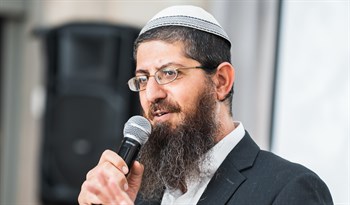




Rabbis in Midrash












Lessons
fast navigation










Shoftim TESHUVA IN COURT OF LAW?
Parshat Shoftim-Chodesh Elul
Why does parshat Shoftim always come out during Elul? This innovative and central explanation is an eye-opener regarding many aspects of Judaism.

The Month of Elul TESHUVA IS THE ANSWER
The month of Elul serves as a vital time for self-reflection and personal accountability to prepare for true repentance.

P'ninat Mishpat P'ninat Mishpat: Realtor’s Fee on Large Commercial Building – part I
(based on ruling 85031 of the Eretz Hemdah-Gazit Rabbinical Courts)
(based on ruling 85031 of the Eretz Hemdah-Gazit Rabbinical Courts)
P'ninat Mishpat Complaints about Contractor’s Work – part II
(based on ruling 83037.1 of the Eretz Hemdah-Gazit Rabbinical Courts)
(based on ruling 83037.1 of the Eretz Hemdah-Gazit Rabbinical Courts)
Chemdat Yamim Moreshet Shaul: The Goal of an Agricultural Yeshiva – part I
Based on Siach Shaul, Pirkei Machshava V’Hadracha p. 263 (address at the laying of the cornerstone of the Yeshiva Chakla’it in Kfar Haroeh)
Based on Siach Shaul, Pirkei Machshava V’Hadracha p. 263 (address at the laying of the cornerstone of the Yeshiva Chakla’it in Kfar Haroeh)
Chemdat Yamim The Goal of an Agricultural Yeshiva – part II
Based on Siach Shaul, Pirkei Machshava V’Hadracha p. 263 (address at the cornerstone laying for the Yeshiva Chakla’it in Kfar Haroeh – 1938)
Based on Siach Shaul, Pirkei Machshava V’Hadracha p. 263 (address at the cornerstone laying for the Yeshiva Chakla’it in Kfar Haroeh – 1938)
Re'e NEVER EXTREME EXCEPT ISRAEL
Parshat Re'eh
Judaism is against extremism, so how can we understand the seemingly extreme statements found in our sages in favor of living in the Land of Israel and against living in Chutz laAretz? The article deals with the seeming contradiction between the strength of Free-Will and the strength of being influenced by our surroundings.