Yeshiva
Beit Midrash
- Sections
- Revivim
- Shabbat and Holidays
- Jewish Holidays
- Simchat Torah and Shmini Atzeret

"This may be compared to a mortal king who said to his servants, ‘Prepare for me a great banquet’; but on the last day he said to his beloved friend, ‘Prepare for me a simple meal that I may derive benefit from you.’
The Midrash also explains:
‘This may be compared to the case of a king who made a banquet for seven days and invited all the people in the province during the seven days of the feast. When the seven days of the feast were over he said to his friend: ‘We have already done our duty to all the people of the province, let us now rejoice together, you and I, with whatever you can find – a pound of meat, fish, or vegetables.’ In a similar manner the Holy One, blessed be He, said to Israel: ‘On the eighth day you shall have a solemn assembly; let’s rejoice together with whatever you can find; with one bullock, one ram’(Bamidbar Rabbah 21:24).
Likewise, in the Zohar, it is also written that this day, Shemini Atzeret, is a day for the King himself – his day of joy together with Israel.
"This is analogous to a king who invited guests. The household people entertained them. At the end, the king said to his household, ‘Until now, I and you all entertained the guests. You offered sacrifices for the other nations every day, that is, the seventy bullocks. From now on, for one day, let me and you rejoice. This is the meaning of the verse ‘On the eighth day you shall have a solemn assembly’; "you" means offering sacrifices for yourselves" (Zohar 3, Emor 104:2).
Revivim (56)
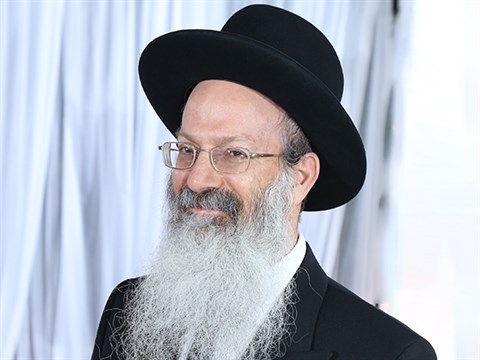
Rabbi Eliezer Melamed
49 - Together in the Sukkah
50 - The Meaning of Shmini Atzeret
51 - The Death of the Righteous
Load More
This is the special and unique meaning of Shemini Atzeret, which contains no distinctive mitzvoth, other than the mitzvah of rejoicing in God, His Torah, and His salvation.
Taken from Rabbi Eliezer Melamed’s book, "Peninei Halkha: Sukkot" and translated from Hebrew. All of Rabbi Melamed’s books can be found at: http://yhb.org.il/




Rabbis in Midrash























Lessons
fast navigation










Hosha'ana Rabba FLYDUBAI & HOSHANA RABBA- ANI VAHU HOSHIA NA- I & HIM SAVE US
"Ani vaHu Hoshia Na", "I and Him, Save Us". We don't just pray to Him, but we also pray to and for ourselves that we should emulate and educate our children to have that instinctive altruism with which He created the world. President Trump seemed amused about Yaniv Hayon, our PLUMBER who confidently worked with G-d like Superman (he learned from a pilot on a TV show!) to save 174 lives on the Dubai hijacking, but we in Israel are totally accustomed already 78 years to our plumbers, teachers, garbage-men, rabbis, farmers & doctors being Hashem's shlichim! This is what Zionism is about.
Moreshet Shaul Hashem Is your Shadow – part I
Based on Siach Shaul, Pirkei Machshava V’Hadracha p. 420 – an address from 1941

P'ninat Mishpat A Non-Contractor in Changing Times – part I
(based on ruling 85128 of the Eretz Hemdah-Gazit Rabbinical Courts)
Moreshet Shaul Our King on Rosh Hashana, Our Father on Yom Kippur.
Based on Aroch Siach, p. 221 (Rav Shaul Yisraeli)








