Yeshiva
Beit Midrash
- Shabbat and Holidays
- Jewish Holidays
- The Holidays of Tishrei

The Torah study is dedicatedin the memory of
Hana Bat Haim
Regarding the verse, "On the first day, you must take for yourself a fruit of the citron tree, etc." the Midrash points out that the day referred to as "the fist day" is in fact the fifteenth of Tishrei. Why, asks the Midrash, does scripture call it the first day? Answer: It is the first day of the year in the reckoning of sins. That is, after atonement has been granted on Yom Kippur, a new reckoning does not begin until the first day of Sukkot.
Here is the full text of the Midrash:
"'On the first day, you must take for yourself a fruit of the citron tree, etc.' Why is the fifteenth referred to here as the first? R' Mana from Shav and R' Yehoshua from Sakhnin relate a parable in the name of R' Levi: A certain city had to pay a fine to the king. The king went to collect the fee. When he came within ten miles of the city, the city's leaders came out to praise the king and show him honor, asking him to revoke the fine. In response, the king reduced the fee by one third. When he came within fifteen miles, other important city members came out to receive and praise him. The king, in return, reduced the fine by another third. Upon entering the city, all of its citizens, men, women, and children, came out to receive the king. The king requited the members of the city, nullifying the entire fine. He said, 'Let's let bygones be bygones. From here on we will start a new reckoning.'
This may be likened to what happens in the month of Tishrei: On Rosh Hashanah eve, the leaders of the generation fast, and the Almighty expiates a third of their transgressions; from Rosh Hashanah to Yom Kippur, pious individuals fast and the Almighty erases a third of their wrongs; on Yom Kippur, everybody, fasts, men, women, and children, and the Almighty says to them: 'Let's let bygones be bygones; from here on we will start a new reckoning.' From Yom Kippur until Sukkot, the entire Jewish people is busy fulfilling Torah commandments - some with the Sukkah, others with the Lulav. On the first day of Sukkot the entire community of Israel stands before the Almighty holding the Four Species in order to give honor to His name. He, in turn, says to them: 'The past is behind us; from here on we will start a new reckoning.' Therefore, Moses warns the People of Israel: 'On the first day, you must take for yourself a fruit of the citron tree, etc.'"
Our beloved mentor, Rabbi A. I. Kook, with an eye to explaining why there is no reckoning of transgression during the the days between Yom Kippur and Sukkot, takes a conceptual approach to our Midrash. He informs us that by virtue of our repentance on Yom Kippur we attain an extremely high spiritual level, and the soul becomes illuminated with the light of the World to Come. Yom Kippur's elevation causes us to become distanced from our own physical world. When we do return to the matters of this world, we must proceed with caution.
The days between Yom Kippur and Sukkot were designed for just this: to teach us how to return to the realm of our mundane world while maintaining an appropriately holy posture. In other words, the transition from the towering heights of Yom Kippur to ordinary daily existence is no simple task. It is possible to lose proper proportion. During the four days which follow Yom Kippur, this balance has not yet been reached. Fortunately, the sanctity of Yom Kippur covers up for us.
We find, then, that just as ascending to a great height like that of Yom Kippur calls for a gradual process beginning on the first of Elul and ending on Yom Kippur, so too the return from a high spiritual level to the ephemeral existence of our word must be taken in stages - not in one great leap. One must not remain too elevated. In the days that immediately follow such a spiritual summit, before one is able to view things in their proper perspective, there is no reckoning of transgressions. Only on the first day of Sukkot, when we fulfill the commandments of Sukkah and Lulav, do worldly matters "settle in" and take hold with the desired level of sanctity. Therefore, the fifteenth of Tishrei is the first day for reckoning transgressions.
------
Translations of biblical verses in the above article were taken from Rabbi Aryeh Kaplan's, The Living Torah (Moznayim).
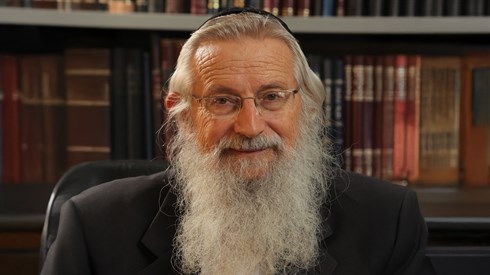






Rabbis in Midrash























Lessons
fast navigation










Hosha'ana Rabba FLYDUBAI & HOSHANA RABBA- ANI VAHU HOSHIA NA- I & HIM SAVE US
"Ani vaHu Hoshia Na", "I and Him, Save Us". We don't just pray to Him, but we also pray to and for ourselves that we should emulate and educate our children to have that instinctive altruism with which He created the world. President Trump seemed amused about Yaniv Hayon, our PLUMBER who confidently worked with G-d like Superman (he learned from a pilot on a TV show!) to save 174 lives on the Dubai hijacking, but we in Israel are totally accustomed already 78 years to our plumbers, teachers, garbage-men, rabbis, farmers & doctors being Hashem's shlichim! This is what Zionism is about.











