Yeshiva
Beit Midrash
- Torah Portion and Tanach
- Bamidbar
- Korach

In the complaints mounted against Moshe and God about water and food, the tribe of Levi is not to be found. The tribe of Levi did not participate in the mission of the spies and explorers of the Land of Israel and there is opinion that it was not included in the decree that that generation would die in the desert and never see the Land of Israel. Yet this seemingly impeccable record is tarnished by the events described in this week’s parsha.
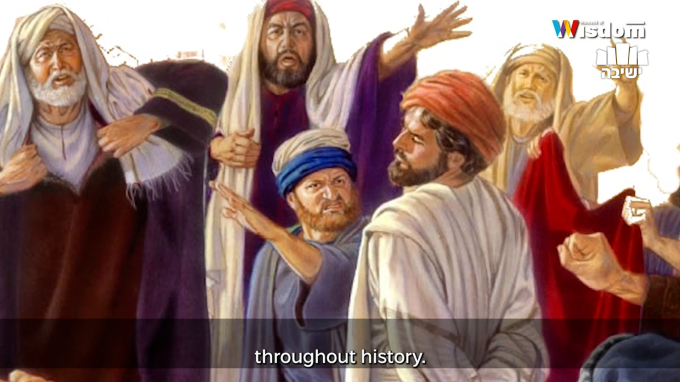
Here, apparently, the tribe of Levi, through Korach and his supporters, are the leaders of a very serious rebellion against the authority of Moshe. Moshe himself is a Levite and when he criticizes the behavior of the tribe of Levi – "is it not enough for you to be the chosen servants of the Lord in your Levite status that you must insist that you will also be the priestly class of Israel?!" he certainly does so with heavy heart and great bitterness. In effect he is demanding to know what happened to turn the holy tribe of Levi into a rebellious group whose punishment would be their being swallowed up by the earth.
One of my favorite truisms in life is that one is never to underestimate the power of ego. The Great War of 1914-18 was in a great measure caused and driven by the egotistical whims of some of the main monarchs of Europe who were then in power. The Talmud records for us that the evil but potentially great King of Israel, Yeravam ben Nvat, was offered by God, so to speak, to stroll in Paradise alongside King David and God Himself, again, so to speak.
The Talmud tells us that Yeravam refused the offer because King David would have preference of place over him on that walk in Heaven. The message and moral that the Talmud means to convey with this story is how dangerous and tragic an inflated ego can be to one's self and, if one is in a position of leadership and authority it, may affect others as well.
Korach and the tribe of Levi fall victim to their inflated egos. Their sense of self is now far from reality and responsibility. One cannot be without ego and self-pride. Yet these attributes must be tempered by perspective, logic and a sense of loyalty and obedience to the word of God. That, in my opinion. is the basic lesson of this week's parsha.
Moshe’s overriding sense of modesty diminishes the drive of his own ego and he is able to say "would that all of God's congregation could join me as prophets." Korach, consumed by his unjustly inflated ego, destroys himself and many others in his quest for positions that do not belong to him nor is he worthy of having.




Rabbis in Midrash























Lessons
fast navigation










Various Events FOR WHOM NOT TO VOTE
Rav Zvi Yehuda Kook stressed that Israeli politics is G-dly, so I have no problem answering this common question on a Torani blog. Also, Free-Will is a G-d-given right and obligation, to "destine one's fate" (R. Soloveichik, Kol Dodi Dofek, 67), so I obviously don't tell others how to vote. But once not a few (especially young) have already asked, a couple of personal words from experience and thoughts from chazal & Rav Kook which may be of help to others, mainly for whom NOT to vote.

P'ninat Mishpat Fallout from Failure to Install Elevator – part II
based on ruling 85007 of the Eretz Hemdah-Gazit Rabbinical Courts










