Yeshiva
Beit Midrash
- Sections
- Chemdat Yamim
- Parashat Hashavua
- Torah Portion and Tanach
- Bamidbar
- Bamidbar

Perhaps Moshe took the cue from Hashem. According to a midrash in at least three places (see Tanchuma, Yitro 9) Hashem actually wanted to give the Torah to Bnei Yisrael right after they left Egypt (it is not clear on precisely what date). However, since Bnei Yisrael quarreled at each encampment, Hashem did not give it earlier. He waited until they came to the Desert of Sinai and encamped opposite the mountain "as one person with one heart" (see Shemot 19:2 and Rashi, ad loc.). Moshe, thus, saw that the crucial thing was not the date on the calendar but the development of Bnei Yisrael in the proper way.
What did Moshe feel would be gained by waiting? According to Rashi (Shemot 19:15) Moshe calculated that if the Torah was given on the sixth, some women would be unable to become purified by that time. This type of impurity would not have raised a halachic problem in this context, and there were types of impurity that existed anyway. However, Moshe realized the crucial role that the women would play in the proper acceptance of the Torah. In the first message Hashem gave to Bnei Yisrael regarding their preparedness to accept the Torah and enter the special covenant, He told Moshe to speak to "Beit Ya’akov" and "Bnei Yisrael" (Shemot 19:3). Rashi identifies Beit Yaakov as the women, making it interesting that the women are mentioned first in this context. Moshe decided that for Bnei Yisrael to be fully ready to encounter Hashem and accept the Torah, the women should have the opportunity to be at their spiritual best.
Rav Dessler (Michtav Me’eliyahu, vol. II) discusses the danger of the Torah being given with a display of love between Hashem and Bnei Yisrael without the requisite level of fear of Hashem and human effort. Therefore, when Bnei Yisrael expressed apprehension in hearing Hashem directly present the words of the Torah to them, Hashem accepted it (see Shemot 20:17). Thus, we see on several levels that the nation’s having the right attitude and preparing for the giving of the Torah was more important than it being at the most opportune time and optimal manner.
May we relive the giving of the Torah through a sense of unity, a proper balance between love and fear of Hashem, and in a manner that allows both men and women to get the most out of the opportunity. These steps will help ensure the right circumstances for fulfilling the Torah in ever-increasing quality.

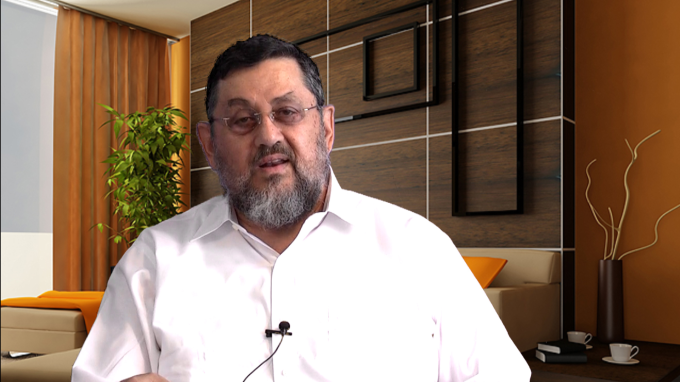




Rabbis in Midrash























Lessons
fast navigation











Various Events FOR WHOM NOT TO VOTE
Rav Zvi Yehuda Kook stressed that Israeli politics is G-dly, so I have no problem answering this common question on a Torani blog. Also, Free-Will is a G-d-given right and obligation, to "destine one's fate" (R. Soloveichik, Kol Dodi Dofek, 67), so I obviously don't tell others how to vote. But once not a few (especially young) have already asked, a couple of personal words from experience and thoughts from chazal & Rav Kook which may be of help to others, mainly for whom NOT to vote.
P'ninat Mishpat Fallout from Failure to Install Elevator – part II
based on ruling 85007 of the Eretz Hemdah-Gazit Rabbinical Courts







