Yeshiva
Beit Midrash
- Torah Portion and Tanach
- D'varim
- Re'e

The depths of loyalty of Soviet Jewry, to their inner faith, is seen in the fact that somehow millions of Soviet Jews still knew when the Jewish holidays – especially Simchat Torah – would occur. For the calendar is the rhythm of our lives and evokes with it memory, hope and a feeling of the timelessness of Jewish life and its traditions.
As such, the mere existence of the Jewish calendar posed a threat to the atheistic, cruel Communist regime that ruled then over a large part of humankind. The calendar in Jewish life and thought does not really only mark the passage of time gone by. Rather, it focuses on time that is yet to come, on the future, which can somehow always be brighter than was the past.
One of my younger grandchildren proudly told me that he had calculated how many years in the future a certain anomaly on the Jewish calendar, regarding erev Pesach, would occur. I bless him that he lives to see it but he is already certainly enthusiastic about the prospect and looks forward to its happening.
The calendar supplies us with a vision of the future and allows us the ability to feel that we are masters of our own fate and that we can, by our own efforts, be influential in determining our destiny.
The Jewish calendar is a progression of one holy day to the next holy day. We are always on the way to celebrate and commemorate our obligations to serve our Creator. Though there have been numerous sad days introduced into our calendar since the times of Moshe, the Jewish calendar still remains one of upbeat spirit and joy, family and hospitality, compassion and appreciation of life and its bounties.
The parsha of Re’eh always falls in the month of Elul, leading to the glorious month of Tishrei with its days of awe and compassion and the celebration of Torah and its commandments on Succot. The review of the Jewish year, which occupies a great deal of the subject matter of this week’s parsha, is therefore most fitting for it prepares us not only for the coming month but for the coming year generally.
Though the future is always inscrutable, we can nevertheless be comforted and feel secure by the consistency of our calendar, which has marked the journey of the Jewish people through time and centuries. The Jewish calendar reminds us daily of our uniqueness as a people and of the eternity of our Torah and our faith. It thus fits rather neatly into Moshe’s overall message to the Jewish people as recorded for us here in the book of Dvarim. The passage of time itself is one of the life’s gifts bestowed upon us by our Creator.


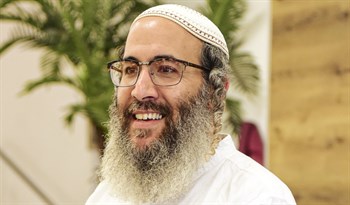





Rabbis in Midrash























Lessons
fast navigation










Various Events FOR WHOM NOT TO VOTE
Rav Zvi Yehuda Kook stressed that Israeli politics is G-dly, so I have no problem answering this common question on a Torani blog. Also, Free-Will is a G-d-given right and obligation, to "destine one's fate" (R. Soloveichik, Kol Dodi Dofek, 67), so I obviously don't tell others how to vote. But once not a few (especially young) have already asked, a couple of personal words from experience and thoughts from chazal & Rav Kook which may be of help to others, mainly for whom NOT to vote.

P'ninat Mishpat Fallout from Failure to Install Elevator – part II
based on ruling 85007 of the Eretz Hemdah-Gazit Rabbinical Courts








