Yeshiva
Beit Midrash
- Family and Society
- The Land of Israel
- The Torah Perspective

One of the drivers was a young Jewish man, a college graduate who told us that he was raised "Reform" by his family. He said that he had a younger brother, a current college student, who just returned from a visit to Israel on a Birthright Mission program. He said that his brother was very impressed by his visit and now was starting to look into Judaism and his heritage more seriously.
He has enrolled in a number of Judaic studies classes and has told his family that upon graduation he intends to move to Israel, marry there and make his future there "with the rest of the Jews." My wife and I naturally gushed over this news and asked him if he himself intended to also visit Israel. He told us that since he had already finished school he was not entitled to a Birthright trip and doubted that he would ever visit Israel. Even though he bragged about how successful his car service business was, he apparently never considered spending any of his own money on a visit to Israel - even though he did tell us about expensive vacations that he had taken to South America.
He then informed us that he had recently become engaged to a non-Jewish woman and that they were going to marry in June. He said that his family wanted the woman to convert to Judaism and that he had broached the subject with her.
The woman he intended to marry was an atheist, he told us, and she said that becoming Jewish would in no way compromise her beliefs or non-beliefs since most of the Jews she knew had no firm beliefs about God or any theology. He said that he brought her to his Reform rabbi who agreed to perform the ceremony even prior to her conversion.
The rabbi was very impressed by the sincerity of her atheistic beliefs. Nevertheless the rabbi said that he would not perform the wedding ceremony in the sanctuary of the temple but only outside on the lawn since the woman was not yet officially converted. The driver said that he was "praying for nice weather." I wonder who his bride was "praying" to for a fair weather day.
The cavalier attitude towards the whole matter by the young Jewish man and apparently by his Reform rabbi saddened me deeply. It provided me with a microcosm of what is happening to the American Jewish community, which is rapidly disappearing, abetted by the failure of Reform and, to a somewhat lesser extent, Conservative rabbis as well, in attempting to stem this tide of disaster. It was a very depressing car ride for me for I knew that this scenario was no longer an exceptional case in Jewish America.
The influence of the State of Israel is crucial to the survival of Jews and Judaism in the Diaspora. Even those pockets of Orthodox religious Jewish life in America, which had previously been convinced that Israel is not a key ingredient in their lives, are beginning to see things in a different light.
For many in European Jewry, suffering intensely under growing open anti-Semitism, public and official, Israel is viewed as being its insurance policy. It is a haven to escape to, if and when the necessity arises. American Jews still feel much more secure and therefore their attitude towards Israel is much more guarded and ambivalent. Hardly more than twenty percent of American Jews have ever visited Israel and the more assimilated American Jews become the more distant their relationship with Israel becomes.
The key to helping American Jews counter assimilation and alienation from Judaism is having them feel more Jewish – in establishing a strong sense of Jewish self-identity within themselves and their families. One undeniable fact about at least visiting and hopefully eventually living in the Land of Israel is that it certainly makes one feel more Jewish. People who feel Jewish eventually begin to search and find a way back to Jewish life and Torah values.
The story of the two brothers I outlined above shows how true this is and how necessary the relationship to Israel is, for Jewish communities in the Diaspora threatened with assimilation and eventual extinction.
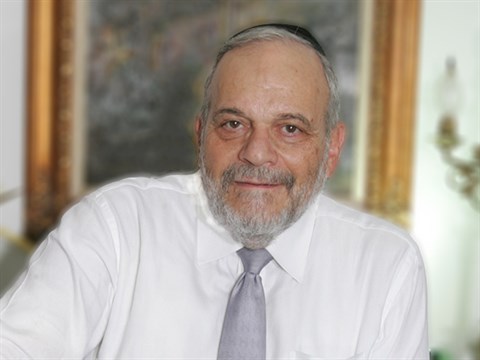
Berel Wein





Rabbis in Midrash























Lessons
fast navigation











Various Events FOR WHOM NOT TO VOTE
Rav Zvi Yehuda Kook stressed that Israeli politics is G-dly, so I have no problem answering this common question on a Torani blog. Also, Free-Will is a G-d-given right and obligation, to "destine one's fate" (R. Soloveichik, Kol Dodi Dofek, 67), so I obviously don't tell others how to vote. But once not a few (especially young) have already asked, a couple of personal words from experience and thoughts from chazal & Rav Kook which may be of help to others, mainly for whom NOT to vote.

P'ninat Mishpat Fallout from Failure to Install Elevator – part II
based on ruling 85007 of the Eretz Hemdah-Gazit Rabbinical Courts









