Yeshiva
Beit Midrash
- Shabbat and Holidays
- Jewish Holidays
- IDF Memorial Day

The Torah study is dedicatedin the memory of
Shlomo son of Yaakov
The truth, however, is just the opposite. The most appropriate way of viewing the fallen soldiers is to regard them as sacred, to recognize that their entire existence underwent a process of refinement and sanctification on behalf of the Jewish people and the Land of Israel. With regard to such martyrs the Sages teach that "no creature is capable of standing in their section of the Garden of Eden." In other words, one who lacks faith will no doubt consider these soldiers quite dead, while a believing Jew recognizes that they are now more "living" than the rest of us. Though they died while young of age in this world, they live on in the "world which is exceedingly long." In the World to Come they are much more alive than we are. They have attained the level of sanctity, and, in the words of the Sages, "sanctity lives on eternally."
The souls of those who died sanctifying God's name climb above the ordinary status of an individual Jew, arriving at a sacred level which embraces the collective totality of Israel. By giving their lives on behalf of the Jewish people as a whole, they earn a similar status: They become one with the transcendent collective body of the Jewish people. These martyrs are now more attached to the Almighty, the ultimate source of all life; therefore, through dying they have succeeded in adding considerable life in both the World to Come and this world. By virtue of them we are living here today, and all that we do can rightfully be ascribed to them.
Unfortunately though, the Israeli media and culture have been taken over by people who, in addition to lacking faith, are divorced from both the history and the destiny of the Jewish people. Initially they possessed an inkling of Judaism by virtue of what they had heard from their parents, but with the passing of time they naturally became more and more distanced from their roots. Thanks to them, Yom HaZikaron has become a "Peace Now" day. Instead of honoring the memory of the fallen, recognizing what their deaths mean for the Jewish people, and giving meaning to their great self sacrifice, the Israeli media robs them of their honor by portraying their deaths as meaningless and in vain. The media presents itself as mournfully honoring the deceased by telling sad stories about their lives, while, in truth, there could be no greater degradation to these holy individuals than the despicable spirit with which Yom HaZikaron has been infused, which essentially amounts to a disregard for the collective destiny of Israel for which our soldiers sacrificed their lives.
Yom HaZikaron ought truly be characterized by an accentuation of life in light and in memory of the holy individuals who have given their lives on behalf of the nation and the land. By sacrificing their lives in sanctification of God's name they have made it known that the national cause, the vision of the ingathering of the Exiles, and the renaissance of the Jewish people in their land, are so important that it is worth giving one's life for them. As a result, we, the living, redouble our efforts and follow in their footsteps - we raise our children according to their example and establish new settlements in their spirit; the Torah that we study belongs to them; the moral Jewish society that we are striving to establish here in accordance with the vision of the Prophets belongs to them. Yom HaZikaron causes us to intensify our efforts to continue in their path - the path of self-sacrifice on behalf of Israel. In this manner we truly succeed in honoring the fallen as the holy and pure individuals that they were, like the illuminating and radiating splendor of the sky.
This same message must be relayed to the bereaved families as well, and to the households in which these exalted heroes were nurtured: Don't let death defeat you; continue on, powered by the force of the deceased. Turn the tears of sorrow into a fountain of life for the nation.
On this day, a day set aside for the holy, we should take upon ourselves the task of contributing even more to the people of Israel, to establish good families which combine love of the Torah, praiseworthy behavior, and loyalty toward the nation and the land. Instead of bowing our heads in sadness we ought to stand very erect in honor of the fallen and direct our gaze beyond the horizon, toward the prophetic vision of the End of Days. And then, even if our eyes contain tears, they will be tears of greatness.
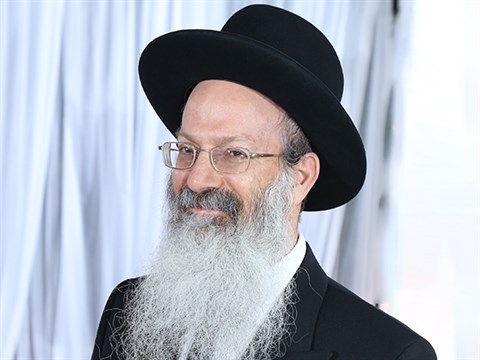
Rabbi Eliezer Melamed
Rosh Yeshiva of Har Bracha and rabbi of the settlement.

Peninei Halakha 18. Torah Verses in the Prayers and in the Berakha of She-asa Li Kol Tzorki
Chapter 10: The Laws of Tisha Be-Av







Rabbis in Midrash






















Lessons
fast navigation










Hosha'ana Rabba FLYDUBAI & HOSHANA RABBA- ANI VAHU HOSHIA NA- I & HIM SAVE US
"Ani vaHu Hoshia Na", "I and Him, Save Us". We don't just pray to Him, but we also pray to and for ourselves that we should emulate and educate our children to have that instinctive altruism with which He created the world. President Trump seemed amused about Yaniv Hayon, our PLUMBER who confidently worked with G-d like Superman (he learned from a pilot on a TV show!) to save 174 lives on the Dubai hijacking, but we in Israel are totally accustomed already 78 years to our plumbers, teachers, garbage-men, rabbis, farmers & doctors being Hashem's shlichim! This is what Zionism is about.











