Yeshiva
Beit Midrash
- Torah Portion and Tanach
- Bereshit
- Toldot

"The first one came out reddish, hairy all over like a fur coat. They named him Esau. His brother then came out, his hand grasping Esau's heel. He named him Jacob." (Gen. 25:25-26)
The name Esau means made or completed. From day one, Esau was full of strength and energy. The name Jacob (Ya'akov) refers to the fact that he was holding on to Esau's heel (ekev). Later on, Jacob is named a second time; here too, his name refers to his relationship with his brother Esau. The night before meeting up with Esau, he struggles with a mysterious stranger. This stranger- according to some, Esau's guardian angel — informs him: "Your name will no longer be said to be Jacob, but Israel. You have struggled with angels and men, and you have prevailed" (Gen. 32:29).
What is the inner meaning of Jacob's names? What is the significance of his grasping on to Esau's heel? Why does he have two names?
Restraint versus Control
Just as there are both positive and negative forces in the world, so too, every person is a composite of positive and negative traits. We need these negative forces, however; without their power and vitality, many goals and aspirations would lack the energy necessary to be realized.
Esau represents the raw, base forces in the world. His reddish complexion indicated the violent and brutal nature of his personality. Jacob did not prevent Esau from coming into the world; after all, the world needs Esau and his raw power. Rather, Jacob held on to Esau's heel, holding him back. The name Jacob refers to this aspect of restraint, reining in the fierce forces.
Ultimately, however, our goal is not to simply hold back these negative forces. We aspire to gain control over them and utilize them, like a hydroelectric dam that harnesses the vast energy of a raging waterfall for the production of electricity. For example, the Talmud tells us that a person with blood-thirsty tendencies should become a shochet (ritual slaughterer) or a mohel, thus sublimating his violent nature for noble purposes. This higher aspiration is represented by Jacob's second name, Israel, which comes from the root-word sar, meaning 'to rule.'
The name Jacob is appropriate when the Jews are in the Diaspora. There, they serve as a moral conscience to partially restrict the wild and violent forces in the world. But when redeemed and living in their own land, the Jewish people are able to attain the higher level of Israel. Then they have the opportunity to demonstrate how a nation may utilize its material capabilities for constructive and ethical goals.
Gold from the Land of Israel, pp. 58-59. Adapted from Ein Eyah vol. I, p. 68)
Rabbi Chanan Morrison of Mitzpeh Yericho runs ravkooktorah.org, a website dedicated to presenting the Torah commentary of Rabbi Avraham Yitzchak HaCohen Kook, first Chief Rabbi of Eretz Yisrael, to the English-speaking community




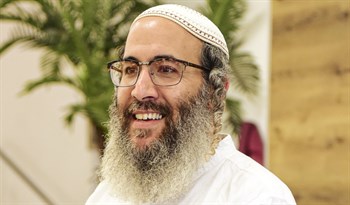




Rabbis in Midrash























Lessons
fast navigation










Various Events FOR WHOM NOT TO VOTE
Rav Zvi Yehuda Kook stressed that Israeli politics is G-dly, so I have no problem answering this common question on a Torani blog. Also, Free-Will is a G-d-given right and obligation, to "destine one's fate" (R. Soloveichik, Kol Dodi Dofek, 67), so I obviously don't tell others how to vote. But once not a few (especially young) have already asked, a couple of personal words from experience and thoughts from chazal & Rav Kook which may be of help to others, mainly for whom NOT to vote.

P'ninat Mishpat Fallout from Failure to Install Elevator – part II
based on ruling 85007 of the Eretz Hemdah-Gazit Rabbinical Courts






