YeshivaThe torah world Gateway
Beit Midrash
- Torah Portion and Tanach
- D'varim
- Nitzavim
- Sections
- Chemdat Yamim
- Parashat Hashavua

Included in the blessings the Torah foresees for a ba’al teshuva is: "Hashem will give you abundance in all of your hands’ work, in the produce of your stomach ... your animals and ... your land..." (Devarim 30:9). The Meshech Chochma noted that almost identical wording is used in the last parasha (ibid. 28:11) regarding one who deserves blessing, with the exception of "all of your hands’ work." Why should that phrase appear in one context and not the other?
The Meshech Chochma refers us to the famous disagreement between R. Shimon Bar Yochai and R. Yishmael. The latter says that when one is blessed, he will have a lot of produce to harvest ... and will harvest it. R. Shimon says that this is not the beracha of a real tzaddik, who should be dedicating his life to Torah rather than working the field. Rather, for the real tzaddik, others who are less devoted will do the work while he learns.
The Meshech Chochma says that the previous parasha’s pasuk refers to the blessing of a R. Shimon type of tzaddik. "All of your hands’ work" is omitted because his hands do not work. Our parasha refers to a R. Yishmael style tzaddik, who does work with his own hands. Why should there be a difference? He explains that since our parasha is talking about one who had sinned and needed repentance, it would be a mistake for him to take R. Shimon’s extreme spirituality approach, as the mishna (Avot 2:2) says that physical labor is important to make sins be forgotten. Only one who had always been righteous and may have no sins that need forgetting, can dedicate himself exclusively to Torah.
The problem with this fascinating suggestion is that one would expect specifically the ba’al teshuva to adopt the approach of extreme spirituality. After all, the Rambam (Intro. to Avot, ch. 4) says that although one should seek the golden mean, when he has strayed to the extreme in one area, it may pay to right himself by taking the opposite extreme until reaching equilibrium. Why then should the one who needed repentance, and thus lacked spirituality, not follow, at least for a significant amount of time, a course of extreme spirituality?
The answer is that the sinner may not have lacked spirituality but the healthy approach to life’s challenges. His remedy is to meticulously follow the Torah’s guidelines for man, including a balance between Torah study and a normal life of labor. The normal path (including much more Torah than most are used to) gives the best prospects for concretizing the spiritual growth and maintaining a healthy balance to keep him away from sin.
Various Rabbis
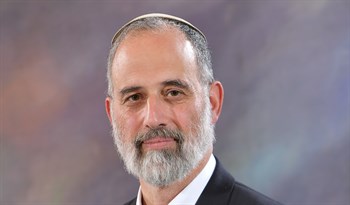
Various Rabbis including those of of Yeshivat Bet El, such as Rabbi Chaim Katz, Rabbi Binyamin Bamberger and Rabbi Yitzchak Greenblat and others.
Moreshet Shaul Moreshet Shaul: A Crown and its Scepter – part II
Based on Siach Shaul, Pirkei Machshava V’Hadracha p. 294-5



Rabbis in Midrash























Lessons
fast navigation










Moreshet Shaul Hashem Is your Shadow – part I
Based on Siach Shaul, Pirkei Machshava V’Hadracha p. 420 – an address from 1941
P'ninat Mishpat A Non-Contractor in Changing Times – part I
(based on ruling 85128 of the Eretz Hemdah-Gazit Rabbinical Courts)
Moreshet Shaul Our King on Rosh Hashana, Our Father on Yom Kippur.
Based on Aroch Siach, p. 221 (Rav Shaul Yisraeli)
P'ninat Mishpat A Non-Contractor in Changing Times – part II
(based on ruling 85128 of the Eretz Hemdah-Gazit Rabbinical Courts)
Moreshet Shaul Hashem Is your Shadow – part II
Based on Siach Shaul, Pirkei Machshava V’Hadracha p. 420 – an address from 1941
Parashat Hashavua Happiness for the Right Reasons
[With painful longing, we share these divrei Torah from our co-Rosh Kollel for close to 40 years, Harav Moshe Ehrenreich zt”l.]