Yeshiva
Beit Midrash
- Family and Society
- A Nation and its Halachot
- Leadership
- Jewish Laws and Thoughts
- Serving Hashem, Mitzvot and Repentance

Two incidents that were in the news last week highlight this sore problem. A supermarket chain intends to be open on a 24/7 basis thus apparently violating the status quo arrangements regarding the public observance of Shabat. This company also owns a chain of supermarkets that caters to the Charedi religious community. In order to pressure the company to rescind its new 24/7 policy, some of the Charedi leaders (mostly self-proclaimed ones at that) have proclaimed a boycott of the chain that sells to the Charedi public. Boycotts and bans are the usual weapons employed by these leaders even though experience should have shown them that by the end of the day these tactics are woefully ineffective and usually counterproductive. Nevertheless, it is obvious that the company’s breach of the status quo, of defining "democratic" in terms of its perceived economic benefit allowed it to ignore completely the "Jewish" aspect of Israel. It was irresponsible on its part to succumb to greed at the expense of community comity. It was also terribly insensitive to the Jewish nature of the state and continues a pattern of wider and wider public Shabat desecration in all areas of Israeli life. To somehow believe that the "Jewish" character of the state can succesfully be preserved, let alone enhanced, by destroying the public Shabat in Israel is malicious folly. I doubt if the boycott tactic will work - perversely, I hope it does - but this is a battle that religious Jews have to join and wage, not only for our sake but for the future of the State of Israel itself.
The second incident was the ruling by an Israeli court that chametz may be sold on Pesach by Jewish stores and restaurants. Again this is a clear breach of the status quo and even of local laws that forbid this practice. The group that brought the suit is against religious coercion. But they do not understand that every society has coercion in one way or another. Otherwise pure anarchy reigns. The laws that coerce are those that form the consensus basis of the society itself. Pesach and chametz have a long history amongst Jews - longer than the existence of the State of Israel and modern progressivism. Disregarding this history and the sensitivity of the vast majority of Israelis in this matter only confirms that as far as Israeli courts are concerned "Jewish" really doesn’t exist in the face of perceived "democratic." The prophet Yechezkel records for us that long ago Jews proclaimed that they were just like other nations -"democratic" to the core. God’s response was that He would not allow that to happen - that anti-Semitism and the hostility of nations would coerce (there is that word again) the Jewish nation to remain "Jewish." Perhaps we are seeing a replay of this scenario again in our state. God apparently prefers "Jewish" to "democratic" if somehow the two must necessarily clash. A little common sense, sensitivity to others, a feeling of altruism and good will - all of which are unfortunately in short supply in many sectors of our society - would go a long way in making the State of Israel a truly Jewish democratic state
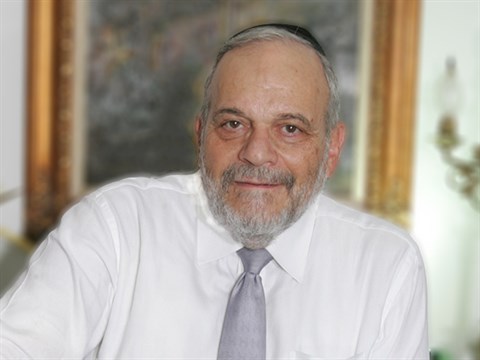








Rabbis in Midrash























Lessons
fast navigation











Various Events FOR WHOM NOT TO VOTE
Rav Zvi Yehuda Kook stressed that Israeli politics is G-dly, so I have no problem answering this common question on a Torani blog. Also, Free-Will is a G-d-given right and obligation, to "destine one's fate" (R. Soloveichik, Kol Dodi Dofek, 67), so I obviously don't tell others how to vote. But once not a few (especially young) have already asked, a couple of personal words from experience and thoughts from chazal & Rav Kook which may be of help to others, mainly for whom NOT to vote.

P'ninat Mishpat Fallout from Failure to Install Elevator – part II
based on ruling 85007 of the Eretz Hemdah-Gazit Rabbinical Courts







