Yeshiva
Beit Midrash
- Shabbat and Holidays
- Jewish Holidays
- The Holidays of Tishrei

We are about to embark on the High Holidays, also known as the Days of Awe: the New Year day of judgement, and the Yom Kippur day of atonement. Five days after that, a week of joy begins, with the holidays of Sukkot and Simchat Torah, the Rejoicing of the Law. How do we make sense of this progression from solemnity to joy?
The days of happiness that follow the Days of Awe fill the pockets of emptiness that were left in our souls during the process of teshuvah (repentance). What is interesting, though, is that when we had the Holy Temple and were able to bring offerings to G-d, this long-awaited joy was not so evident. On Sukkot we were commanded not to finally engage in our happiness – but rather to bring a long series of 70 sacrifices. And the sacrifices weren't even for us! Instead, they were for the 70 nations of the world. Only on the day after the week-long holiday did G-d say to us: "Please remain for another day, so that you and I can rejoice just us together" – and we bring one extra offering for the occasion. Why just one little feast for us to be alone with our Creator and Redeemer?
Perhaps we can explain that the days of joy correspond to the days of awe that precede them. Rosh HaShanah is the new year for the entire world, whose entire population is judged in the Divine court – "all of mankind passes before Him" in judgement, as we say in the prayers of the day. But Yom Kippur is a day that is totally "Israelite," a special day that atones for the Jewish Nation.
Sukkot follows the same pattern: The week begins with days in which we bring sacrifices for the world and analyze our relationship to the other peoples, and only at its end is revealed our private aspect of "a nation that will dwell alone, and will not be reckoned among the nations" (Bamidbar 23,9). These are the two ways in which we perceive Am Yisrael: sometimes as the heart of the universal human body, and sometimes as the independent nation standing alone.
How then can we define the relationship between Israel and the nations? On Rosh HaShanah, all the nations, including Israel, begin on an even keel – but our entire job on that day is to begin a process of disengagement. We must show in every way possible that we are different than them. We recite on this day a special prayer of Malchuyot, Zikhronot, and Shofarot – enthroning G-d over us, beseeching Him to remember us for good, and recalling the historic national occasions of His majestic presence on which the shofar was and will be sounded (at the Giving of the Torah on Mt. Sinai, when the Exiles return, when the Holy Temple is rebuilt, etc.).
The paragraphs of this prayer begin with the nations and continue with Israel. In Malchuyot we begin with, "Place Your awe over all Your creations," but we quickly move to, "Bring honor to Your nation" and "the righteous will see and rejoice."
In Zikhronot, we begin with the covenant that G-d forged with the children of Noach, and then continue with, "Please remember the Binding of Yitzchak for the merit of Yaakov's descendants."
And Shofarot begins with a prayer for "all the inhabitants of the world," quickly changing over to "He hears the shofar blasts of His nation Israel with mercy."
But on Sukkot, we change the program and we begin to "re-engage" and offer up 70 sacrificial bulls to atone for the nations. The great Sukkot joy that follows the Days of Awe is not the joy of individuals, nor is it egotistical happiness, but rather rejoicing for all, a happiness stemming from the desire to be good to all.
The 70 bulls that we bring decrease in number each day: 13 on the first day, 12 on the next, and so on, until the seventh day, when we bring seven. This is an expression of the fact that the nations of the world are diminishing. But we are clearly not rejoicing over this, for we are bringing sacrifices precisely to atone for them! What then is the significance of the decreasing number of bulls?
The answer lies in a profound distinction between Israel and the nations. For the Jewish People, it is precisely the disengaging and the inward-looking that makes us into a better nation, of higher quality. But for the nations of the world, the process works in reverse: The more the nations are invested deeply into themselves and only themselves, the more they harm their environment. On the other hand, the more they diminish their own national character and engage more in contributing to the world as a whole, the more they can refine their individual coarse strengths.
This is why the rectification of the nations is not when they disappear from the face of the earth, but rather when they reduce their specific national focus. The goal of the 70 nations must be to "de-nationalize," to strive for the entire world to be, spiritually, "one nation, one language." We pray for a time when "everyone who has breath in his nostrils will say that the G-d of Israel is King, and His Kingship rules over all."
We conclude by noting that the Zohar, too, makes this point. It explains that the "way of holiness is to begin with separation and end with connection; the way of impurity begins with connection, but ends with separation."
Translated by Hillel Fendel
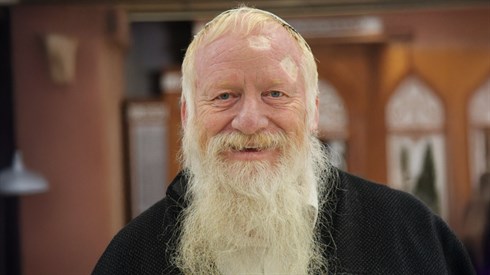






Rabbis in Midrash


































Hosha'ana Rabba FLYDUBAI & HOSHANA RABBA- ANI VAHU HOSHIA NA- I & HIM SAVE US
"Ani vaHu Hoshia Na", "I and Him, Save Us". We don't just pray to Him, but we also pray to and for ourselves that we should emulate and educate our children to have that instinctive altruism with which He created the world. President Trump seemed amused about Yaniv Hayon, our PLUMBER who confidently worked with G-d like Superman (he learned from a pilot on a TV show!) to save 174 lives on the Dubai hijacking, but we in Israel are totally accustomed already 78 years to our plumbers, teachers, garbage-men, rabbis, farmers & doctors being Hashem's shlichim! This is what Zionism is about.











