Yeshiva
Beit Midrash
- Torah Portion and Tanach
- D'varim
- Shoftim

Translated by Hillel Fendel
A wise man once said: "The history of the world is actually the history of the great men of the world." He meant, of course, that the great people are those who move the historic processes and determine their countries' agenda.
There is much truth to this saying, but it must be understood correctly – and if it is, that will determine whether we will end up as one of these "great men," or rather trail far behind them.
Most of the world believes that the "great" people are those with power and authority: heads of state, multi-millionaires, and the like. Generally, these "leaders" truly think that they are guiding the historic processes. In fact, many times one diplomatic plan or another will be named after one of them, such as the Trump Peace Plan, or the Monroe Doctrine – as if these people truly move international processes.
But in reality, good historians know that these people simply bring to the fore in-depth processes that had long been taking place beneath the surface. These processes were initiated by the really great people: people who wish to rectify the world, people who think, people who truly leave their imprint on history.
This week's Torah portion is Shoftim, which means "judges," because its first verse is: "Judges and police you shall place in your gates [cities]." In truth, while the policemen deal with problems that arise in the day-to-day, the judges are those who truly determine what must be done.
And what is the essential quality necessary for one who wants to be among those who generate deep internal processes, those who truly determine reality?
A few stories about the great tzaddik, Rabbi Avraham Yitzchak HaKohen Kook (1865-1935), whose yahrtzeit we commemorated this week on the 3rd day of Elul, can paint a picture of one who truly makes an imprint on history.
He was only 23 when he became Rabbi of the small Eastern Europe town of Zoimel. As his renown as one of the greatest Torah leaders of his generation grew, he received offers to become Rabbi in larger cities and to head important Yeshivot. After a while, when he was already Rabbi of the city of Boisk, he received the following interesting offer: to make Aliyah to the Holy Land and become Rabbi of the small Jewish community of Jaffa.
You have to understand: At that time, in the early 1900's, there were only some 5,000 Jews in Jaffa. Altogether in the Land of Israel, the Jewish population was only some 80,000 – compared to the millions of Jews in the lands where Rav Kook was active. True, hundreds of thousands of Jews were leaving Eastern Europe because of worsening anti-Semitism and pogroms, but they were going mainly to the United States and the West, while only a few thousand were heading to Eretz Yisrael.
At first glance, then, the offer from Jaffa seemed to be a bit insulting. Many rabbis advised the Rav not to accept it, as it would mean leaving the center of influence within the Jewish world. But Rav Kook felt differently. Beyond his love for the Holy Land, he sensed that the Jewish center of gravity was about to gradually shift to the Land of Israel. And so he immigrated to the Land, and began to act.
He first established a Yeshiva in Jaffa, and later another one in Jerusalem, which became the famous Merkaz HaRav – the Central Universal Yeshiva, for he truly envisioned it as becoming exactly that. This vision at first appeared detached from reality; there were only a few dozen students at first, and money for room and board and teachers in those days of poverty in the Land of Israel was not amply available.
{Very interestingly, around the same time there was another great Torah leader who was also building a Yeshiva – but this one was in Europe. It was one that this rabbi, just like Rav Kook, planned to be a great institution in the Torah world. Money and students flowed into it from all over the world – but it lasted only a few years until the Nazis put a cruel end to it. It is told that, towards the end of the Yeshiva's construction, this rabbi was asked, "Wouldn't it be better to build this Yeshiva in Eretz Yisrael?" He answered, "Now you tell me, when I'm almost finished? But yes, it would have been better."}
Years passed, and despite the difficult conditions, the Central Universal Yeshiva, Merkaz HaRav Kook, did indeed become a great Torah center, and the Land of Israel became the center of the Torah world in particular and the Jewish world in general.
That which turns people into the "great people" who determine the historic agenda is that they look forward with special vision towards the future. The way of the world is that one who has that vision and believes that he can make changes, will have few followers at first – but in the end, he will be a great light to the world.
And we too, all the "regular" people – let us come together and be "great" people and look far ahead and work to change the world!
In order to get articles like this delivered straight to your inbox every week, subscribe to the Israel National Torah newsletter here.
A wise man once said: "The history of the world is actually the history of the great men of the world." He meant, of course, that the great people are those who move the historic processes and determine their countries' agenda.
There is much truth to this saying, but it must be understood correctly – and if it is, that will determine whether we will end up as one of these "great men," or rather trail far behind them.
Most of the world believes that the "great" people are those with power and authority: heads of state, multi-millionaires, and the like. Generally, these "leaders" truly think that they are guiding the historic processes. In fact, many times one diplomatic plan or another will be named after one of them, such as the Trump Peace Plan, or the Monroe Doctrine – as if these people truly move international processes.
But in reality, good historians know that these people simply bring to the fore in-depth processes that had long been taking place beneath the surface. These processes were initiated by the really great people: people who wish to rectify the world, people who think, people who truly leave their imprint on history.
This week's Torah portion is Shoftim, which means "judges," because its first verse is: "Judges and police you shall place in your gates [cities]." In truth, while the policemen deal with problems that arise in the day-to-day, the judges are those who truly determine what must be done.
And what is the essential quality necessary for one who wants to be among those who generate deep internal processes, those who truly determine reality?
A few stories about the great tzaddik, Rabbi Avraham Yitzchak HaKohen Kook (1865-1935), whose yahrtzeit we commemorated this week on the 3rd day of Elul, can paint a picture of one who truly makes an imprint on history.
He was only 23 when he became Rabbi of the small Eastern Europe town of Zoimel. As his renown as one of the greatest Torah leaders of his generation grew, he received offers to become Rabbi in larger cities and to head important Yeshivot. After a while, when he was already Rabbi of the city of Boisk, he received the following interesting offer: to make Aliyah to the Holy Land and become Rabbi of the small Jewish community of Jaffa.
You have to understand: At that time, in the early 1900's, there were only some 5,000 Jews in Jaffa. Altogether in the Land of Israel, the Jewish population was only some 80,000 – compared to the millions of Jews in the lands where Rav Kook was active. True, hundreds of thousands of Jews were leaving Eastern Europe because of worsening anti-Semitism and pogroms, but they were going mainly to the United States and the West, while only a few thousand were heading to Eretz Yisrael.
At first glance, then, the offer from Jaffa seemed to be a bit insulting. Many rabbis advised the Rav not to accept it, as it would mean leaving the center of influence within the Jewish world. But Rav Kook felt differently. Beyond his love for the Holy Land, he sensed that the Jewish center of gravity was about to gradually shift to the Land of Israel. And so he immigrated to the Land, and began to act.
He first established a Yeshiva in Jaffa, and later another one in Jerusalem, which became the famous Merkaz HaRav – the Central Universal Yeshiva, for he truly envisioned it as becoming exactly that. This vision at first appeared detached from reality; there were only a few dozen students at first, and money for room and board and teachers in those days of poverty in the Land of Israel was not amply available.
{Very interestingly, around the same time there was another great Torah leader who was also building a Yeshiva – but this one was in Europe. It was one that this rabbi, just like Rav Kook, planned to be a great institution in the Torah world. Money and students flowed into it from all over the world – but it lasted only a few years until the Nazis put a cruel end to it. It is told that, towards the end of the Yeshiva's construction, this rabbi was asked, "Wouldn't it be better to build this Yeshiva in Eretz Yisrael?" He answered, "Now you tell me, when I'm almost finished? But yes, it would have been better."}
Years passed, and despite the difficult conditions, the Central Universal Yeshiva, Merkaz HaRav Kook, did indeed become a great Torah center, and the Land of Israel became the center of the Torah world in particular and the Jewish world in general.
That which turns people into the "great people" who determine the historic agenda is that they look forward with special vision towards the future. The way of the world is that one who has that vision and believes that he can make changes, will have few followers at first – but in the end, he will be a great light to the world.
And we too, all the "regular" people – let us come together and be "great" people and look far ahead and work to change the world!
In order to get articles like this delivered straight to your inbox every week, subscribe to the Israel National Torah newsletter here.
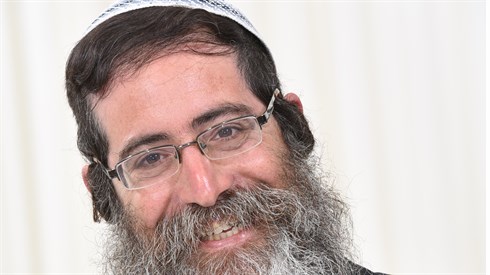







Rabbis in Midrash























Lessons
fast navigation











Hosha'ana Rabba FLYDUBAI & HOSHANA RABBA- ANI VAHU HOSHIA NA- I & HIM SAVE US
"Ani vaHu Hoshia Na", "I and Him, Save Us". We don't just pray to Him, but we also pray to and for ourselves that we should emulate and educate our children to have that instinctive altruism with which He created the world. President Trump seemed amused about Yaniv Hayon, our PLUMBER who confidently worked with G-d like Superman (he learned from a pilot on a TV show!) to save 174 lives on the Dubai hijacking, but we in Israel are totally accustomed already 78 years to our plumbers, teachers, garbage-men, rabbis, farmers & doctors being Hashem's shlichim! This is what Zionism is about.













