Yeshiva
Beit Midrash
- Torah Portion and Tanach
- Bamidbar
- Naso
Bitterness or Bracha – Choose!
We complain about the conditions of the desert; the lack of water; the shortage of meat; the taste of the miraculous Mahn. Even Miriam & Ahron get into the act when they complain to Moshe about his neglecting his wife Tzipora. We find fault with everyone & everything.

Our Sedra is called Parshat Hamiton’nim, the chapter of the complainers. The nation has reached a true high; we were freed from Egypt, received the Torah, built & then dedicated the magnificent Mishkan, but it all seems to break down. We go into depression, we find fault with our leaders - & by extension with G-d - & we start to practice that time-honored Jewish tradition: Kvetching.
We complain about the conditions of the desert; the lack of water; the shortage of meat; the taste of the miraculous Mahn. Even Miriam & Ahron get into the act when they complain to Moshe about his neglecting his wife Tzipora. We find fault with everyone & everything.
In fact, we don’t even need a specific reason to complain: The chapter (11!) begins by simply saying, "The people complained; it was evil in the ears of Hashem; He became angry & He burned the people." Notice this is before any specific grievances were lodged! There was just a general mood of discontent that gripped the nation.
Where does this dissatisfaction come from? The answer, I suggest, can be found in 2 tiny little words. When grousing about the mahn, the people say: Our souls are parched, spoiled; ayn kol! These last two words ayn kol can mean, "we have nothing." But it can also mean, "we don’t have everything! And there is the key to it all.
If you believe that everything is coming to you, then the moment you don’t have something - be it a steak done exactly the way you like it, ice in your drink or the perfect temperature of 72(F) - 22(C) degrees (all pretty hard things to get in a desert!) then you forget about all the amazing blessings you do have, & you focus only on what is missing. And, invariably, you will come up with a million & one faults in your own personal universe.
If this was a problem 2500 years ago, it is perhaps even more of a problem today. Our souls are often spoiled, too. We want everything to be perfect, & when it doesn’t quite go the way we want it, we go ballistic, or we fall into moaning, groaning or depression. We suddenly forget all the beautiful gifts which G-d sends our way every day, every second; the amazing miracles that surround us.
One of a Jew’s greatest tests is whether he will see himself deprived, or Divinely blessed. One attitude leads to a life of bitterness, the other to a life of bracha.
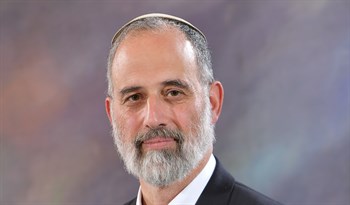
Rabbi Stewart Weiss
Was ordained at the Hebrew Theological College in Skokie, Illinois, and led congregations in Chicago and Dallas prior to making Aliyah in 1992. He directs the Jewish Outreach Center in Ra'anana, helping to facilitate the spiritual absorption of new olim.
Jewish Laws and Thoughts Shul “etiquette:” can we honor Hashem while respecting our fellow congregants?




Rabbis in Midrash























fast navigation




Search lessons

Kuzari -Rabbi Ari Shvat Kuzari class 17- "Miracles Don't Make a Messiah (87)
After learning about the unique "mass-revelation" at Sinai, the question was asked: what about the Christian claim that their "messiah also did miracles in front of people. The class summarizes the 3 significant differences between that claim and Israel's "mass-revelation".