Yeshiva
Beit Midrash
- Torah Portion and Tanach
- Vayikra
- Tazria

The circumcision ceremony itself is called a brit – a covenant. It is the dedication of Jews to their faith and tradition that has remained, despite all the various attempts to destroy it in each century of Jewish existence. Throughout Jewish history, this ritual of circumcision, like the Jewish people itself, has always been under attack and criticism from the outside world.
The Romans and the Greeks, who worshiped the human body in its physical form and for its prowess, abhorred the idea of circumcision. They felt that it was a mutilation that defiled the body and its perfection. Jews, however, felt that circumcision sanctified the body, and represented the better nature of human beings – the spiritual and eternal side of human life.
Jews always believed that inevitably the body weakens, withers, and eventually disappears, and it is only the intangible parts of our existence – memory, spirit, and creativity, that endure and can be passed on from generation to generation. As such, circumcision was not so much a defilement of the human body, as it was and is a testimony to the enhancement and eternity of the human spirit. Every circumcision was a statement of renewal of the original covenant with our father Abraham, and is a testimony to the values of monotheism, human kindness, and hospitality that he represented and introduced into a pagan and hostile world environment.
Even today, there are many forces in the world that seek to deny the rights of the Jewish people to perform this core basic commandment. These groups always cloak themselves in the piety of self-righteousness. They claim to represent the eight-day-old infant, who apparently has no say in the matter. Mixed into this specious argument is the old Roman and Greek idea of the holiness of the human body and the necessity to protect it from mutilation, which still exists.
There are so-called democratic countries that even have legislated against circumcision, all in the name of some higher good and greater morality, that only they possess and understand.
It must be noted that in the Moslem world, also claiming the heritage from our father Abraham, circumcision is also an enshrined ritual and one of in its tenets of faith, but it is usually performed only when the child is much older than eight days. One of the decrees against Judaism instituted by the tyrannical Soviet Union government of the past century was the banning of circumcision. Yet, when the Soviet Union collapsed, an enormous number of Jews who were already adults, chose to undergo circumcision, to show their solidarity with their people and with the tradition of our fathers.
This phenomenon attests to the strength and permanence of this commandment amongst all Jews, no matter what their status of religious observance may be. It is this supreme act of loyalty and commitment that binds the Jewish people together with each other, and with our past, our present and our eternity.
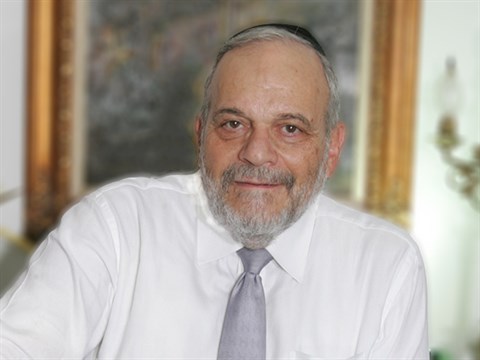







Rabbis in Midrash























Lessons
fast navigation











Various Events FOR WHOM NOT TO VOTE
Rav Zvi Yehuda Kook stressed that Israeli politics is G-dly, so I have no problem answering this common question on a Torani blog. Also, Free-Will is a G-d-given right and obligation, to "destine one's fate" (R. Soloveichik, Kol Dodi Dofek, 67), so I obviously don't tell others how to vote. But once not a few (especially young) have already asked, a couple of personal words from experience and thoughts from chazal & Rav Kook which may be of help to others, mainly for whom NOT to vote.

P'ninat Mishpat Fallout from Failure to Install Elevator – part II
based on ruling 85007 of the Eretz Hemdah-Gazit Rabbinical Courts







