Yeshiva
Beit Midrash
- Sections
- Chemdat Yamim
- Igrot Hare’aya

Recipient: A young Moshe Zeidel. A close disciple of Rav Kook, from their time in Boisk, he asked Rav Kook many philosophical questions. He would become Dr. Zeidel, a philologist and philosopher.
Body: I will now deal with your question on the number of years since creation in relation to geological calculations. Early kabbalists broadly assumed, and this should be accepted as a standard approach, that there were many historical periods before the one we count (from the creation of Adam). The midrash (Bereishit Rabba 3) says that Hashem built worlds and destroyed them. The Zohar (Vayikra, p. 10) says that there were a few types of people, other than Adam, who the Torah described.
Igrot Hare’aya (200)
Beit Din Eretz Hemda - Gazit
61 - Follow-Up Questions
62 - Questions about Torah Accounts of Creation – part I
63 - Questions about Torah Accounts of Creation – part II
Load More
In truth, we do not need any of these things to have happened. Even if the process of creation was by the development (i.e., evolution) of species, this would not contradict [our beliefs]. We count according to the simple reading of the p’sukim, which is much more impactful for us than all the unimportant ancient conceptions. The Torah related the story of creation in a closed manner and spoke in hints and parables. We know that the actual story behind creation is one of the Torah’s deepest secrets (see Chagiga 11b). If everything written in Bereishit should be understood according to its simple meaning, what secrets are there?! As the midrash says: "It is impossible to tell the power of creation to flesh and blood; therefore, scripture wrote in a closed form."
The main thing is the "knowledge of Hashem" that comes out of the episode and learning true morality. Hashem gave the exact measure of spirit that rested on the prophets. He minimized matters so that man will be able to access the greatest elements of creation, when they try hard. These are the most poignant and useful elements, including the "precious frozen light" (see Zecharia 14:6), i.e., the secrets of the Torah.
In short, nothing in the scientific findings contradicts the Torah. Nevertheless, we do not have to accept theories as if they are facts, even if they enjoy a relative consensus. They are like a withering flower. When new instruments of investigation will emerge, today’s newest discoveries will be scoffed at. Today’s greatest theories will be deemed worthless, but the word of Hashem will prevail forever. "Whereas the mountains and peaks will collapse, My grace for you will not wane" (Yeshayahu 54:10).
The foundation of all knowledge is that which we teach the world – everything is the work of Hashem, including the myriad media through which things come about. He made a world with everything in it, as Hashem’s power is limitless. Sometimes the Torah spells out the means of creation; sometimes it just skips to the bottom line – "Hashem created" or "Hashem made." This is similar to the pasuk saying, "Shlomo did build"; it does not say that "Shlomo commanded the high officers, who ordered the craftsmen, who commanded the simple workers …" That is because this process is both known and not very important.
Similarly that which is uncovered over thousands of years about the manner of the world’s development, which increases our knowledge, is still revealed to us cryptically. The main point is that there is a time and place for each matter, without Hashem leaving anything to chance. For example, had people known thousands of years ago that the world was moving and spinning, some people would have been afraid to stand, out of fear of falling and would be afraid to build great buildings, thus holding back progress. Only after intellectual maturity set in, was it possible to teach the world about the movement of heavenly bodies, knowledge that now brings the world great benefit.
Beit Din Eretz Hemda - Gazit
Igrot Hare’aya Departure of an Uncle to Eretz Yisrael
Igrot Hare’aya – Letters of Rav Kook: Vol. I, #1 , p. 1-2 – part II
Igrot Hare’aya Trying to Arrange Purchase of Land in Eretz Yisrael – part II
#229 Date and Place: 13 Tishrei 5670 (1909), Yafo
P'ninat Mishpat Profits from Formerly Joint Swimming Pool – part
(based on ruling 81110 of the Eretz Hemdah-Gazit Rabbinical Courts)
Igrot Hare’aya Raffle of Property in Eretz Yisrael for Tzedaka
Igrot Hare’aya – Letters of Rav Kook: – #220
Igrot Hare’aya Excerpts of Letter on Shemitta – #289 – part I
Date and Place: 6 Nisan 5670 (1910), Yafo
Igrot Hare’aya Maintaining a Friendship of the Spirit – #266 – part III
Igrot Hare’aya – Letters of Rav Kook; Date and Place: 11 Shevat 5670, Yafo
Igrot Hare’aya The State of Religion in Eretz Yisrael – #277 – part II
Igrot Hare’aya – Letters of Rav Kook Date and Place: 9 Adar I 5670 (1910), Yafo




Rabbis in Midrash























Lessons
fast navigation





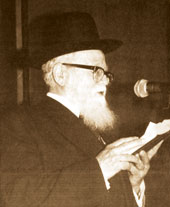




Various Events FOR WHOM NOT TO VOTE
Rav Zvi Yehuda Kook stressed that Israeli politics is G-dly, so I have no problem answering this common question on a Torani blog. Also, Free-Will is a G-d-given right and obligation, to "destine one's fate" (R. Soloveichik, Kol Dodi Dofek, 67), so I obviously don't tell others how to vote. But once not a few (especially young) have already asked, a couple of personal words from experience and thoughts from chazal & Rav Kook which may be of help to others, mainly for whom NOT to vote.
P'ninat Mishpat Fallout from Failure to Install Elevator – part II
based on ruling 85007 of the Eretz Hemdah-Gazit Rabbinical Courts










