Yeshiva
Beit Midrash
- Shabbat and Holidays
- Purim & The Month of Adar
- The Laws of Purim
- Sections
- Peninei Halakha

Even a married woman must fulfill these mitzvot. Therefore, a married couple must send two mishloĥei manot – one from the husband and one from the wife – and each mishlo’aĥ manot must contain at least two portions of food. Even though the main objective of sending mishlo’aĥ manot is to foster friendship between the sender and the recipient, it seems that it is unnecessary to specify explicitly that one mishlo’aĥ manot is from the husband and the other is from the wife. This does not detract from the goal of fostering friendship, because it is clear that the mishlo’aĥ manot are from both of them, since they are a married couple. The friendship engendered will thus extend to both of them.
For matanot la-evyonim, a married couple must give the equivalent of four gifts – two from the husband and two from the wife. It is unnecessary for the wife to give her gifts in person; her husband can distribute them on her behalf. A man may also give these four gifts to two poor people, each one receiving one gift from him and one gift from her. The custom today is to give the equivalent of four gifts to a gabbai tzedaka, who then distributes them to two poor people on the couple’s behalf.
Children who have reached the age at which they are obligated to observe mitzvot are obligated in mishlo’aĥ manot and matanot la-evyonim, even though they are still dependent on their parents for support. Since the purpose of mishlo’aĥ manot is to increase love among Jews, the child must send them explicitly in his or her name. Regarding matanot la-evyonim, however, the parents may give on their child’s behalf.
It is proper to train children who have reached the age of ĥinukh to observe these mitzvot. Some do so by sending them to deliver the mishlo’aĥ manot. Others even give their children food items of their own, so that they can then send to their friends. Regarding matanot la-evyonim, some parents give their children money to give to poor people, while others give money to the poor themselves on behalf of their children. In such a case, the parents educate their children to observe mitzvot by telling them what they did. 5
A poor person who is supported by charity is still obligated in mishlo’aĥ manot and matanot la-evyonim. If he has only enough food for his own Purim meal, he should trade with a friend, meaning that each one should give the other the contents of his meal. This way, they both fulfill the mitzva of mishlo’aĥ manot. They should do the same thing regarding matanot la-evyonim (SA 695:4, MB 694:1-2).
^ 5.The obligation of women in these mitzvot is explained in Rema 695:4. However, Pri Ĥadash states that they are exempt, since it says in regard to mishlo’aĥ manot, "ish le-re’ehu" (lit. "a man to his friend"). The Vilna Gaon seems to concur, but the vast majority of poskim maintain that women are obligated in these mitzvot, because they too participated in the miracle of Purim. So states Sha’arei Teshuva 695:9 in the name of Responsa Shvut Yaakov 1:45 and She’eilat Yaavetz 1:108. MA 695:12 notes his observation that married women are not careful in their observance of these mitzvot, perhaps because of the principle that one’s wife is considered like himself. He concludes, however, that women should be stringent in this regard. Eliya Rabba, MB 695:25, Ĥayei Adam 155:33, and AHS 695:18 all concur.
Eshel Avraham (Buczacz) states that children are exempt from matanot la-evyonim, because they have no money of their own; we educate them only in the mitzva of mishlo’aĥ manot. Pri Megadim and Siddur Beit Yaakov, however, maintain that one must also educate children in the mitzva of matanot la-evyonim.
A mourner, even during shiva, is obligated in all the mitzvot of Purim, including mishlo’aĥ manot. According to Sephardic custom, one may send mishlo’aĥ manot to a mourner. According to Ashkenazic custom, however, one must not send mishlo’aĥ manot to a mourner during the entire year of mourning for a parent or during the shloshim period for other relatives. When one member of a couple is in mourning, one may send mishlo’aĥ manot to that person’s spouse.
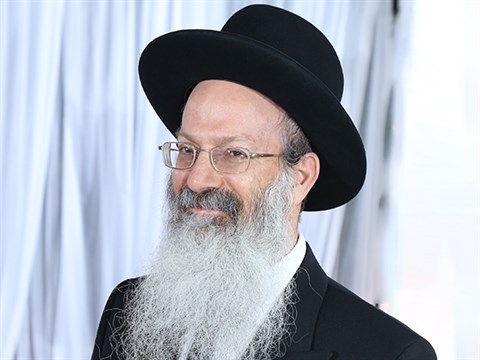
Rabbi Eliezer Melamed
Rosh Yeshiva of Har Bracha and rabbi of the settlement.

Peninei Halakha 18. Torah Verses in the Prayers and in the Berakha of She-asa Li Kol Tzorki
Chapter 10: The Laws of Tisha Be-Av
The Laws of Purim 5. Reading the Megilla and Publicizing the Miracle
Chapter 15: Purim and Reading the Megilla





Rabbis in Midrash






















Lessons
fast navigation










Various Events FOR WHOM NOT TO VOTE
Rav Zvi Yehuda Kook stressed that Israeli politics is G-dly, so I have no problem answering this common question on a Torani blog. Also, Free-Will is a G-d-given right and obligation, to "destine one's fate" (R. Soloveichik, Kol Dodi Dofek, 67), so I obviously don't tell others how to vote. But once not a few (especially young) have already asked, a couple of personal words from experience and thoughts from chazal & Rav Kook which may be of help to others, mainly for whom NOT to vote.

P'ninat Mishpat Fallout from Failure to Install Elevator – part II
based on ruling 85007 of the Eretz Hemdah-Gazit Rabbinical Courts









