Yeshiva
Beit Midrash
- Shabbat and Holidays
- Laws of Hanukkah
- Peninei Halkha - Hanukkah
- Sections
- Peninei Halakha

If one did not light all night, he has lost out on the mitzva of that day. Nevertheless, the next day he should light just like anyone else (Rema 672:2).
Even though, as we have seen, on Friday we light the Ĥanuka candles before shki’a, on a regular weekday one should not light before shki’a. Only when there is no alternative may one light candles as early as plag ha-minĥa. For example, if one needs to leave home before shki’a, there is no one at home who can light on his behalf, and he will return very late at night when no one will be around to see the candles, since he has no alternative, he may light the candles as early as plag ha-minĥa (about forty minutes in Israel) before sunset. According to most poskim, he should even recite the berakhot when he lights. If one needs to leave home even earlier, in pressing circumstances he may light as early as an hour before shki’a, but he should light without the berakhot in such a case. 14
^ 13.Shabbat 21b states that the time for candle-lighting is "until the marketplace empties out." The Rishonim explain that this is half an hour after candle-lighting time. They disagree about whether one may light later than this. MT, Laws of Ĥanuka 4:5 states that there is no mitzva to light later (and Behag and others rule likewise). Others maintain that the Gemara is describing the ideal time; be-di’avad, however, one may light all night, even though one publicizes the miracle less when lighting late at night (Rashba, Rabbeinu Yeruĥam, and others). Some suggest that the dispute hinges on a debate between the two explanations given in the Gemara. Since the mitzva is rabbinic, the halakha follows the lenient opinion. Thus, be-di’avad, one may light all night (Raavya in the name of Rabbeinu Tam; this seems to be the opinion of Rosh as well; SA 672:2). Many Rishonim maintain that even the stringent opinion would agree that when people light inside and the miracle is publicized for the family members whenever the lighting takes place, one may light all night long, even after the marketplace has emptied out. This is the opinion of Tosafot, Rashba, Ran, Rosh, Sefer Ha-teruma, and many others. Rema 672:2 agrees as well. Nevertheless, Rema adds that it is preferable to light at the time the Sages instituted. In a time of need, one may light later in accordance with the vast majority of poskim, as I wrote in the previous section and in n. 12.
SA implies that one who lights late may recite the berakhot all night. This is surprising, as it seemingly would have been proper to take into consideration Rambam’s position that one may not light late, and rule that one should not recite the berakhot due to uncertainty. However, there are several uncertainties at play in this case: a) perhaps the halakha follows the second explanation in the Gemara, and even le-khatĥila one may light all night; b) perhaps even according to the first explanation, be-di’avad the berakhot may be recited all night; c) perhaps when lighting inside, it is acceptable to light all night. Additionally, the custom in the past was to recite the berakhot even when lighting late. Indeed, according to Pri Ĥadash, Ĥemed Moshe, and others, be-di’avad, even if no one else will see the candles, one recites the berakhot when lighting. This is because they maintain that, be-di’avad, one may light all night. They claim further that lighting late at night is similar to the case of a person who lives in an isolated area, in which all agree that he may light with the berakhot at the beginning of the night, because that is the time the Sages ordained for lighting. This is the view of Igrot Moshe, OĤ 4:105:7 (SHT 672:17 states that one does not need to object if people rely on this leniency). However, in practice many Aĥaronim maintain that once the marketplace has emptied out, one may make the berakhot only if the miracle will actually be publicized to others. MA 672:6 rules accordingly, as does MB ad loc. 11. The plural phrase "members of the household" implies that there must be at least two additional people there (Ben Ish Ĥai, Year 1, Hilkhot Ĥanuka 7 [Vayeshev]). However, according to AHS 672:7, as long as there is one additional person, even a child who only partially understands, one may recite the berakhot. This is what I wrote in the main text, as it is the intermediate position.
An additional strong rationale for permitting lighting late appears in the newer edition of Ritva, which states that the law follows local norms. If so, now that we have electric lights, the appropriate time to light extends later than it once did. This can be explained in one of two ways. The first approach is that the time when "the marketplace empties out" refers to when people return home latest from work. This seems to be the opinion of Shiltei Giborim. Nowadays, this is about 9 PM. The second approach is that everything depends upon publicizing the miracle, so if people are still out on the streets late at night, the marketplace has not yet emptied out, and one may still light candles with the berakhot. This seems to be the opinion of Maharshal (Responsa Maharshal §85), who writes that one may publicize the miracle until midnight. Sefat Emet states this as well. In practice, as I wrote at the end of section 7, in a time of need one may delay the lighting until 9 PM, but no later. Since that is when people who work late are coming home, this approach fits best with the idea of the marketplace emptying out. Furthermore, since people sometimes delay dinner until then, there is no great concern that they will forget to light. It should be emphasized that for purpose of making a living, which is considered a great need, it is proper to delay lighting, but for other purposes it is not. In my humble opinion, since people are still returning from work at that time, one may light candles with the berakhot then, even if no one else will see the candles. In a time of need, if one wants to delay lighting later than 9 PM but while there are still people in the street next to his home, he has an opinion to rely upon, but, in my opinion, this should not be done except in pressing circumstances.
^ 14.According to Rambam, one may not light candles before shki’a. Orĥot Ĥayim maintains that in pressing circumstances one may light as early as plag ha-minĥa. This position is cited in SA 672:1. Most Aĥaronim, including MB ad loc. 3, permit reciting the berakhot as well. Others, including Torat Ha-mo’adim 4:2, argue that one should not recite the berakhot. Mikra’ei Kodesh (Harari): Hilkhot Ĥanuka 4:4-5 states in the name of R. Mordechai Eliyahu that one should recite the berakhot.
The poskim disagree how to calculate plag ha-minĥa. Some calculate it based on the understanding that the day ends at shki’a (Vilna Gaon), while others calculate it based on the understanding that the day ends at tzeit (Terumat Ha-deshen); both positions are cited in MB 233:4. MB 672:3 states that for the purpose of calculating plag ha-minĥa, the day ends at tzeit. (See Peninei Halakha: Prayer ch. 24 n. 9 and ch. 25 n. 3; see also the end of Igrot Moshe OĤ 4:62, which explains that the two "halves" of the day are not equal in duration.) Since at Ĥanuka time in Israel the length of a seasonal hour is about 51 minutes, and plag ha-minĥa is thus 63 minutes before shki’a, I wrote in the main text that in pressing circumstances one may light forty minutes before shki’a. If one must leave home earlier than this, he may light up to 63 minutes before shki’a, following the position that we calculate plag ha-minĥa based on shki’a. However, he should not recite the berakhot, because of a double uncertainty: perhaps the law follows Rambam and one may not light before shki’a at all; and perhaps the law follows Terumat Ha-deshen, and we calculate plag ha-minĥa based on tzeit rather than shki’a.
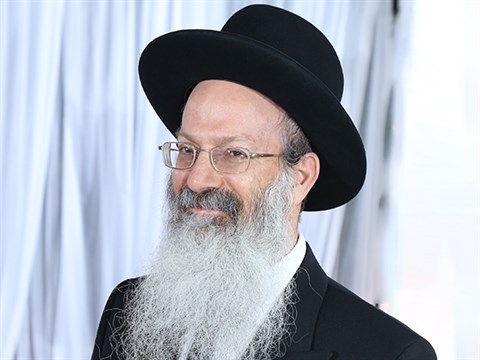
Rabbi Eliezer Melamed
Rosh Yeshiva of Har Bracha and rabbi of the settlement.

Peninei Halakha 18. Torah Verses in the Prayers and in the Berakha of She-asa Li Kol Tzorki
Chapter 10: The Laws of Tisha Be-Av
Peninei Halkha - Hanukkah 5. Friday Evening and Saturday Night
Chapter 13: When and Where to Light Hanuka Candles
Peninei Halakha 4. The Ashkenazic Custom: Men, Women, and Children
Chapter 12: Lighting the Hanuka Candles
Peninei Halkha - Hanukkah 12. Unmarried People who Live Alone
Chapter 13: When and Where to Light Hanuka Candles





Rabbis in Midrash






















Lessons
fast navigation











Various Events FOR WHOM NOT TO VOTE
Rav Zvi Yehuda Kook stressed that Israeli politics is G-dly, so I have no problem answering this common question on a Torani blog. Also, Free-Will is a G-d-given right and obligation, to "destine one's fate" (R. Soloveichik, Kol Dodi Dofek, 67), so I obviously don't tell others how to vote. But once not a few (especially young) have already asked, a couple of personal words from experience and thoughts from chazal & Rav Kook which may be of help to others, mainly for whom NOT to vote.

P'ninat Mishpat Fallout from Failure to Install Elevator – part II
based on ruling 85007 of the Eretz Hemdah-Gazit Rabbinical Courts










