Yeshiva
Beit Midrash
- Shabbat and Holidays
- Laws of Hanukkah
- Peninei Halkha - Hanukkah
- Sections
- Peninei Halakha

Likewise, one may not begin any type of work during the half-hour period before candle-lighting time that may drag on for a long time, nor should one go to sleep during that time. One may begin to eat, work, or sleep during this period if he asks a friend to remind him to light on time. Nevertheless, even if one begins these activities in a permissible fashion, i.e., more than half an hour before candle-lighting time, he must stop at tzeit and light the candles, so that he does not miss the time that the Sages enacted (MB 672:10; SHT ad loc.; Peninei Halakha: Prayer 25:9).
One who is in the middle of work and cannot get home in time to light at tzeit may continue working until he is finished. However, he must take care not to eat until he fulfills the mitzva. In addition, if his work is the kind that can drag on for a long time, to the point where there is a concern that he will end up forgetting to light the candles, he may continue working only if he asks a friend to remind him to light when his work is done (see below 13:6, 9).
One may not even study Torah once the time for lighting the Ĥanuka candles arrives. However, if a regular Torah lecture takes place at that time, and it would be difficult to reschedule it for another time, it is best to keep the lecture at its normal time and remind everyone at its conclusion to light Ĥanuka candles (see below ch. 13, n. 13).
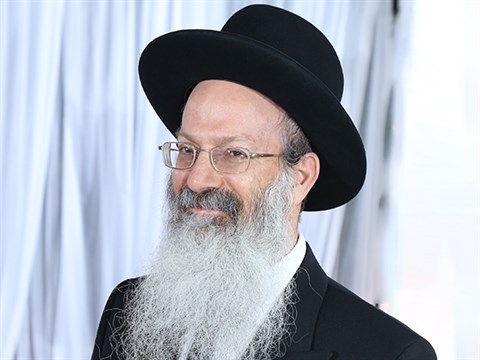
Rabbi Eliezer Melamed
Rosh Yeshiva of Har Bracha and rabbi of the settlement.

Peninei Halakha 18. Torah Verses in the Prayers and in the Berakha of She-asa Li Kol Tzorki
Chapter 10: The Laws of Tisha Be-Av
Peninei Halkha - Hanukkah 15. Candle Lighting at Public Gatherings
Chapter 12: Lighting the Hanuka Candles
Peninei Halakha 2. The Number of Candles and the Mehadrin min Ha-mehadrin Practice
Chapter 12: Lighting the Hanuka Candles
Peninei Halkha - Hanukkah 4. The Proper Time and Duration of Lighting
Chapter 13: When and Where to Light Hanuka Candles



Rabbis in Midrash






















Lessons
fast navigation









Various Events FOR WHOM NOT TO VOTE
Rav Zvi Yehuda Kook stressed that Israeli politics is G-dly, so I have no problem answering this common question on a Torani blog. Also, Free-Will is a G-d-given right and obligation, to "destine one's fate" (R. Soloveichik, Kol Dodi Dofek, 67), so I obviously don't tell others how to vote. But once not a few (especially young) have already asked, a couple of personal words from experience and thoughts from chazal & Rav Kook which may be of help to others, mainly for whom NOT to vote.

P'ninat Mishpat Fallout from Failure to Install Elevator – part II
based on ruling 85007 of the Eretz Hemdah-Gazit Rabbinical Courts











