Yeshiva
Beit Midrash
- Shabbat and Holidays
- Laws of Hanukkah
- Peninei Halkha - Hanukkah
- Sections
- Peninei Halakha

One should take care to leave space between the candles, so that each one can be seen separately, thus publicizing the miracle. In addition, if the candles are too close to one another, their flames may merge, which disqualifies them. Regarding wax candles, another concern arises: If they are too close, they will cause one another to melt before half an hour passes (SA 671:4 and commentaries ad loc.).
Technically, one fulfills the mitzva even if he does not place the candles at the same height or in a straight line, as long as they are separate and a person standing close by can tell that they correspond to the days of Ĥanuka. Similarly, one fulfills the mitzva by placing candlesticks in a circle, since each candle stands on its own. Preferably, though, one should place them in a straight line, so that all onlookers can see the candles all together and discern their number, which corresponds to duration of the miracle (Rema 671:4, BHL s.v. "u-mutar").
In order to prevent people from violating the prohibition of benefiting from the Ĥanuka candles, the custom developed to light an additional candle to serve as a shamash. This way, if one needs light where the candles are burning, he will use the light of the shamash. Technically, one does not need to light a shamash in a room that has electric lights. Nonetheless, many people still light a shamash in order to emphasize the difference between the Ĥanuka candles, whose light we may not use, and the shamash, whose light we may use.
However, in order to avoid miscounting the candles, we place the shamash at a different height or a distance from the other candles, to make it clear to all which are the Ĥanuka candles and which one is the shamash. The prevalent custom is to place it higher than the rest, so that if someone needs light, it will be clear that he is using the light of the shamash and not that of the other candles (SA and Rema 673:1, MB ad loc. 20). 14
^ 14.Regarding the shamash, see Shabbat 21b, Berur Halakha ad loc., SA 671:5, and BHL ad loc., s.v. "ve-tzarikh," which indicate that it is worthwhile to distinguish between candles designated for the mitzva and optional candles.
According SA and Rema 673:1, as well as most poskim, a single shamash permits one to use the light of all of the candles. However, some say that one may not use the light of the candles if one wants to actually look at something closely, because he is benefiting from the additional light generated by the Ĥanuka candles. Pri Ĥadash maintains that this is prohibited only if one needs a large amount of light. MB 673:15 rules – based on MA – that le-khatĥila one should not use the light of the candles and the shamash at all, because onlookers will think that he lit them for his own purposes. Also see MB 673:24, BHL ad loc., s.v. "she-im" and "yihyeh," Kaf Ha-ĥayim 673:39.
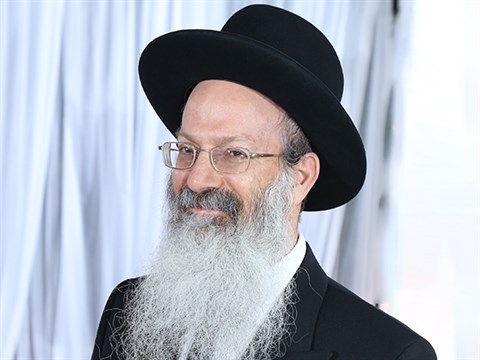
Rabbi Eliezer Melamed
Rosh Yeshiva of Har Bracha and rabbi of the settlement.

Peninei Halakha 18. Torah Verses in the Prayers and in the Berakha of She-asa Li Kol Tzorki
Chapter 10: The Laws of Tisha Be-Av
Peninei Halkha - Hanukkah 4. The Proper Time and Duration of Lighting
Chapter 13: When and Where to Light Hanuka Candles





Rabbis in Midrash






















Lessons
fast navigation










Various Events FOR WHOM NOT TO VOTE
Rav Zvi Yehuda Kook stressed that Israeli politics is G-dly, so I have no problem answering this common question on a Torani blog. Also, Free-Will is a G-d-given right and obligation, to "destine one's fate" (R. Soloveichik, Kol Dodi Dofek, 67), so I obviously don't tell others how to vote. But once not a few (especially young) have already asked, a couple of personal words from experience and thoughts from chazal & Rav Kook which may be of help to others, mainly for whom NOT to vote.

P'ninat Mishpat Fallout from Failure to Install Elevator – part II
based on ruling 85007 of the Eretz Hemdah-Gazit Rabbinical Courts









