Yeshiva
Beit Midrash
- Shabbat and Holidays
- Laws of Hanukkah
- Peninei Halkha - Hanukkah
- Sections
- Peninei Halakha

One may not use leftover oil or candles that were not completely consumed, because they were designated for the mitzva the moment they were lit. Preferably, one should use them for Ĥanuka candles on the remaining days of the holiday, but if they are no longer fit for such use, or if they are left over after the eighth night, one should burn them (SA 677:4, MB ad loc. 18). Alternatively, one may pour the extra oil down the drain and put the remaining wicks in the garbage. Candles left in their package and oil left in the bottle may be used for any purpose.
If one begins lighting the candles and the shamash goes out, he may not rekindle it using one of the Ĥanuka candles, because the shamash is not considered to be designated for use in a mitzva, and one may not light a non-mitzva candle from a candle designated for the mitzva. If, however, one has used up all his matches, and if he does not relight the shamash he will not be able to continue lighting the rest of the candles, he should light the shamash from a Ĥanuka candle. 12
Technically, one may benefit from the candles after they have burned for half an hour. However, it is customary to be stringent and refrain from deriving any benefit from them, even after half an hour passes, because even then the lights publicize the miracle, and if one were to use them, it would seem as if he is denigrating the mitzva. Furthermore, since he prepared the candles for the sake of a mitzva and did not plan on benefiting from them after half an hour passes, some say that the entire candle has been sanctified for the mitzva, and thus one may not use it for mundane purposes. 13
^ 11.According to Ha-ma’or and Itur, one may use the light of the Ĥanuka candles for sacred purposes. However, Rambam, Ramban, Rashba, Rosh, and others prohibit this, and the halakha follows their opinion. Rosh permits one to use the candles temporarily for a mundane purpose, as long as it is not disgraceful, like counting money from afar. Most poskim disagree, as Beit Yosef and SA 673:1 state. BHL, s.v. "ve-yesh" states that perhaps one may use the candles temporarily for a sacred purpose, like studying Torah for a short period of time; SHT ad loc. 11 adds that one may walk in a place where the light of a Ĥanuka candle helps prevent him from tripping. That is, he does not need to close his eyes in such a case, because that is not considered utilizing the light. See Berur Halakha, Shabbat 21b; MB 673:8.
^ 12.See Shabbat 22a; Berur Halakha ad loc.; SA 674:1. This issue has dfferent opinions and many details, but the prevalent custom is not to light even one Ĥanuka candle from another, as Rema, MB, and Kaf Ha-ĥayim 674:8 state. In pressing circumstances, one may rely on the more lenient opinion.
^ 13.SA 672:2, MB ad loc. 7-8. We take into account the opinions of both Maharshal, who is concerned that onlookers will think that he is benefiting from forbidden objects, and Baĥ, which permits one to derive benefit from the candles only if he stipulates that the sanctity will not rest upon the leftover oil or wax after half an hour. Also, see below 13:4, where I explain that it is preferable nowadays to light the candles for more than half an hour. Based on these ideas, I wrote in the main text simply that the remaining oil is forbidden, without differentiating between whether the candles already burned for half an hour or not. However, if one intends to extinguish the flames after half an hour and use the leftover oil or wax for mundane purposes, he may do so, as MB 677:18 explains.
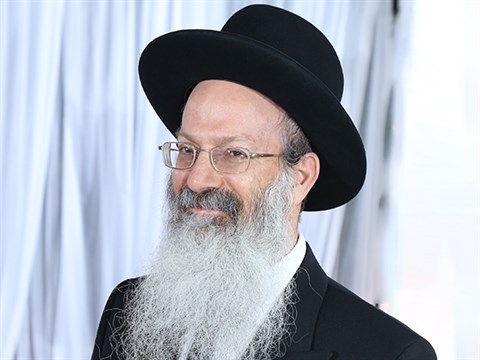
Rabbi Eliezer Melamed
Rosh Yeshiva of Har Bracha and rabbi of the settlement.

Peninei Halakha 18. Torah Verses in the Prayers and in the Berakha of She-asa Li Kol Tzorki
Chapter 10: The Laws of Tisha Be-Av
Peninei Halkha - Hanukkah 10. Guests on Shabbat Hanuka
Chapter 13: When and Where to Light Hanuka Candles
Peninei Halkha - Hanukkah 12. Setting up the Candles and Lighting Them
Chapter 12: Lighting the Hanuka Candles





Rabbis in Midrash






















Lessons
fast navigation










Various Events FOR WHOM NOT TO VOTE
Rav Zvi Yehuda Kook stressed that Israeli politics is G-dly, so I have no problem answering this common question on a Torani blog. Also, Free-Will is a G-d-given right and obligation, to "destine one's fate" (R. Soloveichik, Kol Dodi Dofek, 67), so I obviously don't tell others how to vote. But once not a few (especially young) have already asked, a couple of personal words from experience and thoughts from chazal & Rav Kook which may be of help to others, mainly for whom NOT to vote.

P'ninat Mishpat Fallout from Failure to Install Elevator – part II
based on ruling 85007 of the Eretz Hemdah-Gazit Rabbinical Courts








