Yeshiva
Beit Midrash
- Sections
- Peninei Halakha
- Shabbat and Holidays
- The Three Weeks
- The Laws of Tisha B'Av

Just as mourners may not greet others (sa yd 385), so too, one may not greet others on Tisha Be-Av (sa 554:20). The Hebrew expression that refers to greeting others is "she’eilat shalom," which literally means to "inquire about the peace" of another. Since one who has lost a close relative is not in a state of peace, and no one is in a state of peace on Tisha Be-Av, because we are mourning the destruction of our Holy Temple, one may not greet others in either case.
In particular, Torah students who know this halakha must be careful in this regard. However, when one who is unfamiliar with this halakha extends greetings, the recipient should return the greeting in a soft voice and serious tone, as one who is preoccupied with thoughts of mourning and sorrow, making sure not to insult the person in the slightest. If the person who initiated the greeting is eager to learn Torah and will definitely not be insulted, one should explain to him that we do not greet one another on Tisha Be-Av.
According to most poskim, one may not even say, "Good morning," or "Good evening" (mb 554:41, Kaf Ha-ĥayim 554:90). Some, however, rule that only the greeting "shalom" is prohibited, but one may use phrases like "Good morning" (Leket Yosher). We already learned that in a time of need – in order to avoid insulting others – one may return a greeting; and since some maintain that "Good morning" and "Good evening" are not included in the prohibition, it is preferable to use these phrases rather than saying "shalom."14
If one meets a friend who just got married or had a child, he may wish him "mazal tov," since blessings and congratulations are not prohibited, only greetings (Piskei Teshuvot 554:19). Similarly, handshakes are not included in the prohibition (Har Tzvi, yd 290).
Just as one may not greet others on Tisha Be-Av, one also may not send gifts to others (mb 554:41). Charity, however, is not considered a gift, so one may send food to the needy – it is even a mitzva to do so – so they can have something to eat after the fast (see Kaf Ha-ĥayim 554:91).
We read in t. Ta’anit 3:11: "One may not greet ĥaverim on Tisha Be-Av, but [one may greet] a non-scholar in a soft voice." Some understand this to mean that the prohibition applies only to Torah scholars, who are called ĥaverim. This appears to be Rambam’s view, as Baĥ understands it. However, Mordechai, Mo’ed Katan §895, presents a different version of the Tosefta: "One may not greet his friend (ĥavero)." sa 554:20 adopts this version, stating that one may not greet others on Tisha Be-Av, and that one who is greeted by someone who is unfamiliar with the halakha should answer in a soft voice. Virtually all the Aĥaronim concur. Nonetheless, we wrote above that one need not, and therefore should not, bring this to the attention of a non-scholar upon his greeting, since some maintain that such a person is not obligated in this halakha.↩︎
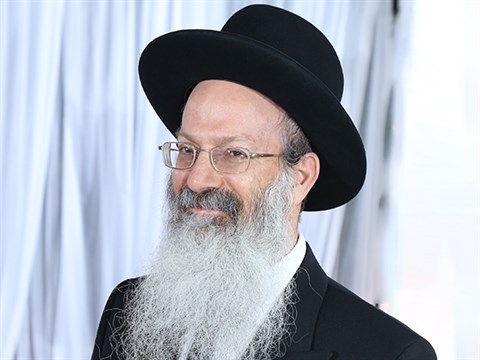
Rabbi Eliezer Melamed

Peninei Halakha 18. Torah Verses in the Prayers and in the Berakha of She-asa Li Kol Tzorki
Chapter 10: The Laws of Tisha Be-Av






Rabbis in Midrash
































Hosha'ana Rabba FLYDUBAI & HOSHANA RABBA- ANI VAHU HOSHIA NA- I & HIM SAVE US
"Ani vaHu Hoshia Na", "I and Him, Save Us". We don't just pray to Him, but we also pray to and for ourselves that we should emulate and educate our children to have that instinctive altruism with which He created the world. President Trump seemed amused about Yaniv Hayon, our PLUMBER who confidently worked with G-d like Superman (he learned from a pilot on a TV show!) to save 174 lives on the Dubai hijacking, but we in Israel are totally accustomed already 78 years to our plumbers, teachers, garbage-men, rabbis, farmers & doctors being Hashem's shlichim! This is what Zionism is about.











