Yeshiva
Beit Midrash
- Sections
- Peninei Halakha
- Shabbat and Holidays
- The Three Weeks
- The Laws of Tisha B'Av

One may not eat two cooked dishes at the last meal before the fast (se’uda ha-mafseket) of Tisha Be-Av (Ta’anit 26b), because that is when our mourning over the destruction of the Temple intensifies, and it is inappropriate, at such a time, to indulge oneself by eating a multi-course meal. One may eat a cooked dish, however, because this is not particularly indulgent. In addition, one may not eat meat or drink wine at this meal (ibid.), because these are dignified foods that bring joy. Indeed, the custom nowadays is to refrain from eating meat and drinking wine from the beginning of Av (see above 8:13); nonetheless, the prohibition to eat these items up until the se’uda ha-mafseket is based on a custom from the time of the Rishonim, while eating them at the se’uda ha-mafseket is a rabbinic prohibition. Therefore, a sick person or a postpartum woman, who could gain strength by eating meat, may do so during the Nine Days, but not at the se’uda ha-mafseket.[1]
What is the se’uda ha-mafseket? It is the last meal before the fast, eaten after midday. Thus, if one eats his last meal before midday, he may eat two cooked dishes at that meal. The prevalent custom is to eat a regular meal, with several dishes, earlier in the afternoon, and then to eat the se’uda ha-mafseket, with only one cooked dish, shortly before the fast. One should not circumvent the law by eating a full meal, with several dishes, close to the fast, reciting Birkat Ha-mazon, waiting a few minutes, and then eating another meal, consisting of one dish, so that the latter meal will be considered the se’uda ha-mafseket.
Be-di’avad, however, if it is late and one did not manage to eat a full meal earlier in the afternoon, and he is concerned that it will be difficult for him to fast without eating several cooked dishes at the se’uda ha-mafseket, he may eat a full meal, go to the synagogue and pray Minĥa, and then return home to eat the se’uda ha-mafseket. However, he should take care not to eat so much during the first meal that he has no appetite for the se’uda ha-mafseket (sa and Rema 552:9, mb ad loc. 22).
[1] Even though a sick person is exempt from fasting on Tisha Be-Av, he should eat only simple foods. Therefore, he should not eat meat or two cooked dishes at the se’uda ha-mafseket. See below 10:3. One may only eat meat or drink wine if he receives an explicit medical directive to do so.
It should be noted that according to the Gemara (Ta’anit 30a), one may eat cured meat and drink grape juice at the se’uda ha-mafseket, because they do not bring joy. However, since it is customary to observe the prohibition from the first of Av, it is obvious that one may not eat these items at the se’uda ha-mafseket.
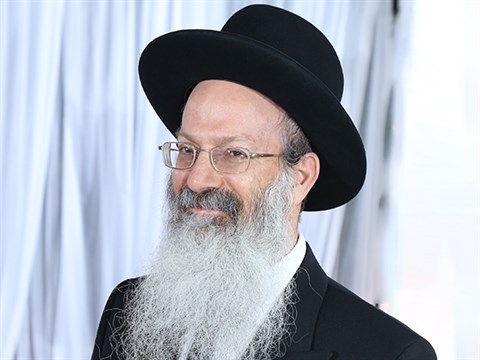
Rabbi Eliezer Melamed

Peninei Halakha 18. Torah Verses in the Prayers and in the Berakha of She-asa Li Kol Tzorki
Chapter 10: The Laws of Tisha Be-Av
Peninei Halakha 10. Listening to Music on Electronic Devices
Chapter 3: Customs of Mourning during the Omer Period




Rabbis in Midrash

































Various Events FOR WHOM NOT TO VOTE
Rav Zvi Yehuda Kook stressed that Israeli politics is G-dly, so I have no problem answering this common question on a Torani blog. Also, Free-Will is a G-d-given right and obligation, to "destine one's fate" (R. Soloveichik, Kol Dodi Dofek, 67), so I obviously don't tell others how to vote. But once not a few (especially young) have already asked, a couple of personal words from experience and thoughts from chazal & Rav Kook which may be of help to others, mainly for whom NOT to vote.

P'ninat Mishpat Fallout from Failure to Install Elevator – part II
based on ruling 85007 of the Eretz Hemdah-Gazit Rabbinical Courts










