Yeshiva
Beit Midrash
- Sections
- Peninei Halakha
- Shabbat and Holidays
- Jewish Holidays
- Lag Ba'omer

Hidden within the hilula celebration of Lag Ba-omer is another memorial: a memorial for the greatest expositor of the Oral Torah, the wondrous Tanna, R. Akiva, one of whose five greatest disciples was R. Shimon bar Yoĥai. The Talmud relates that R. Shimon bar Yoĥai would encourage his students to review his own teachings because they were a condensed version of R. Akiva’s teachings (Gittin 67a). R. Shimon bar Yoĥai also learned to sacrifice himself for Israel’s honor from his master, as R. Akiva supported the rebellion against the Romans and encouraged Bar Kokhba’s revolt. In addition, the celebration of the esoteric Torah on Lag Ba-omer is connected to R. Akiva as well: It is said that R. Akiva entered the Pardes (lit. “orchard” or “paradise”) – that is, the deep secrets of the Torah – and came out unscathed (Ĥagiga 14b). In contrast, the other sages who entered with him did not come out unscathed, as they were incapable of absorbing the awesome secrets of the Pardes.
The halakhic reason given for rejoicing on Lag Ba-omer revolves around the fact that R. Akiva’s disciples continued the tradition of the Torah, as we explained above (section 1). After all, R. Akiva is one of the pillars of the Oral Torah. R. Tzadok Ha-Kohen of Lublin explains (Pri Tzadik, Lag Ba-omer 1) that the Sages did not establish a hilula on the anniversary of R. Akiva’s death because he was killed by the government. Therefore, they established the hilula on the day his student, R. Shimon bar Yoĥai, died. Thus, it turns out that R. Shimon bar Yoĥai’s hilula includes R. Akiva’s hilula as well. Therefore, it is appropriate to focus on R. Akiva’s teachings and greatness on Lag Ba-omer.
There was almost no one who began studying Torah under worse conditions than R. Akiva. Nonetheless, by virtue of his diligence and great faith, he reached the loftiest heights (see Avot De-Rabbi Natan, ch. 6). To a large extent, this was due to his wife Raĥel, the daughter of Kalba Savu’a, one of the wealthiest Jews of the age. She recognized the greatness of his soul and promised that she would marry him if he would study Torah. Her wealthy father disowned her as a result, but she refused to change her mind, marrying R. Akiva and becoming one of the poorest Jews of the time. Despite all this, she continued, with great self-sacrifice, to encourage her husband to study Torah. After R. Akiva became the greatest Torah sage of his generation, he said to his students, “My [knowledge] and your [knowledge] are truly hers” (Ketubot 63a).
R. Yehuda said in the name of Rav: When Moshe ascended on high, he found the Holy One, blessed be He, engaged in affixing coronets to the letters. He said to Him, “Master of the Universe, who is preventing You?” (Who needs these precise coronets? No one understands their meaning, anyway.) God responded to him, “There will arise a person, many generations from now, named Akiva ben Yosef, who will derive heaps of laws from every jot…. Moshe replied, “Master of the Universe, You have such a man and You are giving the Torah through me?” He replied, “Be silent! This is what arose in My thoughts ….” (Menaĥot 29b)
The fact that God showed Moshe R. Akiva specifically, from among all the Sages of Israel, indicates that he is considered the greatest expositor of the Oral Torah. (See also San. 86a, where the Gemara states that all anonymous halakhic teachings stem from him.)
R. Akiva’s dedication to faith in God and Torah was boundless. Even after 24,000 of his students died, he did not lose faith. Rather, he continued to teach more students, who proceeded to spread Torah throughout Israel. When he saw a fox leaving the site of the Holy of Holies, and his colleagues cried, he began to rejoice because of his faith that just as the prophets’ warnings of disaster came true, so too will their words of consolation (Makkot 24b).
When the Romans issued a decree prohibiting Torah study, R. Akiva sacrificed himself by teaching Torah to the masses. He was eventually caught, incarcerated, and sentenced to a cruel death. The Sages say:
When R. Akiva was taken out for execution, it was the time to recite the Shema. And while they combed his flesh with iron combs, he was accepting upon himself the yoke of the kingship of heaven (by reciting the Shema). His disciples said to him, “Our master, even to this point?” (One is exempt from reciting the Shema under such excruciating circumstances. Why, then, are you exerting yourself so greatly to read it now?) He said to them, “All my days I have been troubled by the verse, ‘With all your soul,’ [which I interpret to mean that one must love God] ‘even if He takes your soul.’ I said, ‘When will I have the opportunity to fulfill this?’ Now that I have the opportunity, shall I not fulfill it?” He prolonged the word eĥad (in the verse, “Hear, O Israel, the Lord is our God, the Lord is one [eĥad]”) until his soul departed while saying it. A heavenly voice went forth and proclaimed, “Happy are you, Akiva, that your soul has departed with the word eĥad”…. A heavenly voice went forth and proclaimed, “Happy are you, R. Akiva, for you are destined for life in the World to Come.” (Ber. 61b)
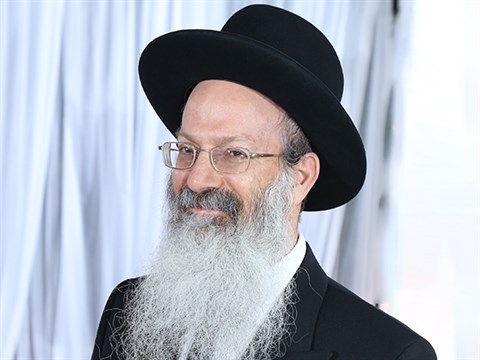
Rabbi Eliezer Melamed

Peninei Halakha 18. Torah Verses in the Prayers and in the Berakha of She-asa Li Kol Tzorki
Chapter 10: The Laws of Tisha Be-Av





Rabbis in Midrash































Various Events FOR WHOM NOT TO VOTE
Rav Zvi Yehuda Kook stressed that Israeli politics is G-dly, so I have no problem answering this common question on a Torani blog. Also, Free-Will is a G-d-given right and obligation, to "destine one's fate" (R. Soloveichik, Kol Dodi Dofek, 67), so I obviously don't tell others how to vote. But once not a few (especially young) have already asked, a couple of personal words from experience and thoughts from chazal & Rav Kook which may be of help to others, mainly for whom NOT to vote.

P'ninat Mishpat Fallout from Failure to Install Elevator – part II
based on ruling 85007 of the Eretz Hemdah-Gazit Rabbinical Courts








