YeshivaThe torah world Gateway
Beit Midrash
- Sections
- Peninei Halakha
- Shabbat and Holidays
- Jewish Holidays
- Lag Ba'omer

Many people have a custom to spend Lag Ba-omer on Mount Meron, where R. Shimon bar Yoĥai (Rashbi) and his son, R. Elazar, are buried. There, they rejoice greatly, light bonfires, sing, and dance. Participants in these celebrations include righteous individuals and Torah scholars.
Some great Torah authorities, however, doubted the legitimacy of this practice. After all, how can we establish a festival on a day when no miracle happened and that the Sages did not institute as a holiday? While it is well known that we do not recite Taĥanun or fast on Lag Ba-omer, there is no known source indicating that it is a holiday (Ĥatam Sofer, yd 233). And if it is in honor of the anniversary of R. Shimon bar Yoĥai’s death, it would be more appropriate to fast, which is the customary observance of the anniversary of a great sage’s death. So why do people rejoice and celebrate the hilula of R. Shimon bar Yoĥai (Sho’el U-meshiv 5:39)?
Yet, as noted, many people, including great scholars and righteous individuals, celebrate and rejoice with the joy reserved for mitzvot. Even though the yahrzeit of a great individual is generally a sad occasion, the kabbalists conveyed in the name of R. Shimon bar Yoĥai that he wanted people to rejoice on his yahrzeit. The Zohar calls the day of R. Shimon bar Yoĥai’s passing a "hilula," a term linked to wedding celebrations. A person’s level of intimacy with the Shekhina in this world is akin to betrothal, whereas in the next world the level of intimacy is more comparable to marriage. In this world, death is viewed as being exceedingly sad, and when a righteous person dies, he leaves a void, and the nation mourns his loss. In the supernal worlds, however, it is understood that everything is for the best. On the contrary, when a truly righteous person is freed from the shackles of this world, he can absorb the full light of the Torah. This is especially true of those sages who delve into the esoteric aspects of the Torah, for their primary engagement is with the inner light of the Torah and the soul. As long as they remain within the confines of this world, its physical boundaries obscure the light of the Torah and the soul. However, when they depart from this world and are released from its physical boundaries, the gates of wisdom and inner light are opened wide before them. Then they are able to understand fully the deep secrets they studied during their lives. Already on the day they die, it is possible to discern that the walls and barriers of this world are fading away. Accordingly, Idra Zuta (Zohar 3:287b and 3:296a) relates that on the day R. Shimon bar Yoĥai died, he revealed deep and wondrous secrets that he was not allowed to reveal beforehand, and he simultaneously cried and rejoiced.
Therefore, the day that a righteous person dies is like a wedding, because on that day he can consummate his connection to the Shekhina, and his Torah becomes a great source of illumination in the supernal realms. Consequently, his disciples and successors in this world can better connect to the depth of his Torah and esoteric teachings. Therefore, disciples who understand this deep idea customarily celebrate a hilula on the day their righteous master, who revealed the Torah’s secrets, died.[2]
R. Shimon bar Yoĥai, who composed the Zohar, is unique in that even Jews who do not understand the secrets of the Torah celebrate his hilula. This is how Lag Ba-omer became a day of celebration for the esoteric side of the Torah. Many people go up to Mount Meron for R. Shimon bar Yoĥai’s hilula. The great scholars among them rejoice over the secrets that were revealed to them in his merit and in the merit of his disciples and successors. Even though the masses who join in the festivities do not understand the secrets of the Torah, they rejoice over the fact that the Torah is deeper than the sea and that there are great scholars and righteous people who connect to its deep secrets, as this entire world of darkness is made slightly more pleasant because of them. Furthermore, the very recognition that there are deep secrets beyond the average person’s comprehension generates humility and wisdom, and even simple folk are elevated by virtue of this awareness.
[2] In Pri Tzadik (Lag Ba-omer 1), R. Tzadok Ha-Kohen of Lublin explains that there is a distinction between the anniversaries of death of a great scholar in the realm of the Written Torah and a great scholar in the realm of the Oral Torah. The Written Torah is fixed and stable, and thus the day when a great scholar of this corpus died – such as the seventh of Adar, when Moshe died – is a painful day. In contrast, we celebrate a hilula on the day a great scholar of the Oral Torah died, because his Torah continues to proliferate and become more nuanced after his death.
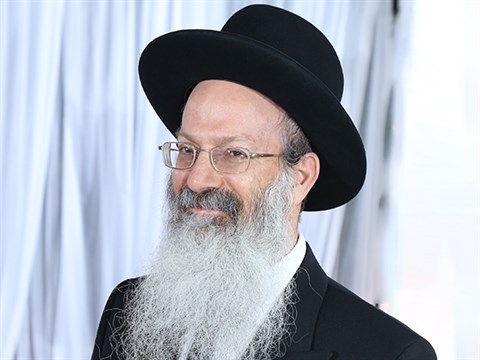
Rabbi Eliezer Melamed

Peninei Halakha 18. Torah Verses in the Prayers and in the Berakha of She-asa Li Kol Tzorki
Chapter 10: The Laws of Tisha Be-Av
Peninei Halakha 10. Listening to Music on Electronic Devices
Chapter 3: Customs of Mourning during the Omer Period


Rabbis in Midrash































Moreshet Shaul Hashem Is your Shadow – part I
Based on Siach Shaul, Pirkei Machshava V’Hadracha p. 420 – an address from 1941

P'ninat Mishpat A Non-Contractor in Changing Times – part I
(based on ruling 85128 of the Eretz Hemdah-Gazit Rabbinical Courts)
Moreshet Shaul Our King on Rosh Hashana, Our Father on Yom Kippur.
Based on Aroch Siach, p. 221 (Rav Shaul Yisraeli)
P'ninat Mishpat A Non-Contractor in Changing Times – part II
(based on ruling 85128 of the Eretz Hemdah-Gazit Rabbinical Courts)
Moreshet Shaul Hashem Is your Shadow – part II
Based on Siach Shaul, Pirkei Machshava V’Hadracha p. 420 – an address from 1941
Parashat Hashavua Happiness for the Right Reasons
[With painful longing, we share these divrei Torah from our co-Rosh Kollel for close to 40 years, Harav Moshe Ehrenreich zt”l.]