YeshivaThe torah world Gateway
Beit Midrash
- Sections
- Peninei Halakha
- Shabbat and Holidays
- Jewish Holidays
- Yom Haatzmaut

With God’s help, the Jewish nation achieved an extraordinary victory over its enemies in the Six-Day War. The war began on three fronts, and in the span of just six days, Israel utterly shattered its enemies’ military strength and dealt them a total defeat. At the same time, all the holy places in Judea and Samaria – most significantly the Old City of Jerusalem and the Temple Mount – were liberated, along with the Sinai Peninsula and the Golan. Anyone who viewed these events honestly and had even the slightest spark of faith in his heart saw clearly the words of our holy Torah, “Since the Lord your God moves about in your camp to protect you and to deliver your enemies to you” (Devarim 23:15). This great victory was truly a manifest miracle.
In order to thank God and publicize the miracle, the Chief Rabbinate – headed by R. Isser Yehuda Unterman and R. Yitzĥak Nissim – ordained the 28th of Iyar, the day on which the Old City and the Temple Mount were liberated, as a day of thanksgiving and joy for all of Israel, on which Hallel is recited, with a berakha, after Shaĥarit. R. Shlomo Yosef Zevin and R. Shaul Yisraeli also participated in and supported this decision.[11]
[11] See R. Shmuel Katz’s article on the topic in Ha-Rabbanut Ha-Rashit, vol. 2, especially pp. 974-5. For the exact wording of the Chief Rabbinate’s decision, see Hilkhot Yom Ha-atzma’ut Ve-Yom Yerushalayim, p. 387. A responsum from R. Unterman is cited on p. 125, which discusses the great importance of the mitzva to publicize a miracle. This mitzva is possibly even more important than that of reciting the Shema; we even interrupt Torah study on Purim to participate in reading the megilla, in order to publicize the miracle. There, R. Unterman also expands upon the mitzva of establishing a holiday on a day when the Jews were delivered from distress. R. Meir Kaplan writes likewise (loc. cit. p. 204). R. Seraya Deblitzky also writes of the need to establish a day of thanksgiving for the Six-Day War (loc. cit. p. 61). According to R. Ovadia Yosef, however, one should not recite a berakha on the Hallel that one recites on Yom Yerushalayim, as he maintains, based on Ĥida’s opinion, that we cannot institute the recitation of Hallel with a berakha unless a miracle happens to all of Israel, and R. Ovadia does not view the Jews of Jerusalem as the entirety of Israel. The Chief Rabbinate decided that even when the 28th of Iyar falls out on a Friday, the date when Hallel is recited should not change.
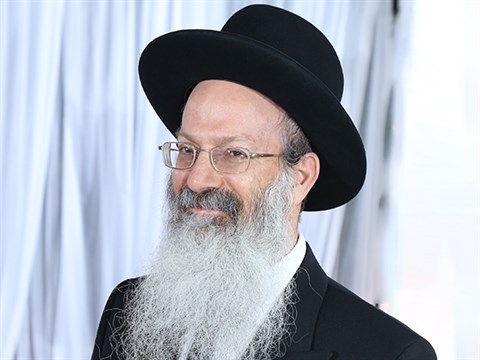
Rabbi Eliezer Melamed

Peninei Halakha 18. Torah Verses in the Prayers and in the Berakha of She-asa Li Kol Tzorki
Chapter 10: The Laws of Tisha Be-Av


Rabbis in Midrash


























Shoftim TESHUVA IN COURT OF LAW?
Parshat Shoftim-Chodesh Elul
Why does parshat Shoftim always come out during Elul? This innovative and central explanation is an eye-opener regarding many aspects of Judaism.

The Month of Elul TESHUVA IS THE ANSWER
The month of Elul serves as a vital time for self-reflection and personal accountability to prepare for true repentance.

P'ninat Mishpat P'ninat Mishpat: Realtor’s Fee on Large Commercial Building – part I
(based on ruling 85031 of the Eretz Hemdah-Gazit Rabbinical Courts)
(based on ruling 85031 of the Eretz Hemdah-Gazit Rabbinical Courts)
P'ninat Mishpat Complaints about Contractor’s Work – part II
(based on ruling 83037.1 of the Eretz Hemdah-Gazit Rabbinical Courts)
(based on ruling 83037.1 of the Eretz Hemdah-Gazit Rabbinical Courts)
Chemdat Yamim Moreshet Shaul: The Goal of an Agricultural Yeshiva – part I
Based on Siach Shaul, Pirkei Machshava V’Hadracha p. 263 (address at the laying of the cornerstone of the Yeshiva Chakla’it in Kfar Haroeh)
Based on Siach Shaul, Pirkei Machshava V’Hadracha p. 263 (address at the laying of the cornerstone of the Yeshiva Chakla’it in Kfar Haroeh)
Chemdat Yamim The Goal of an Agricultural Yeshiva – part II
Based on Siach Shaul, Pirkei Machshava V’Hadracha p. 263 (address at the cornerstone laying for the Yeshiva Chakla’it in Kfar Haroeh – 1938)
Based on Siach Shaul, Pirkei Machshava V’Hadracha p. 263 (address at the cornerstone laying for the Yeshiva Chakla’it in Kfar Haroeh – 1938)
Re'e NEVER EXTREME EXCEPT ISRAEL
Parshat Re'eh
Judaism is against extremism, so how can we understand the seemingly extreme statements found in our sages in favor of living in the Land of Israel and against living in Chutz laAretz? The article deals with the seeming contradiction between the strength of Free-Will and the strength of being influenced by our surroundings.