Yeshiva
Beit Midrash
- Sections
- Peninei Halakha
- Shabbat and Holidays
- Sefirat Haomer
- The Laws of Sefirat Ha'omer

If one regularly prays Ma’ariv at a late hour all year round, it is best that he count after praying at his regular time. If he counts by himself at the beginning of the night, he is liable to make a mistake or forget altogether. Moreover, there is an advantage to performing the mitzva together with the congregation.
However, if one is preoccupied and cannot pray Ma’ariv with a minyan after tzeit, and he intends instead to pray by himself later on, he should preferably count the omer right after tzeit, in order to fulfill the mitzva as soon as possible. Furthermore, there is reason to suspect that he might forget to count after he prays Ma’ariv by himself.[5]
There is a dispute among the Rishonim whether one who forgets to count at night can rectify his error by counting during the day. The Torah teaches us that the time for sefirat ha-omer depends on the time of the omer harvest, as it says, “start to count seven weeks from when the sickle is first put to the standing grain” (Devarim 16:9-10). According to Behag, the halakha follows the opinion cited in Menaĥot 71a that if the harvester fails to reap the omer at night, he may, be-di’avad, reap the next day. Likewise, the same is true of sefirat ha-omer: if one forgets to count at night, he may, be-di’avad, count the next day. Rabbeinu Tam, however, maintains that the halakha follows the opinion stated in Megilla (20b, 21a) that the mitzva of harvesting the omer applies only at night. Therefore, one who forgets to count at night cannot fulfill his missed obligation by counting the next day. In practice, the accepted halakha is that one who forgets to count at night should count during the day without a berakha. On one hand, we give credence to the opinion that one may count during the day. However, we omit the berakha in order to avoid reciting a possible berakha le-vatala (sa 489:7). Each subsequent night, he may count with a berakha (Terumat Ha-deshen, mb 489:34).
[5] If one is accustomed to praying later with a minyan, there is reason to suspect that he might forget to count on his own at the beginning of the night. Then, when the congregation counts, he will think that he has already counted and will thus miss a day. There is also concern that he will forget that he already counted and will thus count again, reciting a berakha le-vatala. Furthermore, there is merit in counting with a minyan, as Shlah states.
There is no reason to elaborate on the issue of eating before sefirat ha-omer, because one may not eat before Ma’ariv in any case. Therefore, if it is permissible to eat before prayers – when there is something to remind him to pray, as I explain in Peninei Halakha: Prayer 25:9 – it is also permissible to eat before sefirat ha-omer.
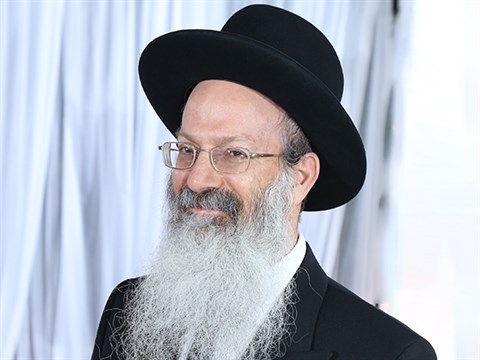
Rabbi Eliezer Melamed

Peninei Halakha 18. Torah Verses in the Prayers and in the Berakha of She-asa Li Kol Tzorki
Chapter 10: The Laws of Tisha Be-Av
The Laws of Purim 15. Scheduling the Se’uda when Purim is on Friday
Chapter 16: The Mitzvot of Joy and Kindness




Rabbis in Midrash

































Hosha'ana Rabba FLYDUBAI & HOSHANA RABBA- ANI VAHU HOSHIA NA- I & HIM SAVE US
"Ani vaHu Hoshia Na", "I and Him, Save Us". We don't just pray to Him, but we also pray to and for ourselves that we should emulate and educate our children to have that instinctive altruism with which He created the world. President Trump seemed amused about Yaniv Hayon, our PLUMBER who confidently worked with G-d like Superman (he learned from a pilot on a TV show!) to save 174 lives on the Dubai hijacking, but we in Israel are totally accustomed already 78 years to our plumbers, teachers, garbage-men, rabbis, farmers & doctors being Hashem's shlichim! This is what Zionism is about.
Moreshet Shaul Hashem Is your Shadow – part I
Based on Siach Shaul, Pirkei Machshava V’Hadracha p. 420 – an address from 1941










