Yeshiva
Beit Midrash
- Jewish Laws and Thoughts
- Personality Development
- Pathways in Personality Development

The Torah study is dedicatedin the memory of
R. Avraham Ben David
One who doesn't examine himself and his actions - won't be aware of his shortcomings and won't be able to mend them. One who doesn't display discretion and alertness regarding his ways, exposes himself to outer influences and to all sorts of character inclinations, and becomes a slave to his desire.
This is not the case with one who contemplates and inspects his ways. Through the very act of contemplation he already rules over himself, for he is aware of his situation. And this brings him to point himself in the right direction.
The ways of examination are built upon two principles:
Pathways in Personality Development (52)
Rabbi Zalman Baruch Melamed
1 - 1. The Quality of "Zehirut" - that Man Contemplate His Actions
2 - 2. Introspection
3 - 3. "Zehirut"- Inhibiting and Contributing Factors
Load More
B. Contemplation of one's behavior, of the actions which one performs, to determine if they fall into the category of good actions or evil ones.
There are good things which a person doesn't do, not because it's difficult to do them, but simply because of carelessness, and were one more attentive, he would readily mend his error and act accordingly. There are bad things which a person does simply because he doesn't discern that they are bad, and were one more mindful, he would certainly stop doing them.
A person who doesn't pay attention can sometimes insult others through speech or behavior without sensing that he's done something offensive. Meanwhile, the inflicted is offended and insulted to the point of shame. Afterwards, the guilty party is surprised at why the offended distances himself from him. Had he sat and considered his words and his behavior towards his partner, he would have noticed that that there was something in them which was liable to offend, and would have resolved to be more careful.
It can happen in relations between children and parents. Sometimes a person doesn't notice that his speech or manner of behavior towards his parents is discomforting to them. They restrain themselves and the child doesn't realize that he's offended them, which is certainly not good. The child didn't intend it, yet the fact that he didn't intend to offend is not enough, for - they've been offended. One who examines his actions and weighs them well, will be able to detect errors like these and to mend them. Often it's very easy to mend, yet people are simply unaware of their mistakes and errors.
Therefore, one who wants to mend his ways - must contemplate and examine himself in all of his actions, like a factory manager who sits and inspects, over and over, the ways in which the factory operates, setting designated times for examination of each department, and searching to locate each stumbling block in order to fix it. So too, each individual must set aside for himself fixed times for soul-searching. And this is in keeping with what the sages have said regarding the verse: "Therefore the rulers say, 'Let us enter into an accounting' (Numbers 21:27) - Therefore the rulers over their evil inclinations say, 'Let us come and calculate the world's account, the loss entailed by the performance of a mitzvah, against the gain that one secures through it, and the gain that one acquires through a transgression against the loss that it entails...' " As Scripture states, "The path of the wicked is like pitch darkness; they do not know upon what they stumble (Proverbs 4:19)." Conversely, the wise are careful, as it says, "The wise man sees the evil and hides, and the fools pass on and are punished (ibid. 22:3)." And, "Let us seek out our ways and examine them, and we will return to God (Lamentations 3:40)." So, the first step in building oneself is not to flee and not to hide but to take hold of oneself.
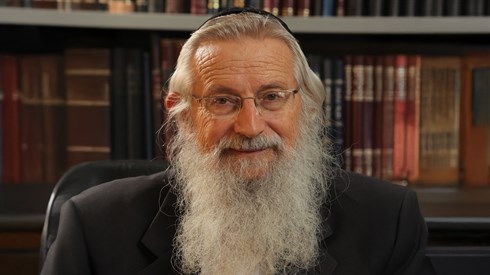







Rabbis in Midrash























Lessons
fast navigation










Hosha'ana Rabba FLYDUBAI & HOSHANA RABBA- ANI VAHU HOSHIA NA- I & HIM SAVE US
"Ani vaHu Hoshia Na", "I and Him, Save Us". We don't just pray to Him, but we also pray to and for ourselves that we should emulate and educate our children to have that instinctive altruism with which He created the world. President Trump seemed amused about Yaniv Hayon, our PLUMBER who confidently worked with G-d like Superman (he learned from a pilot on a TV show!) to save 174 lives on the Dubai hijacking, but we in Israel are totally accustomed already 78 years to our plumbers, teachers, garbage-men, rabbis, farmers & doctors being Hashem's shlichim! This is what Zionism is about.
Moreshet Shaul Hashem Is your Shadow – part I
Based on Siach Shaul, Pirkei Machshava V’Hadracha p. 420 – an address from 1941










