YeshivaThe torah world Gateway
Beit Midrash
- Sections
- Chemdat Yamim
- Bemare Habazak - Rabbis Questions
- Jewish Laws and Thoughts
- Prayer
- Shemone Esrei

Answer: It would appear that there are contradictory approaches on the idea of withholding requests on Shabbat. The Yerushalmi (Shabbat 15:3) says that one is not allowed to "demand his needs" on Shabbat. In Berachot (5:2), it explains that Havdala in Shemoneh Esrei is at the very beginning of the request section because requests are inappropriate before ending Shabbat. The gemara (Berachot 21a), though, rules that if one began one of the middle berachot on Shabbat, he completes that beracha, as the middle berachot are appropriate and are withheld only to avoid tircha (extra toil) on Shabbat for daveners. So it seems to be a machloket whether the content of requests is appropriate on Shabbat. (Some Rishonim (see Beit Yosef, Orach Chayim 268) say that only the first beracha can be done if started by mistake, because asking for wisdom is a spiritual request. The Shulchan Aruch (OC 268:2) rejects this distinction.)
However, a distinction in the first Yerushalmi allows the sources to coexist. It raises the question of whether the parts of the third beracha of Birkat Hamazon that contain requests can be recited on Shabbat. Its answer is that it can since it is a tofes (set form of the) beracha. In other words, special requests are problematic, not ones that are part of the normal text. Thus, Chazal did not have to remove Shemoneh Esrei’s middle berachot but decided to do so because of tircha (Aruch Hashulchan, OC 268:3). Therefore, if one accidentally slips into the set Shemoneh Esrei mode, he may finish it. The Midrash Tanchuma (Vayeira 1) does gives a different reason for omitting the middle berachot – thinking about the needs addressed in these berachot can remind one of his problems and make him unduly sad.
Bemare Habazak - Rabbis Questions (657)
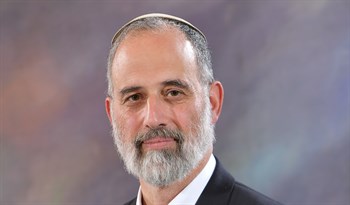
Rabbi Daniel Mann
362 - Personal Requests on Shabbat
363 - Who Should Pay a Ticket?
364 - Kohen Serving as Chazan in Israel
Load More
It is unclear the extent to which being set helps. On the one hand, the Rivash explains that Zocherenu L’chayim can be said during Shabbat of Aseret Y’mei Teshuva because it is a set part of Shemoneh Esrei throughout that period. The Ohr Zarua (II:89) similarly justifies Elokai Netzor (full of requests) on Shabbat on these grounds. This is not obvious when one considers that it is somewhat after the Amida and Chazal did not institute it as a required text (Berachot 17a cites it as one Amora’s personal prayer). He says that it is permitted now only because it has become widely accepted, implying that an individual’s set addition would be a problem.
The Rivash (ibid.) discusses Avinu Malkeinu, reasoning that since it is separate from regular tefilla, it should be improper on Shabbat. (On the other hand, he justifies all of the several minhagim on the matter, saying that the halachic issues are not serious enough to change a community minhag.) We should also note that almost all communities recite public requests (e.g., Yekum Purkan), specifically on Shabbat, as well as Mi Shebeirach for the sick (we do add, "Shabbat hi milizok").
In short, while it is difficult to explain every element of our minhagim on public prayers on Shabbat, the individual should not add his own requests, other than in a case of acute need that cannot be delayed. Your question about peace presents a wonderful opportunity to point out that we have many opportunities. Sim Shalom, which remains in the Shabbat Amida, is a request for peace. Nothing prevents us from taking a little extra time to contemplate ideas that abound in our standard text and cognitively relate them to matters that are on our mind. One should just avoid doing it a manner that makes him sad on Shabbat.



Rabbis in Midrash






















Lessons
fast navigation










Shoftim TESHUVA IN COURT OF LAW?
Parshat Shoftim-Chodesh Elul
Why does parshat Shoftim always come out during Elul? This innovative and central explanation is an eye-opener regarding many aspects of Judaism.

The Month of Elul TESHUVA IS THE ANSWER
The month of Elul serves as a vital time for self-reflection and personal accountability to prepare for true repentance.
P'ninat Mishpat P'ninat Mishpat: Realtor’s Fee on Large Commercial Building – part I
(based on ruling 85031 of the Eretz Hemdah-Gazit Rabbinical Courts)
(based on ruling 85031 of the Eretz Hemdah-Gazit Rabbinical Courts)
P'ninat Mishpat Complaints about Contractor’s Work – part II
(based on ruling 83037.1 of the Eretz Hemdah-Gazit Rabbinical Courts)
(based on ruling 83037.1 of the Eretz Hemdah-Gazit Rabbinical Courts)
Chemdat Yamim Moreshet Shaul: The Goal of an Agricultural Yeshiva – part I
Based on Siach Shaul, Pirkei Machshava V’Hadracha p. 263 (address at the laying of the cornerstone of the Yeshiva Chakla’it in Kfar Haroeh)
Based on Siach Shaul, Pirkei Machshava V’Hadracha p. 263 (address at the laying of the cornerstone of the Yeshiva Chakla’it in Kfar Haroeh)
Chemdat Yamim The Goal of an Agricultural Yeshiva – part II
Based on Siach Shaul, Pirkei Machshava V’Hadracha p. 263 (address at the cornerstone laying for the Yeshiva Chakla’it in Kfar Haroeh – 1938)
Based on Siach Shaul, Pirkei Machshava V’Hadracha p. 263 (address at the cornerstone laying for the Yeshiva Chakla’it in Kfar Haroeh – 1938)
Re'e NEVER EXTREME EXCEPT ISRAEL
Parshat Re'eh
Judaism is against extremism, so how can we understand the seemingly extreme statements found in our sages in favor of living in the Land of Israel and against living in Chutz laAretz? The article deals with the seeming contradiction between the strength of Free-Will and the strength of being influenced by our surroundings.