Yeshiva
Beit Midrash
- Torah Portion and Tanach
- Bereshit
- Vayera

The Torah study is dedicatedto the full recovery of
Inbal Bat Alon
If we compare the p’sukim regarding Avraham and David, we will find a small, but perhaps significant difference. Regarding Avraham, the order is: charity first and justice second. In contrast, regarding David, justice precedes charity. In the few dozen places in Tanach where the combination appears, usually in regard to the behavior expected of a G-d fearing person, justice almost always comes first, following the David model. One of the notable exceptions is where the subject of the pasuk is Hashem. Hashem is described as, "He loves charity and justice; the kindness of Hashem fills the world" (Tehillim 33:5). (This pasuk is apparently the basis of the beracha, "melech ohev tzedakah u’mishpat.") Indeed, Avraham is described as keeping the way of Hashem, which puts charity before judgment.
Let us now try to put the matter in perspective. David served as king and was required to judge between one person and another. His job was thus to make just decisions, which reflected the truth as to who deserved what. Even within this context, he realized the importance of having an element of charity (if the sides agreed) to make the judgment more palatable to the litigants and increase peaceful relations. Regarding Hashem and His "disciple," Avraham, the idea is to do charity whenever possible. However, if one were to do only charity and not demand any accountability, the world would be out of control. Thus, the desire for charity must be tempered by an element of judgment.
S’dom and its surroundings had reached the point where judgment was needed to put an end to the spiraling moral deterioration. Hashem allowed Avraham to try to arrive at charity within a framework of justice. It is noteworthy that Avraham did not say, "They are without virtue, but please have mercy on them anyway." Rather, he devised a judicial claim that it was unjust to destroy the cities if they contained a minimum of righteous inhabitants. When this claim proved untenable, even the charitable Avraham had no recourse but to accept Divine justice as Hashem proposed.

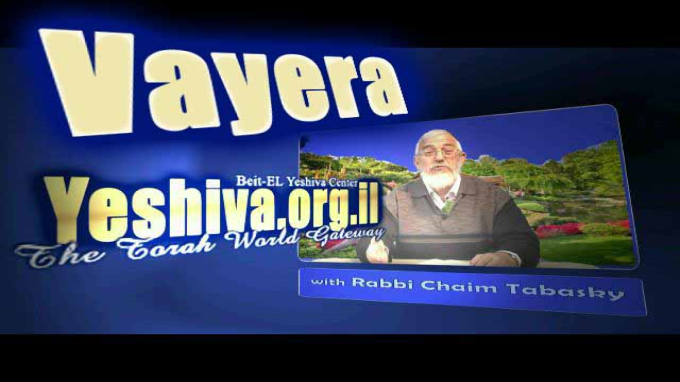






Rabbis in Midrash























Lessons
fast navigation










Hosha'ana Rabba FLYDUBAI & HOSHANA RABBA- ANI VAHU HOSHIA NA- I & HIM SAVE US
"Ani vaHu Hoshia Na", "I and Him, Save Us". We don't just pray to Him, but we also pray to and for ourselves that we should emulate and educate our children to have that instinctive altruism with which He created the world. President Trump seemed amused about Yaniv Hayon, our PLUMBER who confidently worked with G-d like Superman (he learned from a pilot on a TV show!) to save 174 lives on the Dubai hijacking, but we in Israel are totally accustomed already 78 years to our plumbers, teachers, garbage-men, rabbis, farmers & doctors being Hashem's shlichim! This is what Zionism is about.
Moreshet Shaul Hashem Is your Shadow – part I
Based on Siach Shaul, Pirkei Machshava V’Hadracha p. 420 – an address from 1941










