Yeshiva
Beit Midrash
- Torah Portion and Tanach
- D'varim
- Ekev

The Torah study is dedicatedin the memory of
Hana Bat Haim
Moshe goes on to demonstrate how Bnei Yisrael could not claim that they were righteous, as they committed this sin and that. Upon perusing the extensive descriptions of sins (ibid.: 7-25) we notice that the serious sins had been committed in the first couple years in the desert, by a generation which had basically died out. Why then could the new generation not rid itself of that stigma and put in a claim of relative righteousness?
The Ohr Hachayim raises this question and posits, after citing corroboration, that the generation that entered the Land was indeed a righteous one. He explains that it is not sufficient to be a good generation to get the Holy Land as an inheritance in its own merit. That requires exceptional merit, the type that the Torah ascribes to the patriarchs (ibid.:5). The generation’s relative merit, though, had some significance. Hashem arranged matters so that the ones who were fortunate enough to enter the Land were those who were at least somewhat deserving.
What we have not yet explained, according to this approach, is why the Torah bothers to mention the sins of the previous generation if the present one was not guilty of the same things? One can speak about the passing over of sin for up to four generations, when the later one maintains some culpability (see Shemot 34:7 with Rashi). However, the Ohr Hachayim takes a different approach. The previous generation clearly did not deserve to receive the Land in its own merit, yet Hashem continued moving the nation toward the Land, albeit at a slow pace. This proves that the Land was coming to the nation based on past merit. The fact that the next generation did not get locked out of the Land like their predecessors does not change the conclusion that the Land was assured to the nation because of Avraham, Yitzchak and Ya’akov.
Many wonder why recent generations have been the ones to finally receive sovereignty over Eretz Yisrael. We do not have an exact answer to that question. However, we do know that Jewish history is not broken down into isolated generations. Hashem has a multi-generational plan, and we will be wise to be as worthy as possible in order to approach our generation’s potential.


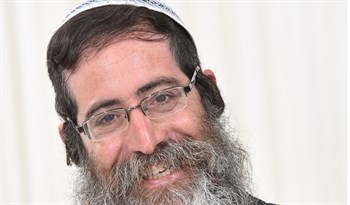







Rabbis in Midrash























Lessons
fast navigation











Hosha'ana Rabba FLYDUBAI & HOSHANA RABBA- ANI VAHU HOSHIA NA- I & HIM SAVE US
"Ani vaHu Hoshia Na", "I and Him, Save Us". We don't just pray to Him, but we also pray to and for ourselves that we should emulate and educate our children to have that instinctive altruism with which He created the world. President Trump seemed amused about Yaniv Hayon, our PLUMBER who confidently worked with G-d like Superman (he learned from a pilot on a TV show!) to save 174 lives on the Dubai hijacking, but we in Israel are totally accustomed already 78 years to our plumbers, teachers, garbage-men, rabbis, farmers & doctors being Hashem's shlichim! This is what Zionism is about.
Moreshet Shaul Hashem Is your Shadow – part I
Based on Siach Shaul, Pirkei Machshava V’Hadracha p. 420 – an address from 1941









