Yeshiva
Beit Midrash
- Torah Portion and Tanach
- Bereshit
- Vayera

Aside from the fact that Avraham at his core is a man of kindness, one who chases after kindness, the Torah teaches us an additional point regarding Avraham (Bereishit 18:19):
"For I have known him for he commands his sons and his household after him, to keep the way of Hashem to do righteousness and justice (tzedaka and mishpat)…"
Avraham Avinu is searching for the way of Hashem. Avraham Avinu is exploring the way of Hashem, and trying to follow it. The Gemara says that it is appropriate to do acts of kindness, in order to emulate the attributes of HaKadosh Baruch Hu (Sotah 14a):
It is also possible to understand this on a deeper level. HaKadosh Baruch Hu created man in His image, b’tzelem Elokim. That means that latent in every one of us there are divine qualities. The Gemara teaches us, that HaKadosh Baruch Hu does kindness, comforts mourners, and the like, and in so doing it teaches us that these qualities are natural to us, they are a tangible part of us.
This quality gives us a unique strength to do kindness. We do not need to acquire from outside ourselves traits of kindness. Rather, we need to reveal the qualities of kindness that exist within us.
The Rambam (Megilla V’Chanuka 2:17) writes that the greatest joy is to gladden others, to make the poor happy:
It is better for one to increase gifts to the poor, matanot la’evyonim, than for one to increase his meal and sending gifts to his friends, his mishloach manot, for there is no greater and splendid joy than to gladden the hearts of the poor, the orphans, the widows and the converts, for one who gladdens the heart of these cheerless people is likened to the Divine Presence, as it is stated, "To revive the spirit of the downtrodden and to enliven the hearts of the despondent" (Yeshayahu 57:15).
Why is the cause of the greatest joy gladdening others?
One can assume that when one finds himself in the presence of sad people, it is sad for them, too. But if he gladdens them, everyone becomes happy, which also includes him. But, in order to be happy, one doesn’t need to make others happy. One simply needs to go to a place where people are happy!
Why is there a special happiness when gladdening others? We explained previously, that HaKadosh Baruch Hu created us in His likeness, with Divine qualities. And we saw, that HaKadosh Baruch Hu has an attribute of kindness. That being the case, kindness is something natural to us. Therefore, when one performs kindness and gladdens others, they utilize their own natural qualities, and it follows that they become more complete and happier.
There is an additional explanation why one who brings happiness to others will be happier himself. One may feel a low sense of self-worth, yet when he gladdens others, one uncovers renewed strength and understands that they possess more power than they previously thought. This results in great happiness, the ability to help others more, and to be even happier.
Avraham Avinu- is the source of kindness in the world. Avraham Avinu searches for the will of G-d, and understands that the will of G-d fits our natural qualities. Avraham invests in kindness, but it is clear from all the parshiyot that it is kindness that enlivens Avraham. We shall strive to walk in the path of G-d, in the path of Torah and good deeds, in the path of kindness and justice, "’For I Hashem does kindness, justice and righteousness in the land- for these I yearned,’ such is the word of G-d." (Yirmiyahu 9:23)



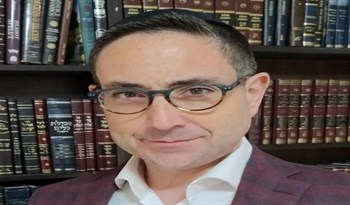




Rabbis in Midrash























Lessons
fast navigation










Hosha'ana Rabba FLYDUBAI & HOSHANA RABBA- ANI VAHU HOSHIA NA- I & HIM SAVE US
"Ani vaHu Hoshia Na", "I and Him, Save Us". We don't just pray to Him, but we also pray to and for ourselves that we should emulate and educate our children to have that instinctive altruism with which He created the world. President Trump seemed amused about Yaniv Hayon, our PLUMBER who confidently worked with G-d like Superman (he learned from a pilot on a TV show!) to save 174 lives on the Dubai hijacking, but we in Israel are totally accustomed already 78 years to our plumbers, teachers, garbage-men, rabbis, farmers & doctors being Hashem's shlichim! This is what Zionism is about.
Moreshet Shaul Hashem Is your Shadow – part I
Based on Siach Shaul, Pirkei Machshava V’Hadracha p. 420 – an address from 1941










