Yeshiva
Beit Midrash
- Sections
- Chemdat Yamim
- Ein Ayah

Ein Ayah: The generation that dwelled in the desert contained within it the spiritual power of every individual until the end of all generations. They fulfilled "… the kindness of your youth, the love of your nuptials, your following me in the desert" (Yirmiya 2:2).
The foundation of "upper life" which stems from the depth of Torah, is hidden among the waters of the Great Sea (i.e., Torah), which emanates from the brilliance of the Elevated Wisdom, the source of knowledge, may He be blessed. It is, though, not simple to draw from this sea to quench the thirst of every heart, for each person to feel his great connection to the sanctity of Israel, which stems from the sanctity of Hashem and the Torah. This depends on the power of the good and pure emotion. The place of this emotion in man’s limited heart changes according to the situation. However, this emotion, which is the basis of Israel’s connection to their Savior and to the Torah, is infinitely powerful.
The source of pure emotion was inherited from the generation of the desert in the merit of Miriam, along with the Torah of the Living G-d. Women tend toward a high level of emotion. Due to Miriam’s deep connection to Hashem, she was worthy to set the foundation of Jewish emotion. It is unlike regular emotion, which stems from the heart’s stormy reaction to a recent event and is therefore fleeting. Rather it is part of the Great Sea, the Sea of Torah, which is the source of infinite wisdom and truth.
At the time of Eliyahu, when Israel reached their lowest level, they were moved to return to Hashem by seeing the wonder of the true prophet being answered with fire from the heaven. They accepted the yoke of Heavenly Kingdom and declared: "Hashem is G-d" (Melachim I, 18:39). Since they had reached such a low level and had "turned their heart backward" (ibid. 37), they still did not connect to divine intellect, and the light of Torah which they had abandoned did not yet shine upon them. On the other hand, the power of Jewish emotion that was hidden in their heart was awakened. Even though this emotion is not readily visible, as it is swallowed up among a multitude of various emotions, it can be seen by looking deeply.
Ostensibly, emotion and awakening is unstable, as it can be emptied out just as it can be filled. However, Jewish sanctity connects the entire nation to its Maker within the depths of the sea of wisdom. It is powered from the storehouse of spirituality, which contains all the grandeur in the world. So if an event causes the diffusing of emotion, it is refilled by the surrounding waters of the sea, i.e., true, infinitely wise ideas. This causes the utensil (i.e., the heart) to always be filled with water, even though it is too "porous" to hold any given idea over time.
Seeing Miriam’s well in its eternal form seems impossible because emotions that fill the heart seem fleeting, making them like a sieve through which water flows. However, one can go to the top of the Carmel, the place where the ever-echoing call of "Hashem is G-d" was uttered by the nation’s masses even at a time of low spirituality. This was possible because of their natural propensity for holy emotion, even when it is indiscernible amidst their abandonment of the ways of Torah. If one looks, he will see a sieve, which one cannot count on to hold water, but, within the sea, it will always contain water. The emotions present are not the fleeting ones that are produced by specific events, but those that emanate from eternal divine emotion and light that are connected to Torah and divine truth. This is the eternal well of Miriam.
Various Rabbis
Various Rabbis including those of of Yeshivat Bet El, such as Rabbi Chaim Katz, Rabbi Binyamin Bamberger and Rabbi Yitzchak Greenblat and others.
Moreshet Shaul Moreshet Shaul: A Crown and its Scepter – part II
Based on Siach Shaul, Pirkei Machshava V’Hadracha p. 294-5
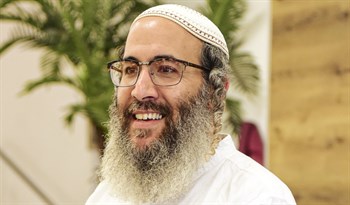





Rabbis in Midrash























Lessons
fast navigation











Hosha'ana Rabba FLYDUBAI & HOSHANA RABBA- ANI VAHU HOSHIA NA- I & HIM SAVE US
"Ani vaHu Hoshia Na", "I and Him, Save Us". We don't just pray to Him, but we also pray to and for ourselves that we should emulate and educate our children to have that instinctive altruism with which He created the world. President Trump seemed amused about Yaniv Hayon, our PLUMBER who confidently worked with G-d like Superman (he learned from a pilot on a TV show!) to save 174 lives on the Dubai hijacking, but we in Israel are totally accustomed already 78 years to our plumbers, teachers, garbage-men, rabbis, farmers & doctors being Hashem's shlichim! This is what Zionism is about.










