YeshivaThe torah world Gateway
Beit Midrash
- Jewish Laws and Thoughts
- Jewish Thought
- Foundations of Faith

The Torah study is dedicatedin the memory of
simha bat hana
True, it is difficult to understand how, immediately following the Giving of the Torah, the Children of Israel made a Golden Calf and began to worship it. Such a sin, it would be expected, should have brought irrevocable disrepute upon that generation. But when one approaches this whole event from broader, more all-encompassing view, things take on a different light. It turns out that the generation of the Exodus, despite everything, was in fact a great generation.
How, then, did the Sin of the Golden Calf come about?
After witnessing the Giving of the Torah, the Children of Israel eagerly awaited the return of Moses. Moses had climbed the mountain and had not taken any provisions with him. It appeared as if he planned on returning the same day to bring the Tablets of the Covenant from God to the people. The people stood waiting for Moses to bring the Tablets, they stood waiting to receive something from Moses, something tangible toward which they would be able to direct their prayers to God. Moses, however, tarried upon the mountain for many days.
Foundations of Faith (51)
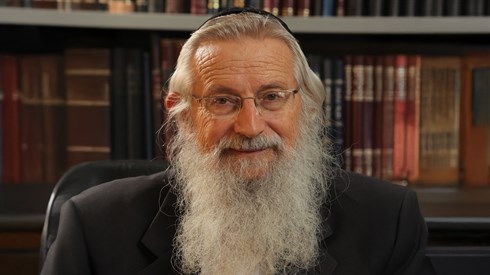
Rabbi Zalman Baruch Melamed
21 - 21. God's Elite Line
22 - 22. The Sin of the Golden Calf Reconsidered
23 - 23. Why Was Torah Given to Israel Alone?
Load More
Eventually, a small group of people began to lose confidence in Moses' ever returning. The nation became divided into factions. The factions held disparate opinions regarding how to respond to the situation.
Some felt that it was necessary to stop waiting around and to start taking action. They prescribed making some sort of graven image toward which the people would be able to turn when they desired worshiping God. Not that the Israelites should worship the image itself, heaven forbid, but that they be able to worship God via such a vehicle. They felt it necessary to have such a tangible object to help them direct their prayers to God and recall His wonders - not unlike what we do today when, in referring to God, we look to the sky and speak of God Who "sits on high." In other words, the people's offense lie in the fact that they created an image. They attributed Divine significance to that which they created with their own hands, of their own will, without being commanded by the Almighty - and such an act is forbidden.
They entertained, then, no intention of disavowing the Almighty God Who had released them from Egyptian bondage. To the contrary, they believed that by creating such a medium they would be capable of serving God even more effectively and devoutly. This was the reason that they approached Aaron with the request that he make the Golden Calf for them. Though their intentions were pure, they erred and committed an offense, for God had commanded not to make any such graven image, even with the purest of intentions. Their transgression was a serious one, yet, while it clearly constituted a violation of one of God's commandments, it did not reflect an attempt to betray Him.






Rabbis in Midrash























Lessons
fast navigation









Moreshet Shaul Hashem Is your Shadow – part I
Based on Siach Shaul, Pirkei Machshava V’Hadracha p. 420 – an address from 1941

P'ninat Mishpat A Non-Contractor in Changing Times – part I
(based on ruling 85128 of the Eretz Hemdah-Gazit Rabbinical Courts)
Moreshet Shaul Our King on Rosh Hashana, Our Father on Yom Kippur.
Based on Aroch Siach, p. 221 (Rav Shaul Yisraeli)
P'ninat Mishpat A Non-Contractor in Changing Times – part II
(based on ruling 85128 of the Eretz Hemdah-Gazit Rabbinical Courts)
Moreshet Shaul Hashem Is your Shadow – part II
Based on Siach Shaul, Pirkei Machshava V’Hadracha p. 420 – an address from 1941
Parashat Hashavua Happiness for the Right Reasons
[With painful longing, we share these divrei Torah from our co-Rosh Kollel for close to 40 years, Harav Moshe Ehrenreich zt”l.]