Yeshiva
Beit Midrash
- Torah Portion and Tanach
- D'varim
- Re'e

An oft-asked question is why the first pasuk in our Sedra of Re’eh seems to have a grammatical mistake: The word "Re’eh (see)" is singular, while the complimentary word "lifneychem (before you)" is plural! It ought to read either, "R’u lifnechem" or "Re’eh l’fanecha!" What gives?
Let’s answer by….asking another question!
The Torah later says we should do that which is "good and right," ha-tov v’ha-yashar, in the eyes of G-d. What is the difference between "good" and "right?" And why the "eyes?"
Rashi comments that "good" means "good in the eyes of Heaven," while "right" means "right in the eyes of man." What Rashi seems to be saying is we have been given two eyes, rather than one, for a good reason: We must, at all times, look up to the Heavens and be sure that we are acting in the way Hashem would want us to act.
At the same time, it is not enough to seek approval for our actions in the Heavenly court alone. The way we act must also be palatable to those around us; how they look upon our behavior is also of paramount importance.
This requires us to constantly check on what we are doing. Yes, G-d may love it when we exuberantly sing out in prayer to Him and loudly praise His name. But how does the person davening next to us feel about it?! Are we impinging on his ability to pray with concentration?
And yes, it is a very noble thing, for example, to march for the cause of human rights. But – if that march happens to be on a Saturday and desecrates the Shabbat - have we truly brought honor to Hashem’s name?!
Now, perhaps, we can answer our initial question about the unusual combination of the singular and the plural in the opening sentence of our sedra. Each of us has a personal, unique relationship with G-d, a "one-on-one" that accompanies us every moment of our lives. And we
have to be true to that singular dynamic, and appreciate just how special that makes each and every one of us.
But we must also recognize that we are not alone in this world, we are part of a greater whole, a community, a worldwide family. What we do affects not only ourselves; it extends far and wide. Not only are we connected to G-d; we are joined at the neshama with every other Jew. So we have to look carefully in both directions, and be "right" and "good" at the same time.

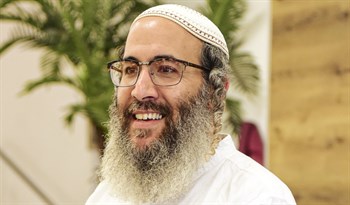




Rabbis in Midrash























Lessons
fast navigation











Various Events FOR WHOM NOT TO VOTE
Rav Zvi Yehuda Kook stressed that Israeli politics is G-dly, so I have no problem answering this common question on a Torani blog. Also, Free-Will is a G-d-given right and obligation, to "destine one's fate" (R. Soloveichik, Kol Dodi Dofek, 67), so I obviously don't tell others how to vote. But once not a few (especially young) have already asked, a couple of personal words from experience and thoughts from chazal & Rav Kook which may be of help to others, mainly for whom NOT to vote.

P'ninat Mishpat Fallout from Failure to Install Elevator – part II
based on ruling 85007 of the Eretz Hemdah-Gazit Rabbinical Courts







