Yeshiva
Beit Midrash
- Torah Portion and Tanach
- D'varim
- Ki Tetze

The Torah study is dedicatedin the memory of
Yaakov Ben Behora
The message of this week’s Torah portion is different. The opening verse, "When you go forth to war against your enemies," teaches that war is an integral part of our Divine national mission. Seven out of the 613 mitzvot of the Torah deal with war. God Himself is called "The Master of War."
Ramban explains that the commandment to wage war, milchemet mitzvah, is part of the mitzvah of dwelling in the Land of Israel and keeping it under Jewish sovereignty. Establishing national Jewish life in Eretz Yisrael is the way that we perform this mitzvah, to be actively pursued by the Jewish People at all times. We do this with the Israel Defense Forces and with the aliyah of every Jew to the Land of Israel. Not only with tanks and airplanes, but with every new Jewish house, stroller and washing machine.
The Torah’s commandments dealing with war teach us that even when enemy nations dispute our right to the Land, we must call up our inner fortitude and courage, and summon our readiness to sacrifice for the sake of our Land, our nation, and our God. We must take active steps to enter the Land of Israel, dwell in it, and establish God’s Kingdom on earth, even at the price of personal hardship and war. The precept of defending the Jewish nation in the Land of Israel and developing Jewish settlement in all of its borders is the Divine command which beckons to all of world Jewry today, just as it did in the time of Joshua. As the Haftora says, "And your seed shall possess nations, and make desolate cities to be inhabited. Don’t be afraid."
--------------------------
This is a weekly column contributed by Aloh Naaleh an organization devoted to motivating Jews to make Aliya.
Aloh Na'aleh
POB 4337, Jerusalem 91042
Tel: 972-2-566-1181 ext. 320 ~ Fax: 972-2-566-1186
Email: [email protected]


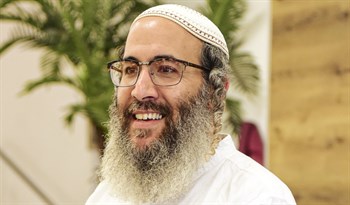





Rabbis in Midrash























Lessons
fast navigation











Hosha'ana Rabba FLYDUBAI & HOSHANA RABBA- ANI VAHU HOSHIA NA- I & HIM SAVE US
"Ani vaHu Hoshia Na", "I and Him, Save Us". We don't just pray to Him, but we also pray to and for ourselves that we should emulate and educate our children to have that instinctive altruism with which He created the world. President Trump seemed amused about Yaniv Hayon, our PLUMBER who confidently worked with G-d like Superman (he learned from a pilot on a TV show!) to save 174 lives on the Dubai hijacking, but we in Israel are totally accustomed already 78 years to our plumbers, teachers, garbage-men, rabbis, farmers & doctors being Hashem's shlichim! This is what Zionism is about.
Moreshet Shaul Hashem Is your Shadow – part I
Based on Siach Shaul, Pirkei Machshava V’Hadracha p. 420 – an address from 1941










