YeshivaThe torah world Gateway
Beit Midrash
- Torah Portion and Tanach
- Shmot
- Tetzave

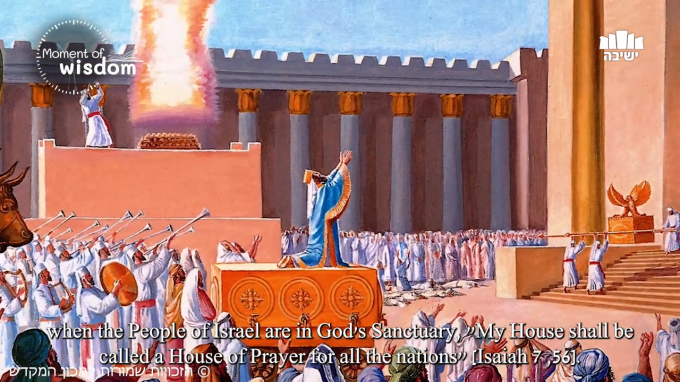
Many ideas have been presented to explain the necessity for this eternal light. One that I wish to mention here in this essay is that the eternal light represented the eternity of Israel and its survival as a people no matter what. Just as the Lord inexplicably demanded that an eternal light be present and lit in the Tabernacle and the Temple, so too is the survival of Israel to be seen as something that is truly inexplicable.
The lights of Hanukkah are the successors to the eternal light of the Tabernacle and the Temple. They too symbolize the unlikely and miraculous, the triumph of the weak and few. This symbolic light is meant to guide us in our understanding of Jewish history and life. The otherwise seemingly unnecessary light represents God's guarantee of Jewish survival and of the great lesson that a small candle while burning can illuminate a great deal of darkness.
The Lord needs no light but humankind cannot operate in the darkness. The prophet Isaiah chose his words carefully when he charged Israel to be "a light unto the nations." Our mere existence and accompanying story of survival is enough to be a guide to a very dark world and lead it towards a better future and a brighter day.
When the eternal light of the national existence of the Jewish people was dimmed by the Roman legions, the Jews installed a physical eternal light in their synagogues. But just as the eternal light in the Tabernacle and Temple required human effort and physical material – pure olive oil – so too does our current eternal light require human effort and physical material.
Lighting a dark room requires ingenuity, ability, planning and the correct fixtures. Since Torah is compared to light in Scripture, and it too is an eternal light, it is obvious that the maintenance of Torah and the spread of its light also require human effort, talent and industry. Even the glorious eternal light that hangs in front of the ark in our synagogue has to have its bulbs changed and cleaned periodically.
The Lord, Who needs no light, demands from us that we provide light in the physical and spiritual sense of the word. The High Priest of Israel was charged with the daily cleaning, preparing and lighting of the eternal light in the Temple. The Lord never provided for automatic lighting but rather for a light that would be generated and cared for by human beings in the daily course of their godly duties.
That remains the case today as well. Though our survival as a people is guaranteed, paradoxically, it cannot happen without our efforts and dogged commitment. We must light our lamp ourselves in order for it to burn brightly and eternally.


Rabbis in Midrash























Lessons
fast navigation











Israel and the Nations A Few Minutes & Many Innovative Ideas on Antisemitism & What to do About It
As we approach the High Holidays, this short lecture (18 minutes) deals with the unfortunate situation of how Israel and the Jewish People stand against antisemitism, analyzing its cause according to Rav Kook, and how to deal with the issue pragmatically & via our prayers.
Ha'azinu PURSUIT is PERFECTION
p. Ha'azinu, Shabbat Shuva
Rav Kook deals with the question of the seemingly hopeless nature of Tshuva. For G-d Himself knows that He created us with free will, which inevitably means we will sometimes make mistakes and choose wrong. This can easily be frustrating, freezing us into inaction and ye'ush (loss of hope). If one sins even once, does he chalila have no choice but suicide?! Moreover, our Godly conscience demands justice, righteousness and perfection, but we all know this is impossible, so what's the solution? Rav Kook's innovative thinking, strongly based on chazal (our sages), offers an inciteful and important aspect to this topic, especially this time of year!

Sukkot Bug-Free Sukkah: Essential Halachic and Practical Schach Guide
How to inspect, clean, and store bamboo mats and palm branches to protect your mitzvah and holiday meals.