Yeshiva
Beit Midrash
- Torah Portion and Tanach
- Shmot
- Tetzave

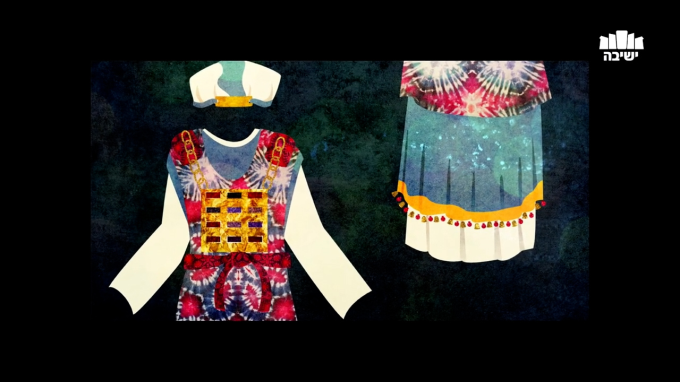
Aharon the priest, and the high priests of later generations, placed the breastplate over his heart. The heart finds special emphasis in many verses:
And Aaron shall bear the names of the children of Israel in the breastplate of judgment upon his heart, when he goes in unto the holy place, for a memorial before the LORD continually. And thou shalt put in the breastplate of judgment the Urim and the Thummim; and they shall be upon Aaron's heart, when he goeth in before the LORD; and Aaron shall bear the judgment of the children of Israel upon his heart before the LORD continually.
Aaron wears the names of Israel, the Urim and the Thummim, and shall bear the judgment of the children of Israel on his heart. What's the special emphasis and connection between the Hoshen and the heart and what are those three things that Aaron has upon his heart?
The Pele Yoetz writes that all of Judaism and serving God depends on the heart. Rabbi Elazar ben Arach teaches a proper lifestyle is identified with a good heart. The heart is the center of the human body and therefore represents something main and central, but it also represents three other things: life, desire and a special wisdom. When we say that someone's heart beats, we mean he has life. Desires or feelings are attributed to the heart and when we say that someone has a special intelligence, wisdom beyond ordinary logic, we say his heart is wise. In other words, the heart represents the integration of logic detached from life and life disconnected from logic, and the whole result gives more than the sum of the parts.
Since the heart contains the different sides of life, we can say that the essence of life depends on it. This is another reason that the heart is central, everything comes from it. Choosing a way of life with a "good heart" doesn't only change a certain aspect of life, but the whole life. In a similar way, placing something against the heart shows the centrality of the object or a similarity with the heart.
Laying the breastplate over the heart is mentioned in three contexts: the names of Israel, the oracle and the courts.
1. In the same way that each of the twelve tribes of Israel is different and unique, each person has his own character. Each tribe has a special way to serve God, but despite various desires, each has the same basic desire - to serve God. Putting the tribes' names on different stones put on one garment upon the heart unites all desires to the same lofty yet deep desire.
2. The oracle where the holy name was inserted between the folds of the breastplate. This name revived the garment, you could talk through it with God and receive an answer through the miraculous shining of the stones. The breastplate also shows that the source of Israel's life depends on God and also establishes a connection to the source of life!
3. Israel's law is different from that of the other nations. Our laws are not just human laws or arbitrary laws, but the laws of God that fit exactly roughest nature. The Sanhedrin court is also different from other courts. The Gemara in Tractate Berakhot (6) says that God is with three judgments sitting in court. The verdict stems not only from logic but also from supernatural wisdom, the wisdom of heart. The Breastplate laid on the heart shows the link between Jewish law and Divine assistance.
We cannot end without quoting from the Mishnah in Avot (1, 18) "Rabban Shimon ben Gamliel said, on three things the world stands, on the law, on truth and on peace."







Rabbis in Midrash























Lessons
fast navigation











Hosha'ana Rabba FLYDUBAI & HOSHANA RABBA- ANI VAHU HOSHIA NA- I & HIM SAVE US
"Ani vaHu Hoshia Na", "I and Him, Save Us". We don't just pray to Him, but we also pray to and for ourselves that we should emulate and educate our children to have that instinctive altruism with which He created the world. President Trump seemed amused about Yaniv Hayon, our PLUMBER who confidently worked with G-d like Superman (he learned from a pilot on a TV show!) to save 174 lives on the Dubai hijacking, but we in Israel are totally accustomed already 78 years to our plumbers, teachers, garbage-men, rabbis, farmers & doctors being Hashem's shlichim! This is what Zionism is about.










