Yeshiva
Beit Midrash
- Torah Portion and Tanach
- Bereshit
- Toldot

For the sake of consistency either our parsha should be named for Yitzchak or the parsha of Noach should be called Toldot as well. Even the naming of the parshiyot of the Torah teaches us important lessons about life and history.
Both Noach and Yitzchak had righteous offspring. Noach had Shem and Yitzchak had Yaakov. Both also had offspring that were less than righteous. Noach had Ham and Canaan, and Yitzchak had Eisav as a son. Yet there was a fundamental difference between Noach and Yitzchak.
Yitzchak possessed a heritage to transmit to Yaakov. The blessings that he bestowed upon his son were those that he had received from his father Avraham. It is heritage, family and national memory and traditions that create toldot, a continuity and connection to generational bonding and unity.
Noach was without such a background – he was a righteous individual, but still only an individual, who did not see himself in the role of being a nation builder. He did not possess a father who imbued him with a sense of tradition, family and nationhood. Avraham on the other hand was described by God, so to speak, as someone who would create a nation after him that would follow God’s ways and commandments.
It was this heritage that Yitzchak received. He was also engaged not only in creating individuals as was Noach but rather in raising toldot – national eternal generations - that would continue the heritage and holy tradition that he had received from his father. Thus Yitzchak’s parsha is named Toldot while Noach’s parsha remains only on his name alone.
The Torah itself emphasizes this point by immediately describing Yitzchak as being the son of Avraham whereas in the parsha of Noach, the name of the father of Noach no longer appears. The Jewish people as a whole has toldot even as individual Jews may or may not be so blessed.
The toldot of the Jewish people are based upon shared memory and historical experience, Torah knowledge and observance, a sense of mission and a strong national identity. The thread of idealism, of helping others, of goodness and compassion – in short, the blessings of our father Avraham, run through the Jewish story of the ages.
We often think that material goods and wealth are the stuff of human inheritances. But that is a false reading of life’s truths. It is the ideals and beliefs and traditions of holiness and Godly service that are the true heritage of Israel and guarantee that the people of Israel will always have toldot.
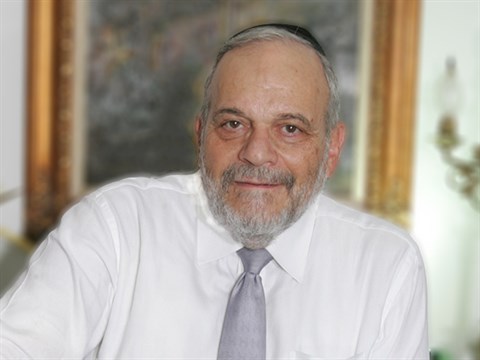







Rabbis in Midrash























Lessons
fast navigation











Hosha'ana Rabba FLYDUBAI & HOSHANA RABBA- ANI VAHU HOSHIA NA- I & HIM SAVE US
"Ani vaHu Hoshia Na", "I and Him, Save Us". We don't just pray to Him, but we also pray to and for ourselves that we should emulate and educate our children to have that instinctive altruism with which He created the world. President Trump seemed amused about Yaniv Hayon, our PLUMBER who confidently worked with G-d like Superman (he learned from a pilot on a TV show!) to save 174 lives on the Dubai hijacking, but we in Israel are totally accustomed already 78 years to our plumbers, teachers, garbage-men, rabbis, farmers & doctors being Hashem's shlichim! This is what Zionism is about.
Moreshet Shaul Hashem Is your Shadow – part I
Based on Siach Shaul, Pirkei Machshava V’Hadracha p. 420 – an address from 1941

P'ninat Mishpat A Non-Contractor in Changing Times – part I
(based on ruling 85128 of the Eretz Hemdah-Gazit Rabbinical Courts)
Moreshet Shaul Our King on Rosh Hashana, Our Father on Yom Kippur.
Based on Aroch Siach, p. 221 (Rav Shaul Yisraeli)





