Yeshiva
Beit Midrash
- Shabbat and Holidays
- Sefirat Haomer
- The Meaning Sefirat Ha'omer

One of the basic teachings of Avot is that of the necessity of respecting others - respecting their space, their property, their right to opinions that disagree with ours, and of their innate humanity. There are special levels of respect that are demanded of us regarding parents, teachers, Torah scholars, people of age and experience and of venerated leaders. A society that shows little respect for its elders and even worse for the "others" in society eventually brutalizes itself. Respect for humans who are created in the image of the Creator Himself is an innate Torah value. It leads to respect for the Almighty Himself for after all respect for the unseen and unknown and the ineffable is almost impossible if one is not previously trained in respect to those that we can actually see and interact with. Even a cursory perusal of Avot convinces us that this concept of respect is central to the Jewish concept of derech eretz. In fact the concept of derech eretz extends to one’s own person and body as well. The Torah that forbids the abuse of others also forbids self abuse. It is not coincidental at all that the commandment of honoring and respecting one’s parents appears in the Torah as the bridge between the commandments pertaining to our relationship with God and those commandments that deal with our required behavior towards fellow human beings. For without this concept of respect and honor we cannot effectively serve either God or humans.
Another facet of Avot is its emphasis on tradition. Each of the great men identified in Avot, the people who more than anything else guaranteed the survival of the Jews in Greco-Roman times, are recorded to have had a teacher, a transmitter of tradition. It is the importance of tradition and of a direct connection to that tradition through a human teacher of stature and importance that is the basis of all religious Jewish life. It is only this connection with human greatness that guarantees the vitality, let alone the survival, of Judaism and the people of Israel. Judaism is a religion of books but certainly not of books alone or even of books mainly. It is again no accident that the basis of Judaism is the Oral Law of Sinai. The written Bible has become the property of all of civilization and is not exclusively Jewish any longer. But the Oral Law of Sinai has remained exclusively the property of the Jewish people. It constitutes the main curriculum of study of all of the yeshivot and many of the courses of higher Jewish studies the world over. Without understanding the role of the tradition of Sinai as transmitted generation after generation by great human beings and awesome scholars, one never can really appreciate the majesty and worldview of Judaism. It is the teachings of Avot that allow us therefore to march forth confidently to the great moment of acceptance of the Torah as symbolized in the forthcoming holiday of Shavuot.
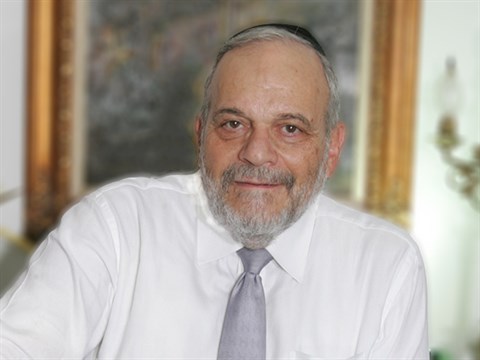







Rabbis in Midrash























Lessons
fast navigation










Hosha'ana Rabba FLYDUBAI & HOSHANA RABBA- ANI VAHU HOSHIA NA- I & HIM SAVE US
"Ani vaHu Hoshia Na", "I and Him, Save Us". We don't just pray to Him, but we also pray to and for ourselves that we should emulate and educate our children to have that instinctive altruism with which He created the world. President Trump seemed amused about Yaniv Hayon, our PLUMBER who confidently worked with G-d like Superman (he learned from a pilot on a TV show!) to save 174 lives on the Dubai hijacking, but we in Israel are totally accustomed already 78 years to our plumbers, teachers, garbage-men, rabbis, farmers & doctors being Hashem's shlichim! This is what Zionism is about.
Moreshet Shaul Hashem Is your Shadow – part I
Based on Siach Shaul, Pirkei Machshava V’Hadracha p. 420 – an address from 1941









