YeshivaThe torah world Gateway
Beit Midrash
- Torah Portion and Tanach
- Bereshit
- Vayeshev

The Torah study is dedicatedin the memory of
Revital Bat Lea
Let us take a look at the always relevant questions about free will in light of Yosef’s choice to overcome the temptation of Potiphar’s wife.
The Sefat Emet explains the fact that Hashem did not allow Yaakov to know that Yosef had been sold into slavery in Egypt as follows. On one hand, in order for Bnei Yisrael to be redeemed eventually from Egypt, Yosef had to undergo his experience as a slave there. On the other hand, Yaakov was aware of the moral decadence that was prevalent in Egypt and that certainly one who was in the lowly position of a slave there could not naturally maintain his spiritual level. Yaakov would have been overcome with grief to know that this was Yosef’s lot. The Sefat Emet explains that there are two types of moral challenges that a person faces. One is a test that he has the ability to pass by means of properly using his free will. The other is a temptation so great that he cannot naturally overcome it. However, Hashem can intervene and enable one to overcome even such a temptation. Yosef, who had gone from a favored son to a slave, was elevated to prominence in his master’s house, and was placed in an irresistible predicament, was in the latter situation.
Yosef was the recipient of such Divine intervention in his struggle to turn down Potiphar’s wife and maintain his moral standing in the depths of Egypt. He merited this help because he was not responsible for the terrible predicament he was in. He did not deserve to be sold into slavery and was a pawn in the Divine Plan in this regard. Therefore, he was given the opportunity to succeed where it should not have been possible.
However, this does not mean that Yosef did not pass the test by virtue of his moral greatness. As the Sefat Emet says, only when a person has a sincere desire to take away the choice that the moral struggle presents does he merit Divine Intervention. Yosef, with all the reasons for bitterness in regard to his predicament, realized that the free will which he possessed was given to him by Hashem. Realizing this, he came to a resolute decision that it would be wrong to use his opportunity to sin as an excuse to violate Hashem’s moral laws and to sin with Potiphar’s wife. This conviction is described by the Torah in a single word: "Vayema’en (he refused)." As a result of this decision to try not to exercise his free will, Hashem intervened and gave him the Divine Assistance which enabled him to extricate himself from the predicament.
Yosef’s decision to forgo his free will is that which turned him into a free man, as matters progressed. This is also what made the exodus from Egypt possible and enabled Am Yisrael to be a free nation in its Land until this day.


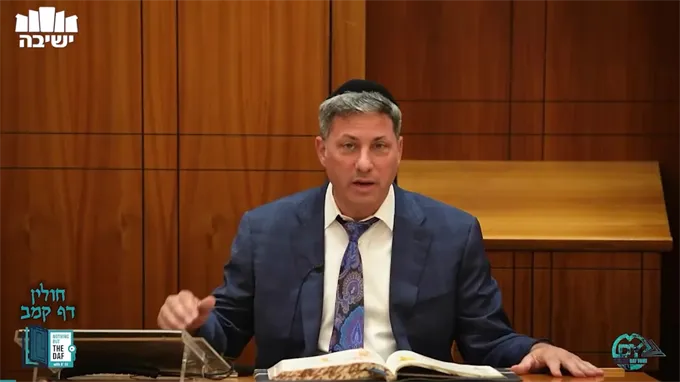
Rabbis in Midrash























Lessons
fast navigation










P'ninat Mishpat A Non-Contractor in Changing Times – part II
(based on ruling 85128 of the Eretz Hemdah-Gazit Rabbinical Courts)
Moreshet Shaul Hashem Is your Shadow – part II
Based on Siach Shaul, Pirkei Machshava V’Hadracha p. 420 – an address from 1941
Parashat Hashavua Happiness for the Right Reasons
[With painful longing, we share these divrei Torah from our co-Rosh Kollel for close to 40 years, Harav Moshe Ehrenreich zt”l.]

Israel and the Nations A Few Minutes & Many Innovative Ideas on Antisemitism & What to do About It
As we approach the High Holidays, this short lecture (18 minutes) deals with the unfortunate situation of how Israel and the Jewish People stand against antisemitism, analyzing its cause according to Rav Kook, and how to deal with the issue pragmatically & via our prayers.
Ha'azinu PURSUIT is PERFECTION
p. Ha'azinu, Shabbat Shuva
Rav Kook deals with the question of the seemingly hopeless nature of Tshuva. For G-d Himself knows that He created us with free will, which inevitably means we will sometimes make mistakes and choose wrong. This can easily be frustrating, freezing us into inaction and ye'ush (loss of hope). If one sins even once, does he chalila have no choice but suicide?! Moreover, our Godly conscience demands justice, righteousness and perfection, but we all know this is impossible, so what's the solution? Rav Kook's innovative thinking, strongly based on chazal (our sages), offers an inciteful and important aspect to this topic, especially this time of year!
Sukkot Bug-Free Sukkah: Essential Halachic and Practical Schach Guide
How to inspect, clean, and store bamboo mats and palm branches to protect your mitzvah and holiday meals.