Yeshiva
Beit Midrash
- Torah Portion and Tanach
- Bamidbar
- Balak
- Sections
- Chemdat Yamim
- Parashat Hashavua

Bilam declared: "He [Hashem] did not see iniquity in Yaakov nor did He see impropriety in Israel. Hashem his G-d is with him and the closeness (teruah) with the King is with him" (Bamidbar 23:21). Our simple translation is along the lines of Unkelos – Bilam saw that there was no trend of idol worship, lying, or other impropriety in the nation.
Rashi goes a step further: even when the members of the nation do not follow Hashem’s instructions properly, He does not treat them as sinners to the extent He might. Hashem’s being with them and His closeness is even when they do things to anger Him. Thus, according to Rashi, Hashem looks at us particularly favorably, even when we do not deserve it. The connection between the Divine Presence and the Congregation of Israel cannot be broken, as the pasuk says, "Your nation are all righteous" (Yeshayahu 60:21; see Sanhedrin 10:1).
Rabbi Chaim ben Atar (author of Ohr Hachayim, whose yahrtzeit is around now), one of the early trailblazers of our national regeneration, who moved to Yerushalayim more than 200 years ago, would also look to justify the actions of Israel. He says, on our pasuk, that the negative actions are not able to make the negative imprints we might expect. This is along the lines of the pasuk "You are totally beautiful, my beloved, and there is no blemish in you" (Shir Hashirim 4:7). The Ohr Hachayim explains that the sin does not make a permanent blemish but rather creates dirt that can be removed by washing. Bilam also was forced to teach us that even when a simple Jew sins, he remains a good Jew in his essence.
We will end off with the homiletic ideas of Rabbi Levi Yitzchak of Berdichev, the great "defense attorney of Israel," in his sefer Kedushat Levi, regarding our pasuk. He says that Hashem’s love for Israel "ruined the objective standards," so that when they sin, Hashem does not look at the sin. As the end of the pasuk indicates, when they do good, Hashem connects Himself to them and their positive actions. The word teruah, according to this approach, is the breaking, i.e., the distinction that Hashem makes between His relating to our positive and negative deeds.
Let us put matters in perspective as follows. Whoever has fear of Heaven in his heart and wants to cleave to the ways of Hashem, whoever feels that the State of Israel is important to him and sees it as the "the beginning of the flowering of our liberation," should adopt the approach of the giants we have surveyed here. He should adopt Rashi’s love without conditions and boundaries, as Hashem does. He should emulate the Ohr Hachayim’s and Rav Levi Yitzchak’s ideas of not viewing Jews as innately flawed. Even if we do, as we may, disagree with our compatriots, we should focus on their merits.

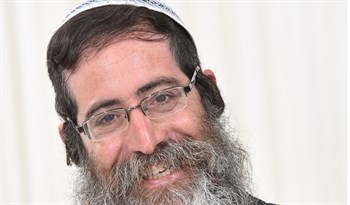





Rabbis in Midrash























Lessons
fast navigation









Various Events FOR WHOM NOT TO VOTE
Rav Zvi Yehuda Kook stressed that Israeli politics is G-dly, so I have no problem answering this common question on a Torani blog. Also, Free-Will is a G-d-given right and obligation, to "destine one's fate" (R. Soloveichik, Kol Dodi Dofek, 67), so I obviously don't tell others how to vote. But once not a few (especially young) have already asked, a couple of personal words from experience and thoughts from chazal & Rav Kook which may be of help to others, mainly for whom NOT to vote.

P'ninat Mishpat Fallout from Failure to Install Elevator – part II
based on ruling 85007 of the Eretz Hemdah-Gazit Rabbinical Courts







