Yeshiva
Beit Midrash
- Shabbat and Holidays
- Jewish Holidays
- Passover - Pesach

As Torah mitzvot are typically introduced by a bracha – in order to focus us upon what we are about to do, & to establish the act as a Divine emanation from Hashem – it ought to have a blessing, such as "Asher kid’shanu b’mitzvotav v’tzivani l’hagid sipur yetziat Mitzraym." So why is this most special Mitzva "bracha-less?"
Some want to suggest that reading the Hagada, which contains numerous quotes from Tanach, & commentary by great rabbis, fulfills the Mitzva of Talmud Torah, & so it is covered by the bracha we recite each morning, "la’asok b’divrei Torah." A special bracha at the Seder would then be superfluous, even a "bracha l’vatala," a blessing in vain.
Others point to the pasuk in Devarim 16:3 that cites the Mitzva to "remember the day you left Egypt every day of your life." This mitzva can be fulfilled by reciting any verse that discusses leaving Egypt; by mentioning the Exodus in one’s own words; or certainly by saying the Kiddush. According to this view, reading the Hagada is subsumed within, & is a continuation of the Mitzva which we have already accomplished.
I want to suggest another approach. Most of the Mitzvot that we perform & which are preceded by a bracha, are things that we are ordered to do: Give our sons a Brit; eat a matza, shake a lulav, put on Tefilin every morning, etc. But acts that we do without saying a bracha indicate that these are acts of love, not only law, & that we fulfill them from the heart – right along with the Halacha.
And so, when we are kind to a convert, we fulfill the command of, "V’ahavtem et ha-ger," but we recite no bracha prior to doing it. When we give Tzedaka, we fulfill the Mitzva of, "Patoach tiftach et yadcha lo – you shall open your hand to the needy," but no bracha is said.
Our Hagadic recounting of our liberation from slavery & our redemption from Egypt should be seen as a marvelous act of love from Hashem to us, & our elaborate telling of this tale should evoke our own deep feelings of love towards the Almighty. And so, no bracha is indicated.
Let us fulfill our Seder Mitzva with love, & hope this love will permeate the entire nation & bring us real peace.
Rabbi Stewart Weiss
Was ordained at the Hebrew Theological College in Skokie, Illinois, and led congregations in Chicago and Dallas prior to making Aliyah in 1992. He directs the Jewish Outreach Center in Ra'anana, helping to facilitate the spiritual absorption of new olim.
Jewish Laws and Thoughts Shul “etiquette:” can we honor Hashem while respecting our fellow congregants?
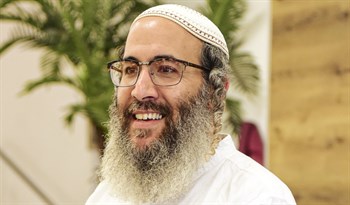




Rabbis in Midrash























Lessons
fast navigation











Various Events FOR WHOM NOT TO VOTE
Rav Zvi Yehuda Kook stressed that Israeli politics is G-dly, so I have no problem answering this common question on a Torani blog. Also, Free-Will is a G-d-given right and obligation, to "destine one's fate" (R. Soloveichik, Kol Dodi Dofek, 67), so I obviously don't tell others how to vote. But once not a few (especially young) have already asked, a couple of personal words from experience and thoughts from chazal & Rav Kook which may be of help to others, mainly for whom NOT to vote.

P'ninat Mishpat Fallout from Failure to Install Elevator – part II
based on ruling 85007 of the Eretz Hemdah-Gazit Rabbinical Courts









