Yeshiva
Beit Midrash
- Family and Society
- The Nation of Israel
- The Value of the Nation of Israel

Translated by Hillel Fendel
The relationship between the Jewish people and the other nations of the world is quite complex. Tremendous thought has gone into the search to understand the reasons for this complexity, and many books have been written about why this strange relationship has always existed. And even with all that, we're still left with the sense that the basic fundamental explanation still eludes us.
This situation began ever since Israel became a nation in the Sinai Desert on its way to its national Promised Land. There has always been a hatred, sometimes hidden, on the part of the gentiles towards Israel, with no explanation and no justification. This hatred is deep-seated and constant, in every place and time. It doesn't matter whether we are successful or not; it's always there. Sometimes they hate Jews because they're capitalist, and sometimes because they're socialist. Here they hate us because they're conservative, and there they loathe us because we're too liberal. They have contempt for us when we're too talented and industrious, even as others accuse us of being useless parasites. Sometimes it's because we are too advanced, and other times it's because we are backward and outdated.
There's no one correct reason, and in fact, there is no reason at all. The animosity is simply a fulfillment of the teaching of Rabbe Shimon bar Yochai: "It is a known halakhah [Halakhic ruling] that Esav hates Yaakov" (Medrash Sifri, Bamidbar 69). This is of course a strange formulation; what does Jewish Law have to do with this sociological truism? Why didn't Rabbi Shimon simply say that it is "known?"
This question was answered by the late saintly Rabbi Menachem Zemba, who was murdered in the Warsaw Ghetto during the Holocaust after he refused an offer to be rescued without his flock. Rabbi Zemba explained that Rabbe Shimon bar Yochai was saying: "Don't look for a reason for anti-Semitism; it's like a cut-and-dried ruling with no explanation." Rabbe Shimon would always seek out reasons for Torah laws, taama dikra – but here is saying that there is no point in looking for justification. It is simply the inexplicable depth of reality.
Not all the Gentiles are comfortable admitting that this hatred is a constant. They try to hide it, cover it, ignore it, deny it – but nothing helps. It doesn't go away. Some people try to fight it and uproot it, to thwarts its flare-ups; they try to conquer and defeat it. But even they are successful only for short periods, and then this natural phenomenon rears its wicked and terrible head yet again.
Of course, the most evil and catastrophic instance of the Gentiles' hatred for the Jewish People happened just 70 years ago, during the unspeakable Holocaust. It was organized by the Germans, but it wasn't only them; many nations were partners in this shameful chapter – some to a great extent, some to a lesser degree, and others simply stood passively by and didn't lift a finger to help save Jews. Only much later, when some of them began to feel pangs of conscience for what they did and didn't do, did they sense the need to seek out a way to atone for their crimes. This came in the form of allowing a vote in the United Nations to partition a part of the Holy Land and set aside a few slices thereof for the establishment of a Jewish State. But their inner nature never changed, and the world's relationship with this Jewish State has ever since been tense and convoluted - certainly not that of friends. "It is a known halakhah that Esav hates Yaakov."
This halakhah teaches us that there is no point in trying to change the world's nature on this point, and that we must rather learn to live with it. It is futile to run from reality, not only because this reality is here to stay – but also because it has a purpose. This destiny is not only blind fate, but rather has a historic, spiritual objective. We can, and we must, insert real meaning and content into the perpetual fact of anti-Semitism.
We must know that there is supreme and uplifting significance to the fact of the Jewish People as a "nation that dwells alone" (Bamidbar 23,9), the nation that is one and singular, the nation of G-d, the nation of the Torah, the nation of Divinity. We must turn the difficult reality into one that is constructive, something that prods us onward to greatness. When Israel's true value becomes clear to the world, it will understand retroactively our unique destiny, as is written:
"Many nations will walk and say, Let us go and ascend to G-d's Mountain, the house of the G-d of Yaakov, and He will teach us of His ways and we will walk in His paths, for Torah will go forth from Zion, and G-d's word from Jerusalem" (Isaiah 2,3).
In order to get articles like this delivered straight to your inbox every week, subscribe to the Israel National Torah newsletter here.
The relationship between the Jewish people and the other nations of the world is quite complex. Tremendous thought has gone into the search to understand the reasons for this complexity, and many books have been written about why this strange relationship has always existed. And even with all that, we're still left with the sense that the basic fundamental explanation still eludes us.
This situation began ever since Israel became a nation in the Sinai Desert on its way to its national Promised Land. There has always been a hatred, sometimes hidden, on the part of the gentiles towards Israel, with no explanation and no justification. This hatred is deep-seated and constant, in every place and time. It doesn't matter whether we are successful or not; it's always there. Sometimes they hate Jews because they're capitalist, and sometimes because they're socialist. Here they hate us because they're conservative, and there they loathe us because we're too liberal. They have contempt for us when we're too talented and industrious, even as others accuse us of being useless parasites. Sometimes it's because we are too advanced, and other times it's because we are backward and outdated.
There's no one correct reason, and in fact, there is no reason at all. The animosity is simply a fulfillment of the teaching of Rabbe Shimon bar Yochai: "It is a known halakhah [Halakhic ruling] that Esav hates Yaakov" (Medrash Sifri, Bamidbar 69). This is of course a strange formulation; what does Jewish Law have to do with this sociological truism? Why didn't Rabbi Shimon simply say that it is "known?"
This question was answered by the late saintly Rabbi Menachem Zemba, who was murdered in the Warsaw Ghetto during the Holocaust after he refused an offer to be rescued without his flock. Rabbi Zemba explained that Rabbe Shimon bar Yochai was saying: "Don't look for a reason for anti-Semitism; it's like a cut-and-dried ruling with no explanation." Rabbe Shimon would always seek out reasons for Torah laws, taama dikra – but here is saying that there is no point in looking for justification. It is simply the inexplicable depth of reality.
Not all the Gentiles are comfortable admitting that this hatred is a constant. They try to hide it, cover it, ignore it, deny it – but nothing helps. It doesn't go away. Some people try to fight it and uproot it, to thwarts its flare-ups; they try to conquer and defeat it. But even they are successful only for short periods, and then this natural phenomenon rears its wicked and terrible head yet again.
Of course, the most evil and catastrophic instance of the Gentiles' hatred for the Jewish People happened just 70 years ago, during the unspeakable Holocaust. It was organized by the Germans, but it wasn't only them; many nations were partners in this shameful chapter – some to a great extent, some to a lesser degree, and others simply stood passively by and didn't lift a finger to help save Jews. Only much later, when some of them began to feel pangs of conscience for what they did and didn't do, did they sense the need to seek out a way to atone for their crimes. This came in the form of allowing a vote in the United Nations to partition a part of the Holy Land and set aside a few slices thereof for the establishment of a Jewish State. But their inner nature never changed, and the world's relationship with this Jewish State has ever since been tense and convoluted - certainly not that of friends. "It is a known halakhah that Esav hates Yaakov."
This halakhah teaches us that there is no point in trying to change the world's nature on this point, and that we must rather learn to live with it. It is futile to run from reality, not only because this reality is here to stay – but also because it has a purpose. This destiny is not only blind fate, but rather has a historic, spiritual objective. We can, and we must, insert real meaning and content into the perpetual fact of anti-Semitism.
We must know that there is supreme and uplifting significance to the fact of the Jewish People as a "nation that dwells alone" (Bamidbar 23,9), the nation that is one and singular, the nation of G-d, the nation of the Torah, the nation of Divinity. We must turn the difficult reality into one that is constructive, something that prods us onward to greatness. When Israel's true value becomes clear to the world, it will understand retroactively our unique destiny, as is written:
"Many nations will walk and say, Let us go and ascend to G-d's Mountain, the house of the G-d of Yaakov, and He will teach us of His ways and we will walk in His paths, for Torah will go forth from Zion, and G-d's word from Jerusalem" (Isaiah 2,3).
In order to get articles like this delivered straight to your inbox every week, subscribe to the Israel National Torah newsletter here.
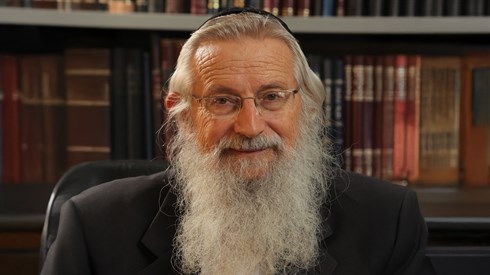

The Value of the Nation of Israel Jews' Special Status: Doing Good For the World
Translated by Hillel Fendel






Rabbis in Midrash






















Lessons
fast navigation









Hosha'ana Rabba FLYDUBAI & HOSHANA RABBA- ANI VAHU HOSHIA NA- I & HIM SAVE US
"Ani vaHu Hoshia Na", "I and Him, Save Us". We don't just pray to Him, but we also pray to and for ourselves that we should emulate and educate our children to have that instinctive altruism with which He created the world. President Trump seemed amused about Yaniv Hayon, our PLUMBER who confidently worked with G-d like Superman (he learned from a pilot on a TV show!) to save 174 lives on the Dubai hijacking, but we in Israel are totally accustomed already 78 years to our plumbers, teachers, garbage-men, rabbis, farmers & doctors being Hashem's shlichim! This is what Zionism is about.











