Yeshiva
Beit Midrash
- Jewish Laws and Thoughts
- Jewish Thought
- Subjects of Jewish Thougts

Translated by Hillel Fendel
Question: We know that the Torah teaches us that there is Reward and Punishment in this world for our deeds. We see this in many places: The stories of the Forefathers, in Genesis and elsewhere; the second paragraph of Kriyat Shema (Deut. 11) which states that if we follow the Torah we will receive rain for our crops, and that if we stray, the land will not give forth crops and we will be exiled; Moshe's speeches to the Nation warning what will happen if we do not keep our covenant with G-d or do not observe the Shemitah year commandments; and more.
We also see the power of our prayer in this framework: Moshe succeeds in having Divine punishments voided; G-d asks Moshe to 'leave Me' and stop praying, so that He can punish Israel; Moshe's prayers for his sister Miriam; the promise that recitation of the 13 Attributes can abolish decrees; etc.
But on the other hand, we certainly cannot force G-d to change His mind, and we must accept what is decreed upon us. Rav Goren [ed. note: 3rd Ashkenazi Chief Rabbi of Israel and founder of the IDF military Rabbinate] wrote a number of times in his work on Jewish Philosophy that there is specific Divine providence only for a nation or a public, but not for individuals.
My question therefore is: The prayers that I recite, and blessings that I receive – do they have influence
Answer: Your question is very important: How can we change, via our prayers or blessings, the will of G-d? The answer is that we do not – we only change ourselves. When a person does a mitzvah (Torah commandment), or studies Torah, or prays, or receives a blessing from a righteous person – he thus ascends to the next spiritual level. The more mitzvot and good deeds a person does, the more he ascends – and there is no limit! We can therefore say that when G-d decrees a punishment upon a person, it applies for when that person is on a particular level. But once the person ascends upward, he is no longer the same person; he is on a higher spiritual level and reality, and is thus deserving of more spiritual abundance. He has thus "changed" the decree with his prayers and good deeds!
Of course, this topic is very deep and profound, and our Torah luminaries have written profusely about it over the generations. But the above is the basic essence of the concept that prayers and blessings can effect a change.
In order to get articles like this delivered straight to your inbox every week, subscribe to the Israel National Torah newsletter here.
Question: We know that the Torah teaches us that there is Reward and Punishment in this world for our deeds. We see this in many places: The stories of the Forefathers, in Genesis and elsewhere; the second paragraph of Kriyat Shema (Deut. 11) which states that if we follow the Torah we will receive rain for our crops, and that if we stray, the land will not give forth crops and we will be exiled; Moshe's speeches to the Nation warning what will happen if we do not keep our covenant with G-d or do not observe the Shemitah year commandments; and more.
We also see the power of our prayer in this framework: Moshe succeeds in having Divine punishments voided; G-d asks Moshe to 'leave Me' and stop praying, so that He can punish Israel; Moshe's prayers for his sister Miriam; the promise that recitation of the 13 Attributes can abolish decrees; etc.
But on the other hand, we certainly cannot force G-d to change His mind, and we must accept what is decreed upon us. Rav Goren [ed. note: 3rd Ashkenazi Chief Rabbi of Israel and founder of the IDF military Rabbinate] wrote a number of times in his work on Jewish Philosophy that there is specific Divine providence only for a nation or a public, but not for individuals.
My question therefore is: The prayers that I recite, and blessings that I receive – do they have influence
Answer: Your question is very important: How can we change, via our prayers or blessings, the will of G-d? The answer is that we do not – we only change ourselves. When a person does a mitzvah (Torah commandment), or studies Torah, or prays, or receives a blessing from a righteous person – he thus ascends to the next spiritual level. The more mitzvot and good deeds a person does, the more he ascends – and there is no limit! We can therefore say that when G-d decrees a punishment upon a person, it applies for when that person is on a particular level. But once the person ascends upward, he is no longer the same person; he is on a higher spiritual level and reality, and is thus deserving of more spiritual abundance. He has thus "changed" the decree with his prayers and good deeds!
Of course, this topic is very deep and profound, and our Torah luminaries have written profusely about it over the generations. But the above is the basic essence of the concept that prayers and blessings can effect a change.
In order to get articles like this delivered straight to your inbox every week, subscribe to the Israel National Torah newsletter here.
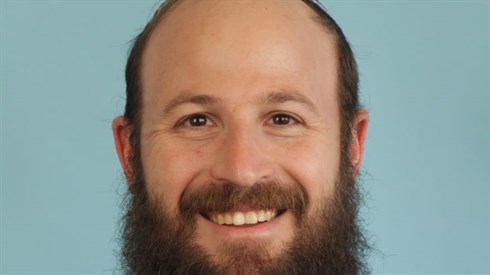
Rabbi Hagai Lerrer
A Rabbi in Beit El

G-d's leadership in the world Is G-d being "kind" if He's working toward a specific end goal?
Translated and edited by Hillel Fendel








Rabbis in Midrash























Lessons
fast navigation










Moreshet Shaul Hashem Is your Shadow – part I
Based on Siach Shaul, Pirkei Machshava V’Hadracha p. 420 – an address from 1941

P'ninat Mishpat A Non-Contractor in Changing Times – part I
(based on ruling 85128 of the Eretz Hemdah-Gazit Rabbinical Courts)
Moreshet Shaul Our King on Rosh Hashana, Our Father on Yom Kippur.
Based on Aroch Siach, p. 221 (Rav Shaul Yisraeli)
P'ninat Mishpat A Non-Contractor in Changing Times – part II
(based on ruling 85128 of the Eretz Hemdah-Gazit Rabbinical Courts)