Yeshiva
Beit Midrash
- Jewish Laws and Thoughts
- Jewish Thought
- Subjects of Jewish Thougts
Translated by Hillel Fendel
Question: How can I believe in something I can't see?
Answer: I imagine you have heard of the classic 18th-century work Mesilat Yesharim (Path of the Just) by the Ramchal, Rabbi Moshe Chaim Luzzatto. He begins another of his famous works, Derekh Hashem (The Way of G-d), with the fundamental obligation of a Jew to know the existence of G-d and to believe in Him. But isn't this a contradiction in terms? To know something is to be certain of it, such as when I know there is a cup on the table. But to believe something is much more iffy: If I say, "I believe I will pass tomorrow's math exam," I might be fairly confident about my mathematical skills, but I still cannot be 100% sure that the test won't be extra hard, or that I won't feel sick in the middle, etc. So how can we both believe and know??
Actually, we need both: Faith in G-d, emuna, requires intellectual knowledge as well. One must not only believe in G-d, but must also "know" Him, after delving into the matter and trying to understand it clearly. We can only do so up to a certain point, of course, but we are not exempt from setting out and trying to learn and know as much as possible.
But even that is not enough. For what if I make a mistake in my studies? What happens if my brain cannot sufficiently absorb or understand the material and the philosophical proofs? This is why we also need faith. We must look around at the world, at the complexities of Creation, see how G-d runs the world with Providence, and see His miracles, both hidden and revealed. We must contemplate the traditions we have from our ancestors, generation after generation, all the way up to our forefathers who received the Torah at Mt. Sinai. The combination of faith and knowledge is a necessity.
Of course, we cannot see G-d with our eyes – for we are His creations, flesh and blood, while He is not corporeal [with no shape or form or physical presence]. But we can "see" Him via our soul, by contemplating the above points – and this leads to belief.
Keep in mind that emuna is not an all-or-nothing affair. There are levels in emuna; he who believes more strongly is closer to G-d. Throughout our lives we are commanded to deepen our faith. The more we strengthen our faith via contemplation and the study of topics of emuna, our faith will be clearer. But it will always remain outside the framework of intellectual certainty – and this is how it must be. To "know" G-d exclusively would leave Him as something physical, without His spiritual aspects.
May we merit to believe in G-d and cleave to Him in the most complete manner possible, Amen!
Ed. note: It is well-known that we "believe" in many things that we cannot see, on various planes: We believe in molecules and atoms, we believe in love and happiness, we believe in thoughts and history and intelligence. None of these can be seen, yet we allow them to run our lives nonetheless.
Question: How can I believe in something I can't see?
Answer: I imagine you have heard of the classic 18th-century work Mesilat Yesharim (Path of the Just) by the Ramchal, Rabbi Moshe Chaim Luzzatto. He begins another of his famous works, Derekh Hashem (The Way of G-d), with the fundamental obligation of a Jew to know the existence of G-d and to believe in Him. But isn't this a contradiction in terms? To know something is to be certain of it, such as when I know there is a cup on the table. But to believe something is much more iffy: If I say, "I believe I will pass tomorrow's math exam," I might be fairly confident about my mathematical skills, but I still cannot be 100% sure that the test won't be extra hard, or that I won't feel sick in the middle, etc. So how can we both believe and know??
Actually, we need both: Faith in G-d, emuna, requires intellectual knowledge as well. One must not only believe in G-d, but must also "know" Him, after delving into the matter and trying to understand it clearly. We can only do so up to a certain point, of course, but we are not exempt from setting out and trying to learn and know as much as possible.
But even that is not enough. For what if I make a mistake in my studies? What happens if my brain cannot sufficiently absorb or understand the material and the philosophical proofs? This is why we also need faith. We must look around at the world, at the complexities of Creation, see how G-d runs the world with Providence, and see His miracles, both hidden and revealed. We must contemplate the traditions we have from our ancestors, generation after generation, all the way up to our forefathers who received the Torah at Mt. Sinai. The combination of faith and knowledge is a necessity.
Of course, we cannot see G-d with our eyes – for we are His creations, flesh and blood, while He is not corporeal [with no shape or form or physical presence]. But we can "see" Him via our soul, by contemplating the above points – and this leads to belief.
Keep in mind that emuna is not an all-or-nothing affair. There are levels in emuna; he who believes more strongly is closer to G-d. Throughout our lives we are commanded to deepen our faith. The more we strengthen our faith via contemplation and the study of topics of emuna, our faith will be clearer. But it will always remain outside the framework of intellectual certainty – and this is how it must be. To "know" G-d exclusively would leave Him as something physical, without His spiritual aspects.
May we merit to believe in G-d and cleave to Him in the most complete manner possible, Amen!
Ed. note: It is well-known that we "believe" in many things that we cannot see, on various planes: We believe in molecules and atoms, we believe in love and happiness, we believe in thoughts and history and intelligence. None of these can be seen, yet we allow them to run our lives nonetheless.
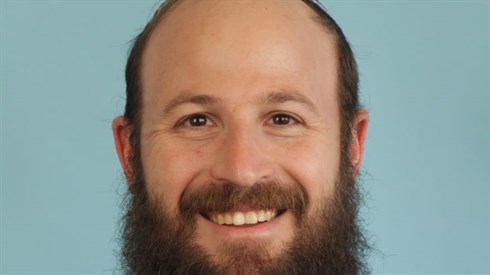
Rabbi Hagai Lerrer
A Rabbi in Beit El

G-d's leadership in the world Is G-d being "kind" if He's working toward a specific end goal?
Translated and edited by Hillel Fendel
Subjects of Jewish Thougts Why Must I be Religious to be a Moral Person? - Part I
Rav Kook, Musar Hakodesh




Rabbis in Midrash























Lessons
fast navigation










Various Events FOR WHOM NOT TO VOTE
Rav Zvi Yehuda Kook stressed that Israeli politics is G-dly, so I have no problem answering this common question on a Torani blog. Also, Free-Will is a G-d-given right and obligation, to "destine one's fate" (R. Soloveichik, Kol Dodi Dofek, 67), so I obviously don't tell others how to vote. But once not a few (especially young) have already asked, a couple of personal words from experience and thoughts from chazal & Rav Kook which may be of help to others, mainly for whom NOT to vote.

P'ninat Mishpat Fallout from Failure to Install Elevator – part II
based on ruling 85007 of the Eretz Hemdah-Gazit Rabbinical Courts








