Yeshiva
Beit Midrash
- Shabbat and Holidays
- Jerusalem Day
- The Essence of the Day

Not only is the amidah directed toward Jerusalem, but the whole prayer service is too, even when we are not facing Jerusalem. Therefore, in the morning prayer we mention Zion and Jerusalem about 20 times explicitly and many more in reference. The "song of the day" is said on the stand of the Temple in Jerusalem. The incense is made in the heart of Jerusalem - the Temple of Hashem.
The blessings of shema also relate to Jerusalem. In particular, the blessing of 'ahava raba' (tremendous love) relates. In it, we pray and ask to be able to learn Torah "for the sake of your great name and for the sake of our fathers who trusted in you, to teach us the ways of life that we may do your will with a full heart." We ask to learn Torah to sanctify His great name in the world.
That is why we ask at the end of this blessing that there be a gathering of exiles and the end of the torment of the nations. "Hurry and bring upon us a blessing and peace to the four corners of the earth. And the burden of the Gentiles is broken over our necks and we are soon led into our land." All these actions are related to Torah study for the sanctification of His name.
"You are He who redeems, and You chose us from amongst the nations." All of these things take place in Jerusalem. There His great name is sanctified for all time, for eternity. Therefore, the heart of he who prays should be directed to Jerusalem throughout the prayer service, from beginning to end.
Also in the verses of song, before Shema, whose purpose is to crown Him (which happens in Jerusalem), we say "And in David’s songs, You will be praised, in praises and in hymns. We will exalt You our King and praise You. We will honor You. And we will crown You. Let’s remember the name of our king, He who gives life, and rules all the worlds." Therefore in every prayer one should direct his heart to Jerusalem.
And really we should be in Jerusalem all day. "We wish all day for your redemption." The verse from which we learned the rabbinical law that we direct our hearts to Jerusalem speaks of all the hours of the day, "And my eyes and my heart are there all the days." This is what He does, and so that is what we must do.
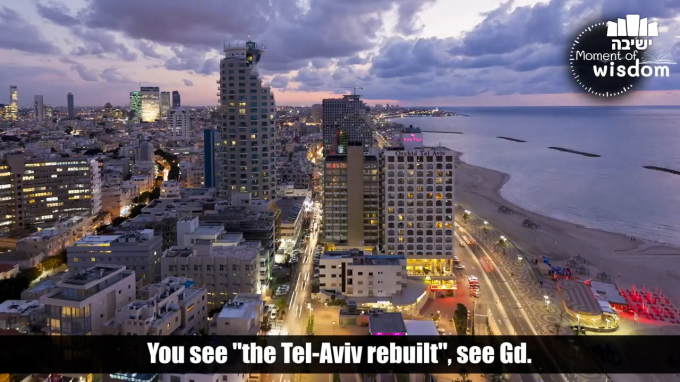
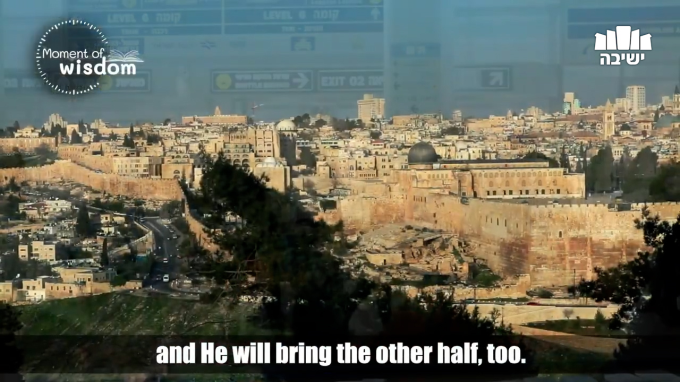








Rabbis in Midrash






















Lessons
fast navigation











Hosha'ana Rabba FLYDUBAI & HOSHANA RABBA- ANI VAHU HOSHIA NA- I & HIM SAVE US
"Ani vaHu Hoshia Na", "I and Him, Save Us". We don't just pray to Him, but we also pray to and for ourselves that we should emulate and educate our children to have that instinctive altruism with which He created the world. President Trump seemed amused about Yaniv Hayon, our PLUMBER who confidently worked with G-d like Superman (he learned from a pilot on a TV show!) to save 174 lives on the Dubai hijacking, but we in Israel are totally accustomed already 78 years to our plumbers, teachers, garbage-men, rabbis, farmers & doctors being Hashem's shlichim! This is what Zionism is about.











