Yeshiva
Beit Midrash
- Sections
- The Life of Tzaddikim
- Rabbi Mordechai Eliyahu

"I’m your neighbor, Mordechai – I came to meet you and drink some tea with you."
I brought our nice neighbor inside. Before he left my house, I suggested to him that we dance. The neighbor answered my invitation with a radiant expression, and so we burst into dance in the lounge!
One day, when I was wandering around the Mahane Yehudah market, I saw a picture of Rabbi Mordechai Eliyahu hanging up at one of the stalls. I thought to myself, "That rabbi looks really similar to my neighbor - I wonder if he knows him?"
The next time I bumped into my neighbor, I asked him if he knew Rabbi Mordechai Eliyahu. My neighbor smiled and said, "Yes, I know him." I told my neighbor that Rabbi Mordechai Eliyahu looked so similar to him, and he smiled again.
Some time passed, and I was in need of a certain book. I knocked on my neighbor’s door and asked him if by any chance he had the book. My neighbor smiled and told me that I should feel free to go into his library and take the book. I was stunned by the size of the library, and there, on the wall, I saw another picture of Rabbi Mordechai Eliyahu. I gazed at the picture and at my neighbor’s face, and again thought how close the resemblance was between them.
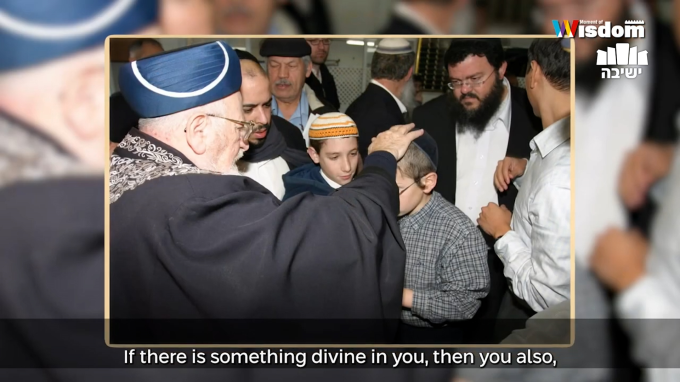
Another two months passed, and then, late at night, I heard people’s voices in the stairwell. I went out to see what was going on, and suddenly I saw my neighbor in front of me – but this time he was wearing the robes of the Rishon L’Tzion! Only then did the penny drop and I finally realized that he was the same Mordechai!
(Shlomo, former neighbor of the Rav)
No Rabbi
Rabbi Mordechai Eliyahu The Path of the Righteous is as the Light of Dawn
From the book The Father of Israel






Rabbis in Midrash























Lessons
fast navigation











Various Events FOR WHOM NOT TO VOTE
Rav Zvi Yehuda Kook stressed that Israeli politics is G-dly, so I have no problem answering this common question on a Torani blog. Also, Free-Will is a G-d-given right and obligation, to "destine one's fate" (R. Soloveichik, Kol Dodi Dofek, 67), so I obviously don't tell others how to vote. But once not a few (especially young) have already asked, a couple of personal words from experience and thoughts from chazal & Rav Kook which may be of help to others, mainly for whom NOT to vote.
P'ninat Mishpat Fallout from Failure to Install Elevator – part II
based on ruling 85007 of the Eretz Hemdah-Gazit Rabbinical Courts








