Yeshiva
Beit Midrash
- Shabbat and Holidays
- Purim & The Month of Adar
- The Laws of Purim
- Sections
- Peninei Halakha

Each gift must be worth the amount of money that could be used to purchase ordinary foods that would satiate a person eating a small, simple meal – for example, a sandwich. To discharge one’s obligation, one can give an amount of money that would purchase about three slices of bread for each gift (in Israel, this is about one shekel). This amount of bread is approximately equivalent to the volume of three eggs, which is enough to minimally satisfy a person. However, giving more matanot la-evyonim is praiseworthy (see below, section 8).
One may not count matanot la-evyonim toward the ma’aser kesafim he owes, as one may not fulfill this obligation with money that he is anyway required to give to charity. However, one may set aside the minimum amount of money per gift and then add to and increase the sum with ma’aser kesafim money.
An evyon is defined by halakha as a poor person who has insufficient funds for his family’s essential needs, as defined by the time and place in which he lives. There were times when a person who had bread to eat and two sets of clothes to wear was not considered poor, whereas today even one who has four sets of clothes and bread and cheese to eat is still considered poor.
One may give matanot la-evyonim even to a poor child, on condition that he is sufficiently intelligent not to lose the money. If one gives the equivalent of two gifts to a poor couple, he fulfills his obligation to give a minimum of two gifts. Similarly, if one gives the equivalent of two gifts to a widow and her young son who is dependent on her, he fulfills his obligation. However, one who gives two gifts to a single poor person does not fulfill his obligation, even if he gives the gifts one after the other, because one must give to two poor people. 1
If one does not know two poor people, or if he is embarrassed to give them gifts, he should give his matanot la-evyonim to a reputable gabbai tzedaka (charity fund manager) to distribute to the poor on his behalf. The gabbai must attempt to give these gifts to the poor in a way that will enhance their joy at the Purim meal. 2
^ 1.Maĥzik Berakha states in the name of Zera Yaakov §11 that the value of each gift must be equivalent to the price of three eggs’ bulk of a food item, as this is the size of a minimal meal. It is preferable, however, for the value of the gift to be great enough to purchase a simple meal, such as a roll with a spread, a serving of falafel, or the like. In any case, one discharges his obligation with three eggs’ bulk worth of bread. MB 694:2 cites Ritva as saying that even a single pruta is considered a sufficient gift. The value of a pruta today is approximately three Israeli agorot or one US cent. However, since this is a case of uncertainty concerning divrei kabbala, one should be stringent. Besides, nowadays one cannot buy anything with a pruta, and perhaps even Ritva would agree that one does not fulfill his obligation today with a gift of a pruta. (Sma ĤM 88:2 is similarly uncertain whether one can betroth a woman nowadays with a pruta. Shakh YD 294:16 states similarly regarding neta reva’i [the redemption of fourth-year produce].) Therefore, one must give a sum of money that is large enough for the recipient to purchase something.
^ 2.In the past, gabba’ei tzedaka would purchase calves and slaughter them for the poor people’s Purim meal. They were not permitted to purchase fewer calves in order to leave money over for the other needs of the poor. Rather, they would prepare an abundant amount of food for the Purim meal, and if there was extra money left over, they would direct it toward the other needs of the poor after Purim (BM 78b; SA 694:2).
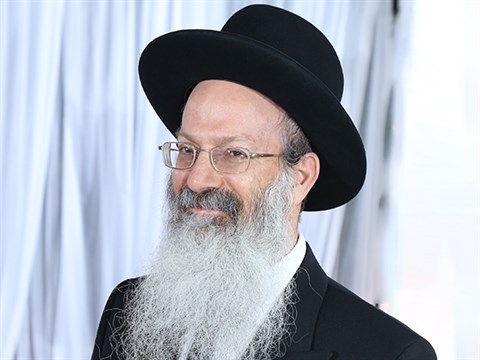
Rabbi Eliezer Melamed
Rosh Yeshiva of Har Bracha and rabbi of the settlement.

Peninei Halakha 18. Torah Verses in the Prayers and in the Berakha of She-asa Li Kol Tzorki
Chapter 10: The Laws of Tisha Be-Av
The Laws of Purim 14. Can a Drunk or Tipsy Person Recite Berakhot and Pray Ma’ariv?
Chapter 16: The Mitzvot of Joy and Kindness
The Laws of Purim 8. Between Mishlo’ah Manot and Matanot La-evyonim
Chapter 16: The Mitzvot of Joy and Kindness
The Laws of Purim 12. The Meaning of the Mitzva of Drinking
Chapter 16: The Mitzvot of Joy and Kindness







Rabbis in Midrash






















Lessons
fast navigation











Various Events FOR WHOM NOT TO VOTE
Rav Zvi Yehuda Kook stressed that Israeli politics is G-dly, so I have no problem answering this common question on a Torani blog. Also, Free-Will is a G-d-given right and obligation, to "destine one's fate" (R. Soloveichik, Kol Dodi Dofek, 67), so I obviously don't tell others how to vote. But once not a few (especially young) have already asked, a couple of personal words from experience and thoughts from chazal & Rav Kook which may be of help to others, mainly for whom NOT to vote.

P'ninat Mishpat Fallout from Failure to Install Elevator – part II
based on ruling 85007 of the Eretz Hemdah-Gazit Rabbinical Courts







