Yeshiva
Beit Midrash
- Sections
- Peninei Halakha
- Shabbat and Holidays
- Laws of Hanukkah
- Peninei Halkha - Hanukkah

One may use any type of oil or wick for the Ĥanuka candles, including those that are unusable for Shabbat candles. This is because the purpose of Shabbat candles is to illuminate one’s home, and if they do not burn nicely, there is a concern that one may manipulate a candle to improve its light and thus desecrate Shabbat. Therefore, the Sages prohibited lighting Shabbat candles with oils and wicks that do not burn well. In contrast, one may not use the light of the Ĥanuka candles, so any type of oil or wick that can stay lit for half an hour may be used.
The more beautifully the candle burns, the more beautiful the mitzva is, because the miracle is publicized more effectively. Therefore, many people light wax or paraffin candles, whose flame is strong and beautiful. Many Aĥaronim write that it is even better to light with olive oil, because its light is lucid and it also recalls the miracle of the oil.6
The Ĥanuka candles must contain enough fuel to last for half an hour, because the Sages prescribed that we light from the end of shki’a until people are no longer walking around in the marketplace, or about half an hour. And even when one lights indoors, the candles must be able to last for half an hour. If one has only a small amount of oil or a small candle, which will burn for only a few minutes, one should light it without reciting a berakha.7
Shabbat 21b, 23a; sa 673:1. Shabbat 23a states that the preferred way to perform the mitzva is with olive oil, but the Gemara implies that this is so only because its light is more lucid (see Berur Halakha). Therefore, some say that wax is just as good as, if not better than, olive oil, as Darkhei Moshe 673:1 cites. R. Avraham Yitzĥak Kook concurs in Mitzvat Re’iyah §673. However, Me’iri and Kol Bo state that olive oil has an advantage in that it reminds one of the miracle. Many Aĥaronim, including mb ad loc. 4 and ahs ad loc. 1, state likewise. R. Kook and his son R. Zvi Yehuda Kook followed this practice. (Regarding Maharal’s opinion, see Maĥatzit Ha-shekel ad loc. 1, sht ad loc. 4, Kaf Ha-ĥayim ad loc. 18, and Yemei Hallel Ve-hoda’ah 14:21-23.)↩︎
According to the first answer recorded in Shabbat 21b, the time to light is "from shki’a until the market empties of pedestrians." According to the second answer, however, that is how long the candles must be lit. Rif, Rambam, and other Rishonim write that this is a duration of half an hour. sa 672:2, 675:2 rules accordingly. See mb 672:5. However, some Rishonim maintain that one may fulfill one’s obligation if one lights for a shorter period of time and using smaller candles, either because the halakha follows the first answer in the Gemara, or because even though the halakha follows the second answer, once people began lighting indoors there was no longer a need to light for half an hour, which is the amount of time it used to take for people to return from the marketplace (Or Zaru’a, Smag). Therefore, if one does not have enough oil, he should light without a berakha (bhl 672:2, s.v. "ka-zeh"). See Berur Halakha, Shabbat 21b, nn. 4:2, 5; Torat Ha-mo’adim 6:27, 31.↩︎
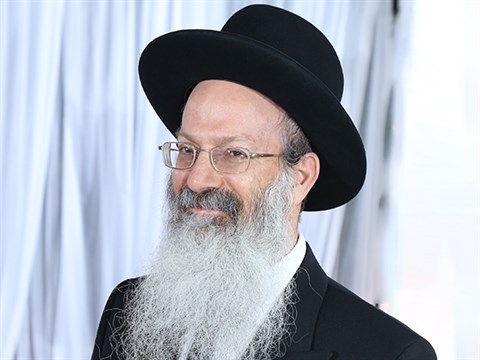
Rabbi Eliezer Melamed

Peninei Halakha 18. Torah Verses in the Prayers and in the Berakha of She-asa Li Kol Tzorki
Chapter 10: The Laws of Tisha Be-Av
Peninei Halkha - Hanukkah 6. Delaying Candle-Lighting When Necessary
Chapter 13: When and Where to Light Hanuka Candles
The Laws of Purim 15. Scheduling the Se’uda when Purim is on Friday
Chapter 16: The Mitzvot of Joy and Kindness






Rabbis in Midrash
































Hosha'ana Rabba FLYDUBAI & HOSHANA RABBA- ANI VAHU HOSHIA NA- I & HIM SAVE US
"Ani vaHu Hoshia Na", "I and Him, Save Us". We don't just pray to Him, but we also pray to and for ourselves that we should emulate and educate our children to have that instinctive altruism with which He created the world. President Trump seemed amused about Yaniv Hayon, our PLUMBER who confidently worked with G-d like Superman (he learned from a pilot on a TV show!) to save 174 lives on the Dubai hijacking, but we in Israel are totally accustomed already 78 years to our plumbers, teachers, garbage-men, rabbis, farmers & doctors being Hashem's shlichim! This is what Zionism is about.